Mecsengineering

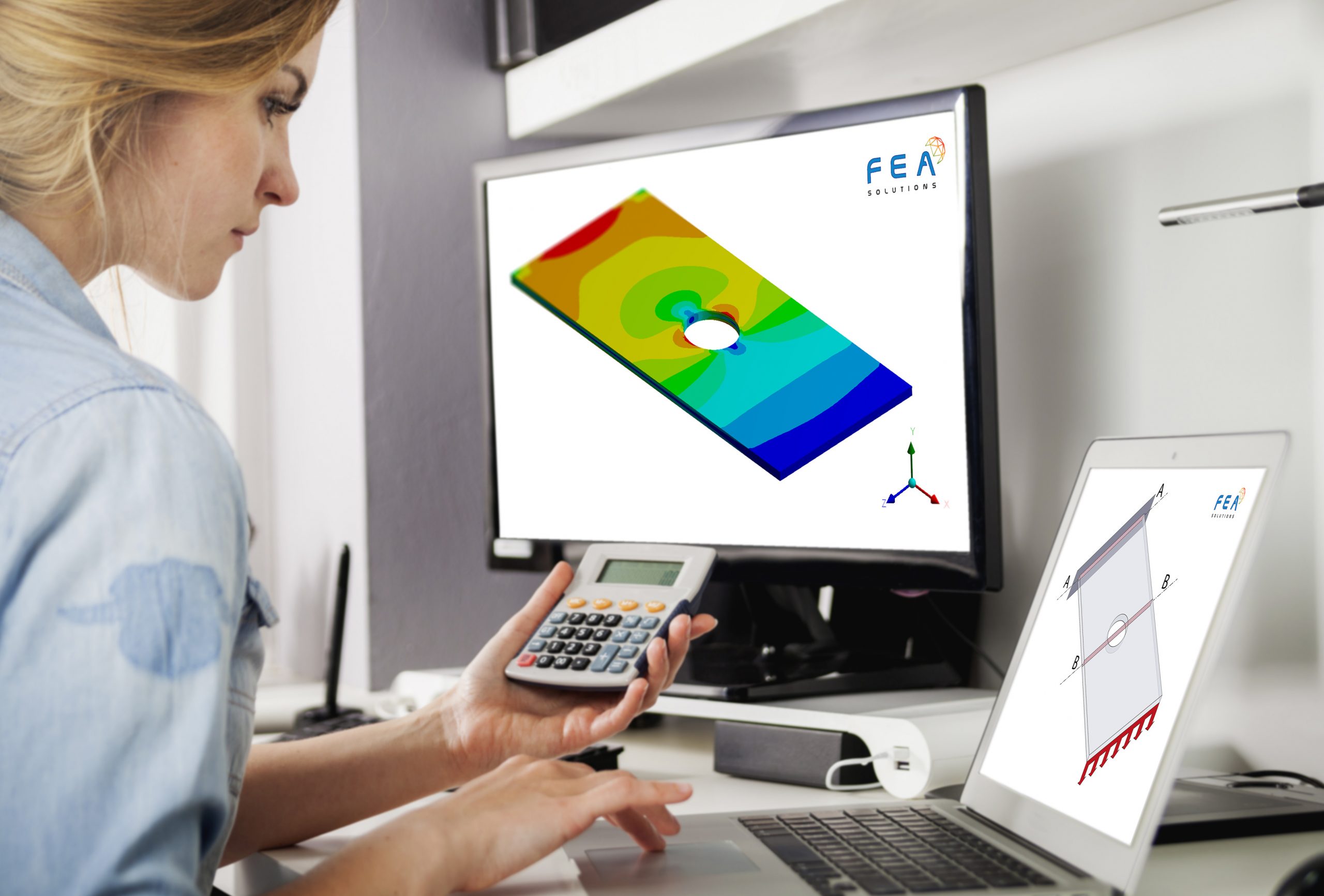
We use Finite Element Analysis to evaluate stresses, deformation, temperature effects, vibration, fatigue, and other complex behaviours that may not be adequately addressed through conventional engineering calculations.

MECS Engineering provides practical FEA solutions that help clients validate designs, investigate failures, resolve code-compliance concerns, and improve the safety and reliability of equipment and structures. Our analyses consider constructability, operability, maintainability, and safety throughout the design process.

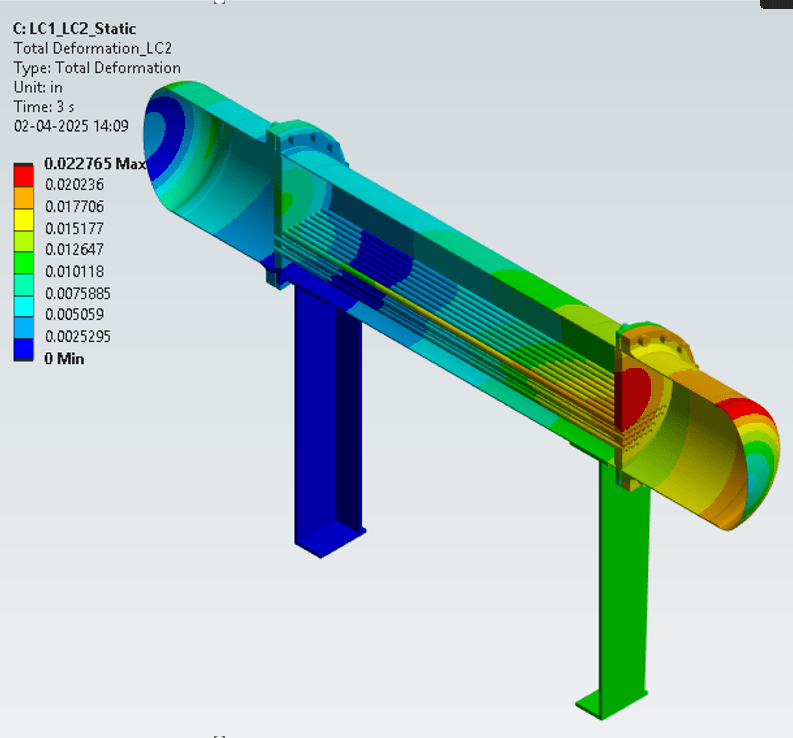
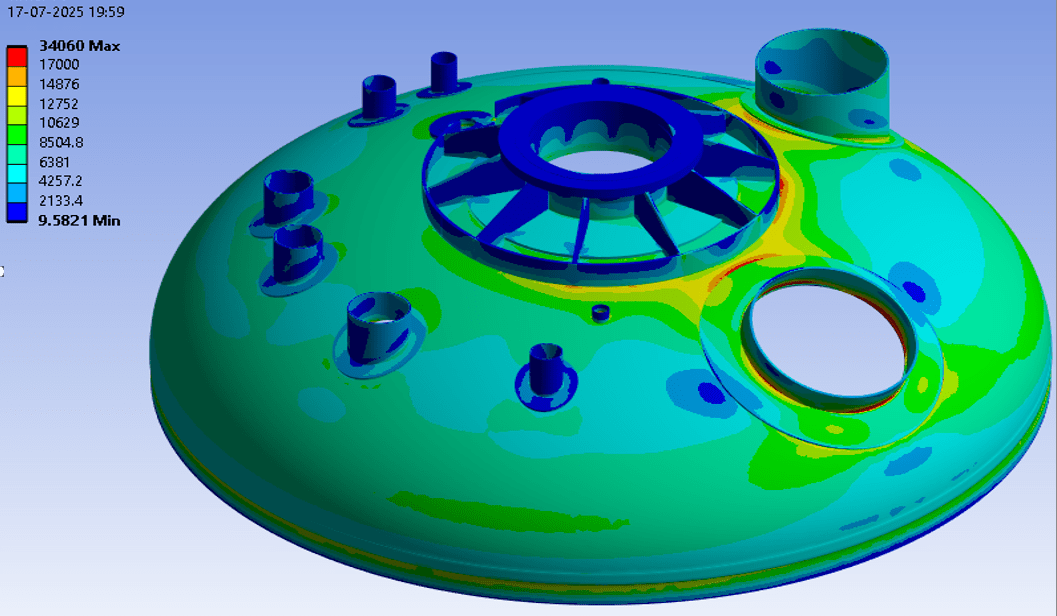
  • Static Structural Analysis

    We evaluate stresses, strains, deformation, load paths, and structural performance under operating, design, test, transportation, lifting, and other applicable loading conditions.

  • Thermal / Thermo-Structural Analysis

    Our engineers assess temperature distribution, thermal expansion, thermal gradients, and the resulting thermal stresses within equipment and structural components.

  • Dynamic and Impact Analysis

    We evaluate the response of equipment and structures subjected to dynamic loads, including vibration, impact, transient forces, pressure fluctuations, and time-dependent loading. Dynamic analysis can help establish structural response, identify critical loading conditions, and improve the resistance of a design to fluctuating or short-duration loads.

  • Modal and Vibration Analysis

    Modal analysis is used to determine the natural frequencies and mode shapes of equipment, piping components, supporting structures, and mechanical assemblies. The results help assess the potential for resonance and support the development of design modifications intended to reduce vibration-related risks.

  • Fatigue Assesment and Fatigue Analysis

    We assess fatigue-sensitive areas subjected to cyclic pressure, thermal loading, vibration, or repeated mechanical loads. FEA results can be used to evaluate stress ranges, estimate fatigue usage, identify potential crack-initiation locations, and support improvements to the expected service life of a component.

  • Nonlinear Analysis

    For applications where conventional linear analysis may not accurately represent actual behaviour, we perform nonlinear analysis considering material plasticity, nonlinear material properties, large deformation local yielding and load redistribution. This provides a more realistic representation of component behaviour under severe or complex loading conditions.

  • Buckling and Stability Analysis

    Our engineers evaluate the stability of structures and components subjected to compressive, external-pressure, wind, lifting, and other applicable loads. Linear eigenvalue buckling or nonlinear collapse analysis may be performed depending on the geometry, loading conditions, material behaviour, and required level of assessment.

Need Assistance with a Complex Design?

Our engineers can help you evaluate stresses, deformation, fatigue, vibration, thermal effects, and other complex behaviours that cannot be adequately addressed through conventional calculations.

FAQs

FEA is typically required when the geometry, loading, material behaviour, or boundary conditions are too complex for standard design equations. It is commonly used for non-standard components, local stress evaluations, equipment modifications, lifting assessments, thermal loading, fatigue-sensitive details, and designs not fully covered by code formulas.

The required information normally includes drawings or 3D models, component dimensions, material properties, design and operating conditions, applicable loads, support conditions, temperature data, design codes, and acceptance criteria. Where some information is unavailable, reasonable engineering assumptions may be established and clearly documented.

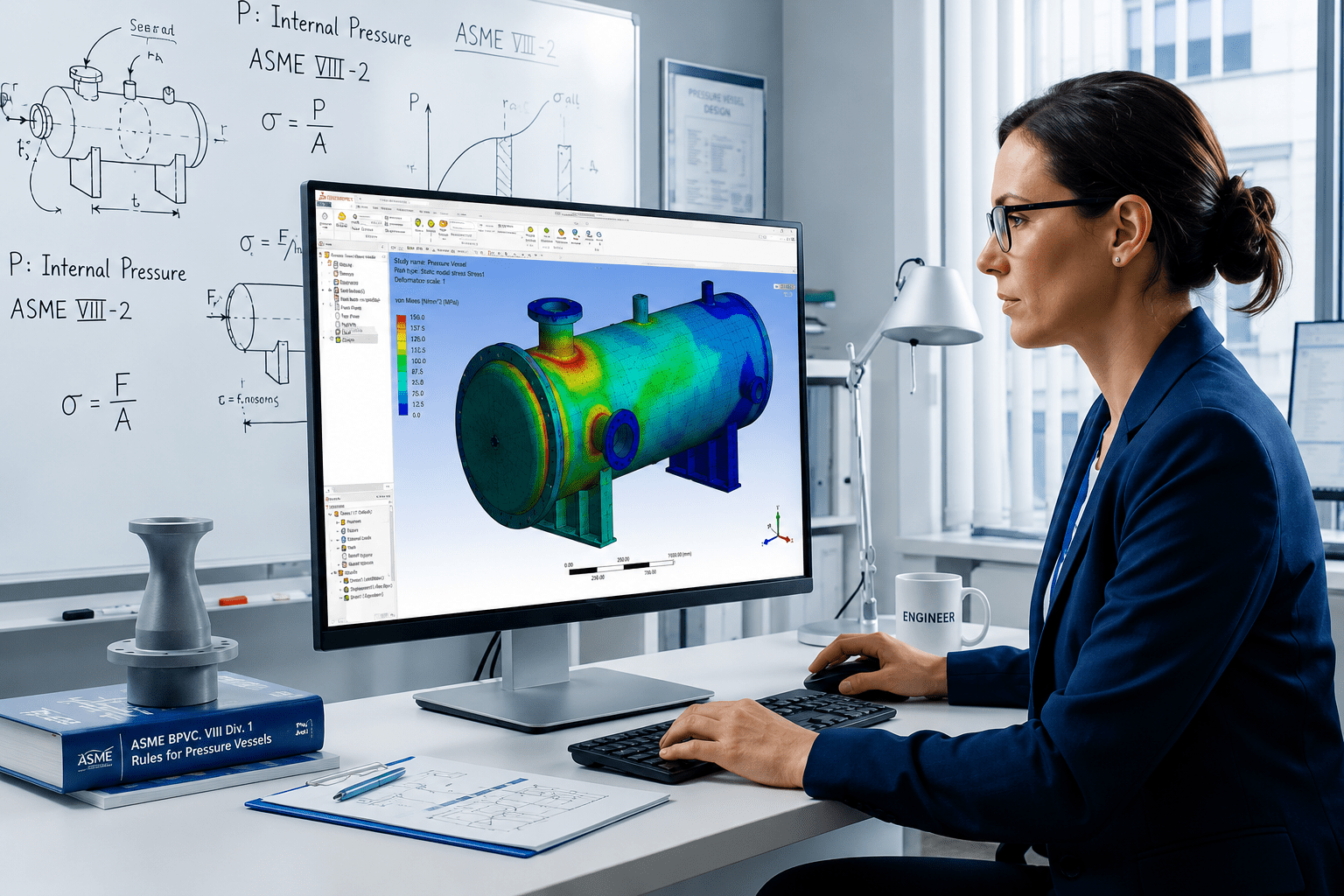
The applicable code depends on the equipment, service, project location, and purpose of the assessment. Analyses may reference standards such as ASME Section VIII Division 2, applicable ASME B31 piping codes, CSA B51 and project-specific requirements.

A typical FEA report includes the analysis objective, design basis, geometry, material properties, loading conditions, boundary conditions, modelling assumptions, mesh details, results, acceptance criteria, conclusions, and engineering recommendations. Supporting stress plots, deformation plots, and code-compliance evaluations are also included where applicable.

Blog

  • All Posts
  • Blog
  • News
  • Piping Stress Analysis
  • Professional Engineering

We’re here to help!

We cover all the aspects of piping engineering, detailed design, stress Analysis, structural and support design and code calculations to meet every type of need.