June 2, 2026
When Do You Need a Piping Stress Analysis? Real-World Scenarios Piping systems in industrial facilities are exposed to various operating...

Static and dynamic piping analysis, support design, and engineering verification with P.E./P.Eng. certification support.
MECS Engineering provides piping stress and flexibility analysis for new and existing piping systems across industrial, commercial, energy, and highly regulated facilities.
Our engineers evaluate how piping systems respond to pressure, temperature changes, weight, equipment movement, support conditions, wind, seismic effects, vibration, and other operating or occasional loads. The objective is to confirm that the piping, supports, equipment connections, and associated components can perform safely throughout their intended service life.
We combine code-based analysis with practical piping and support-design experience to develop solutions that consider constructability, operability, maintainability, and safety.
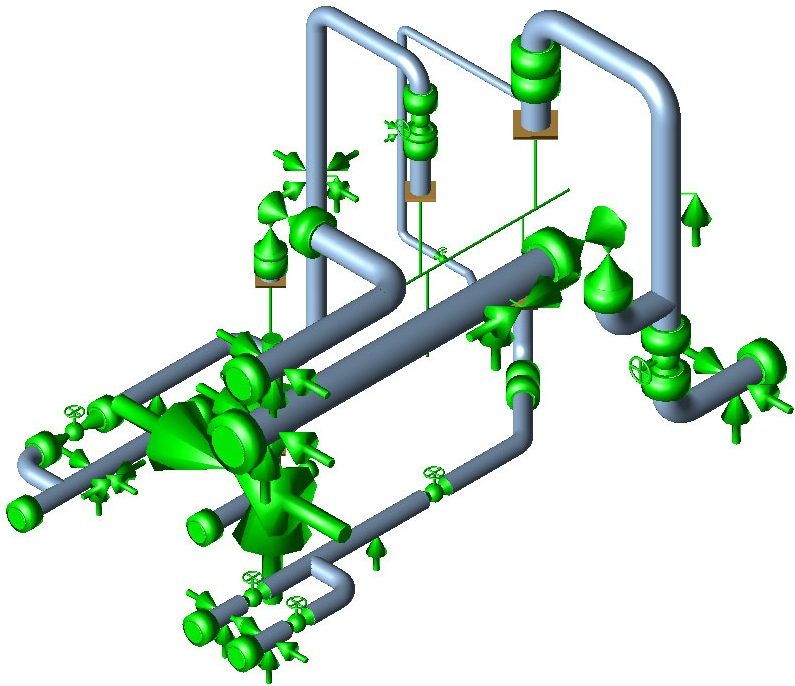
We perform detailed piping stress analysis to evaluate system stresses, displacements, support loads, equipment nozzle loads, and code compliance under applicable operating, design, shutdown, test, and occasional loading conditions. The analysis helps determine whether the piping system has sufficient flexibility to accommodate thermal expansion and other imposed movements without excessive stress or loading.
Temperature changes can cause significant expansion or contraction within a piping system. When this movement is excessively restrained, it can generate high stresses, support loads, and equipment nozzle loads. We assess thermal movement and recommend practical solutions such as routing modifications, flexibility improvements, expansion loops, support changes, or specialized supports.
Our engineers evaluate the combined effects of piping weight, internal pressure, insulation, fluid contents, concentrated loads, and thermal operating conditions. This confirms that the piping system and its supports remain within the applicable code limits during normal operation and other required load cases.
Properly designed supports are essential for controlling piping movement while maintaining adequate system flexibility. Support arrangements are developed with consideration for installation access, maintenance, drainage, insulation, movement, and constructability. Spring supports are used where piping must move vertically while remaining adequately supported. We select and evaluate variable or constant spring supports based on system movement, hot and cold loads, variability, installation requirements, and available space. Existing spring supports can also be reviewed for system modifications or changed operating conditions.


Piping systems may require assessment for seismic events, wind, pressure relief, blast criteria, snow or ice loads, transportation effects, and other occasional conditions. We evaluate these loads in combination with applicable sustained and operating conditions and confirm compliance with the governing piping code and project criteria.
Modifications to an operating facility can change load paths, support conditions, equipment loads, and system flexibility. We assess existing piping systems for Equipment replacement, Rerouting or tie-ins, Operating-temperature changes, Expansion or debottlenecking projects, Recurring leakage or vibration, Damaged or malfunctioning supports and Fitness-for-service considerations. Where original design information is limited, we work with available drawings, field measurements, inspection findings, operating data, and clearly documented engineering assumptions.
Our structural analysis services cover the full lifecycle of a structure, from in-service performance to safe transportation and installation. We simulate movement and evaluate the effects of lifting and transporting components to prevent failure during these critical phases.
Stress analysis is commonly required for high-temperature, high-pressure, large-diameter, hazardous, cryogenic, vibration-sensitive, or equipment-connected piping. It may also be required by the governing code, client specification, regulatory authority, or equipment vendor.
The applicable code depends on the piping service and industry. Common standards include the ASME B31 piping codes, CSA Z662, applicable API requirements, nuclear codes, equipment-vendor criteria, and project-specific specifications.
Common solutions include modifying the piping route, adding flexibility, changing support locations, revising restraint directions, using spring supports, adding expansion loops, or strengthening local components. The appropriate solution depends on the cause of the excessive load and the operating requirements of the system.
A typical deliverable includes the design basis, applicable codes, modelling assumptions, load cases, stress results, displacement results, support loads, equipment nozzle loads, conclusions, and recommended modifications. Supporting software output and professional certification may also be provided where required.
From initial flexibility analysis and support design to dynamic assessment, troubleshooting, and professional engineering certification, MECS Engineering provides practical solutions for safe and reliable piping systems.
When Do You Need a Piping Stress Analysis? Real-World Scenarios Piping systems in industrial facilities are exposed to various operating...
How to Choose the Right Piping Engineering Company for Your Project Industrial piping systems are at the heart of many...
Piping Flexibility Analysis: A Practical Engineering Guide Piping systems are rarely static. Temperature changes, pressure fluctuations, and external loads...

Mr. / Mrs.