
Piping Stress Analysis: Why It Matters for Safe and Compliant Facilities
In industrial facilities, piping systems do much more than move fluids from one point to another. They operate under pressure, experience temperature changes, carry heavy loads, and connect to critical equipment. Without proper engineering review, these forces can lead to leaks, vibration, equipment nozzle failures, or costly downtime.
That is why Piping Stress Analysis is a key part of safe and reliable plant design.Whether you are building a new system or modifying an existing one, understanding piping behaviour under real operating conditions helps reduce risk and improve long-term performance.
What Is Piping Stress Analysis?
Piping Stress Analysis is the engineering process of evaluating how a piping system responds to loads such as:
- Internal pressure
- Thermal expansion and contraction
- Dead weight of pipe, valves, and insulation
- Wind and seismic forces
- Vibration and dynamic loads
- Equipment nozzle loads
Engineers use specialized software and sound engineering judgment to model the piping system, identify overstressed areas, and recommend practical design changes.
The goal is not simply to pass a software check. It is to ensure the system can operate safely, maintain alignment, and avoid premature failure.
Why Piping Stress Analysis Is Important
1. Protects Equipment Connections
Pumps, compressors, vessels, and heat exchangers are sensitive to external piping loads. Excessive nozzle loads can create misalignment, seal failures, or equipment damage.
A proper analysis helps confirm connected equipment remains within allowable load limits.
2. Manages Thermal Expansion
As temperatures rise or fall, piping expands and contracts. If movement is restrained, high stresses can develop.
Stress analysis identifies where flexibility is needed through routing changes, expansion loops, or spring supports.
3. Supports Code Compliance
Many industrial projects must comply with codes such as ASME B31.1, ASME B31.3, or other jurisdictional requirements. In Canada, provincial regulations may also apply depending on the system and location.
Engineering review helps document that the design meets applicable standards. Requirements can vary by province, state, and authority having jurisdiction.
4. Reduces Downtime and Maintenance Costs
Unexpected vibration, fatigue cracking, and support failures can interrupt operations. Identifying these issues during design is far less expensive than correcting them after startup.
When Should You Request Piping Stress Analysis?
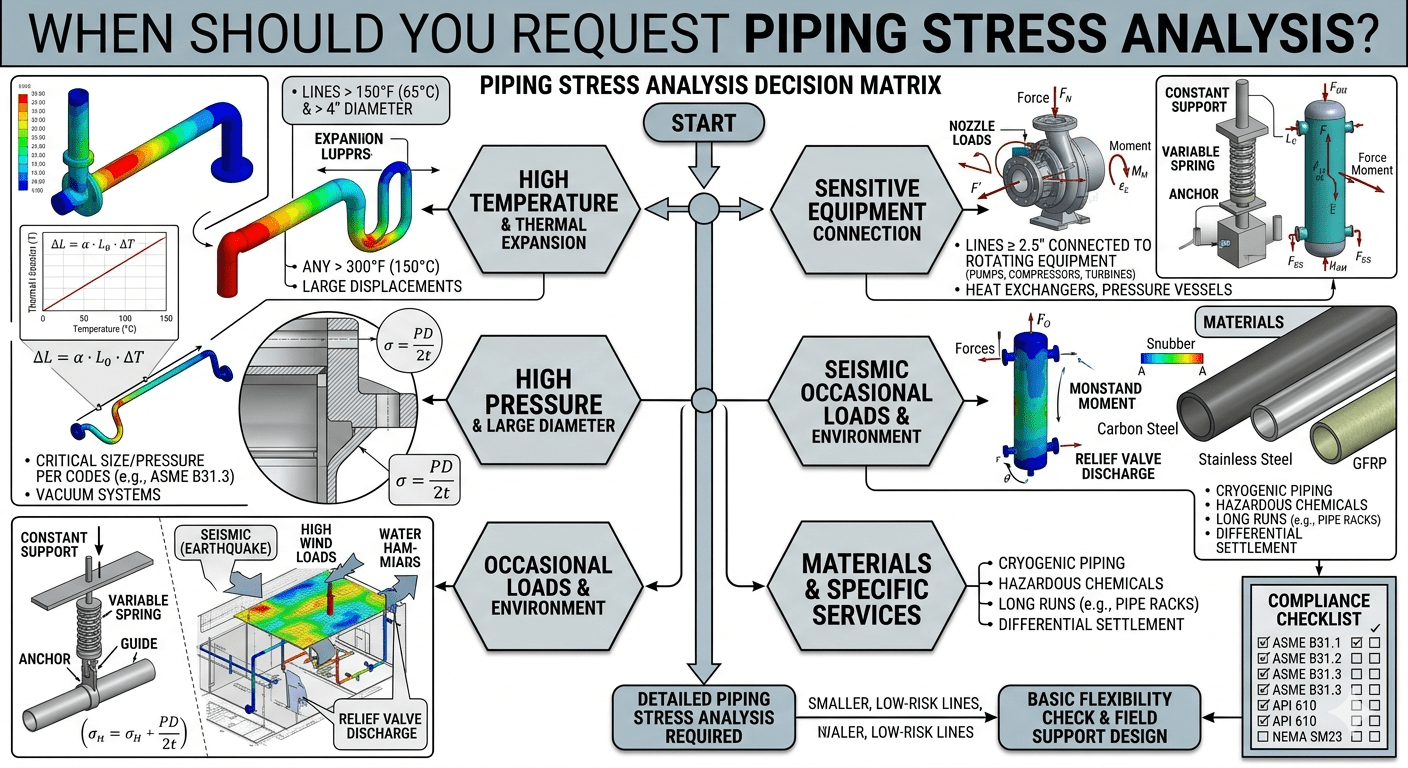
Many projects benefit from early stress review, especially when systems involve:
- High temperature service
- Large diameter piping
- Long pipe runs
- Critical rotating equipment
- Steam and condensate systems
- Frequent thermal cycling
- Complex support arrangements
- Revamps or tie-ins to existing plants
Even smaller systems may require analysis if operating conditions or connected equipment make loads significant.
Typical Deliverables from a Stress Analysis Study
A professional engineering review often includes:
Stress Model and Calculations
A computer model is created to evaluate sustained, expansion, and occasional loads.
Support Recommendations
Engineers may recommend guides, anchors, spring supports, or layout adjustments.
Equipment Load Review
Loads at pumps, vessels, and other connections are checked against manufacturer or code limits.
Practical Design Changes
The best solution is often a simple routing change or support relocation rather than costly redesign later.
Piping Stress Analysis in Canada and the USA
Facilities across Canada and the USA often require a combination of code compliance, owner standards, and regulatory approvals. In Canada, projects may also involve CRN support, depending on the pressure equipment scope and jurisdiction. Professional Engineer review or stamping requirements can vary by province.
In the USA, owner specifications, insurance requirements, and applicable state regulations may also influence project deliverables.
Working with an experienced engineering team helps ensure the analysis aligns with the real approval pathway, not just theoretical calculations.
How MECS Engineering Supports Clients
MECS Engineering provides practical Piping Stress Analysis services for industrial clients, EPC firms, fabricators, and plant owners. Our team supports projects involving:
- New piping system design
- Brownfield modifications
- Pipe support design
- Pressure equipment packages
- CRN support documentation
- Professional Engineer stamping where required
- Coordination with piping, structural, and mechanical disciplines
Learn more about our dedicated service here: Piping Structural Stress Analysis
Choosing the Right Engineering Partner
When selecting a consultant, look for more than software capability. You need engineers who understand constructability, plant operations, code requirements, and practical solutions.
A good stress report should clearly explain risks, assumptions, and recommended actions. It should help move the project forward, not create confusion.
Conclusion
Piping Stress Analysis is an essential investment in safety, reliability, and compliance. It helps protect equipment, control thermal movement, reduce maintenance issues, and support code-ready designs for facilities in Canada, the USA, and worldwide.
If you are planning a new installation, expansion, or retrofit, MECS Engineering can help you assess your piping system with practical, project-focused engineering support. Contact our team today to discuss your next project.
