
Third Party Verification: Why It Matters in Industrial Engineering
Industrial projects often involve strict technical requirements, regulatory expectations, and complex engineering documentation. Whether a project includes pressure equipment, piping systems, structural components, or fabrication packages, owners and contractors need confidence that designs and deliverables meet applicable standards.
This is where Third Party Verification becomes valuable. Independent engineering review helps identify issues early, improve quality control, and support compliance with project specifications and regulatory requirements.
For projects across Canada, the USA, and international markets, third party verification can provide an additional layer of technical assurance before equipment is installed or commissioned.
What Is Third Party Verification?
Third Party Verification is an independent engineering review performed by a qualified organization that is separate from the original designer, manufacturer, or contractor.
The purpose of the review is to assess whether engineering documents, calculations, fabrication details, or designs align with applicable codes, standards, and project requirements.
Verification may apply to:
- Pressure vessels
- Piping systems
- Structural supports
- Fabrication drawings
- Design calculations
- Stress analysis reports
- CRN application packages
- Quality and compliance documentation
The level of review depends on the project scope and industry requirements.
Why Third Party Verification Is Important
Improves Engineering Confidence
Independent review can help identify technical concerns, missing information, or inconsistencies before fabrication or installation begins.
This helps project teams reduce the risk of costly revisions later in the project lifecycle.
Supports Compliance Requirements
Some projects require external review as part of regulatory, client, or insurance requirements. In Canada, pressure equipment projects may also involve provincial regulators and CRN-related review processes depending on the equipment type and jurisdiction.
Requirements can vary by province, state, and local authority, so project-specific review obligations should always be confirmed.
Helps Reduce Project Delays
Incomplete calculations, drawing conflicts, or documentation gaps can slow approvals and fabrication schedules. Early verification often improves coordination between engineering, fabrication, and compliance teams.
Provides Additional Quality Assurance
Third party review supports consistency and accountability across engineering deliverables, especially on large or technically demanding projects.
When Is Third Party Verification Commonly Used?
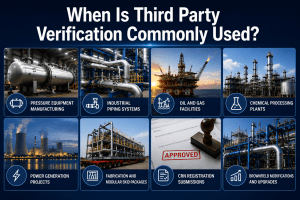 Many industries rely on Third Party Verification during design, fabrication, or regulatory approval stages.
Typical applications include:
- Pressure equipment manufacturing
- Industrial piping systems
- Oil and gas facilities
- Chemical processing plants
- Power generation projects
- Fabrication and modular skid packages
- CRN registration submissions
- Brownfield modifications and upgrades
Verification is particularly useful when projects involve multiple contractors, international suppliers, or complex code requirements.
What Does the Verification Process Include?
The exact scope depends on the project, but the process often includes several technical review steps.
Design Review
Engineering calculations, material specifications, and drawings are checked against applicable standards and project requirements.
Code Compliance Assessment
Reviewers assess whether the design aligns with recognized codes such as ASME standards or relevant jurisdictional requirements.
Documentation Verification
Technical documentation is reviewed for completeness, consistency, and traceability.
Comment Resolution
Any identified concerns are documented so corrections or clarifications can be addressed before project completion.
Third Party Verification in Canada and International Projects
Canadian industrial projects may involve additional regulatory considerations, particularly for pressure equipment and CRN-related applications. Some projects also require review or authentication by a licensed Professional Engineer depending on local regulations.
International manufacturers supplying equipment into Canada often benefit from third party engineering support because documentation expectations may differ from other jurisdictions.
Since local regulations apply, verification requirements should always be reviewed according to the installation location and project scope.
How MECS Supports Third Party Verification
MECS provides practical Third Party Verification services for industrial clients across Canada, the USA, and global markets.
Our engineering team supports projects involving:
- Pressure equipment review
- Piping and stress analysis verification
- CRN support documentation
- Structural engineering assessments
- Design calculation review
- Fabrication package verification
- Professional Engineer support where required
MECS works closely with manufacturers, EPC contractors, fabricators, and facility owners to help improve technical accuracy and project readiness.
Choosing the Right Verification Partner
Effective verification requires both technical expertise and practical industry experience. The review team should understand engineering standards, fabrication practices, and real project constraints.
Clear communication and organized reporting are also important to help project teams resolve issues efficiently.
Conclusion
Third Party Verification provides an important layer of technical review for industrial projects involving pressure equipment, piping systems, and engineering documentation. Independent assessment can help improve quality, support compliance, and reduce the risk of costly project delays.
MECS offers third party verification and engineering support services tailored to industrial projects in Canada, the USA, and international markets. Contact our team to discuss your project requirements and verification needs.
