
CRN Certification Checklist: Documents You Need Before Submitting
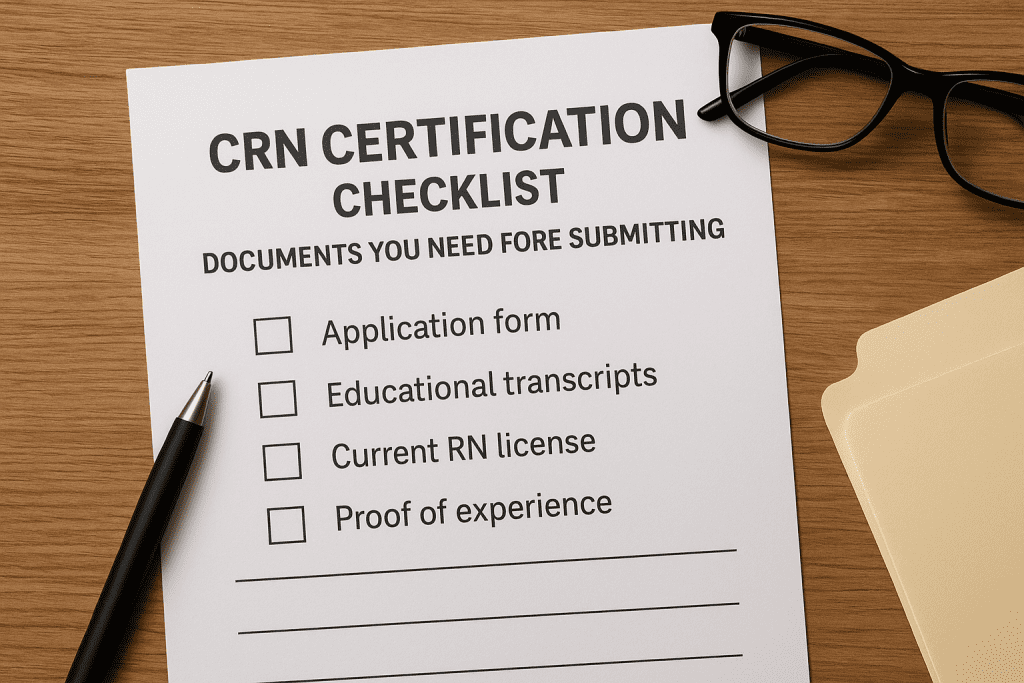
CRN Certification Checklist: Documents You Need Before Submitting Home / Learning For firms like MECS Engineering, which specialize in pressure equipment design review and compliance, submitting accurate and complete documentation is key to avoiding review delays or registration rejections. Our team helps clients navigate the CRN process efficiently from start to finish. Meaning of Canadian Registration Number A CRN is a unique identifier issued by a provincial or territorial safety authority that confirms that the design of pressure equipment (such as boilers, pressure vessels, and fittings) is compliant with Canadian safety codes. Without a valid CRN, equipment cannot legally be used or commissioned in most Canadian jurisdictions. For firms offering industrial engineering services, obtaining CRN registration is a technical and regulatory requirement—aligning your design documentation, calculations, and drawings with code requirements is non-negotiable.. Key Documents You Must Gather Before Submission To streamline your CRN certification, prepare the following essential items: Complete Design Drawings & Calculations: Signed and stamped by a licensed professional engineer. These must reflect the applicable codes (e.g., ASME, CSA) for the equipment. Scope of Registration / Product Catalogue: For fittings or repeat items, provide a list of products, sizes, and variables to be registered. Quality Program Certificate: A valid certificate showing the manufacturer’s quality management system, when required. It is a mandatory requirement for fittings. Statutory Declaration Form(s): Required for fitting categories; must be properly signed, dated, and notarized. Submission Form & Fee Payment: Complete required applications forms with correct information. If applying for Piping registration, make sure to provide PP number, if available. By organising these documents in advance, you’ll reduce back‐and‐forth and speed up approval. Important for Professional & Industrial Engineering Services As a provider of professional engineering services and industrial engineering services, MECS Engineering understands that failing to comply with CRN regulation can result in regulatory non-compliance, liability exposure or project delays. Ensuring your documentation is complete also reflects well on your engineering practice—demonstrating professionalism, technical competence and regulatory awareness. Final Tips Before You Submit Ensure your drawings and calculations reflect the correct design code and jurisdiction(s). Double-check that each required form is signed and dated appropriately. Use the official CRN Portal where applicable for electronic submission. Retain records of submission, receipt acknowledgement and follow up until registration is granted. If registering in multiple jurisdictions, note that fees and review criteria may vary. CONCLUSION Securing a CRN is not simply a bureaucratic step—it’s a benchmark that speaks to the quality of your design work and your commitment to safe operations. With MECS Engineering’s support, you can confidently navigate the CRN certification process and focus on delivering Professional industrial engineering services. Contact MECS Engineering to check whether your submission of documents is correctly submitted. And, if you are having any difficulty, we’re here for your support.
CRN Requirements by Province: ABSA, TSSA, BCSA, and Beyond Explained
CRN Requirements by Province: ABSA, TSSA, BCSA, and Beyond Explained Home / Learning In Canada, the design and operation of pressure vessels, fittings, and piping systems are governed by rigorous safety standards. One of the most critical compliance steps is obtaining a Canadian Registration Number (CRN). Because CRN requirements are managed independently by each province and territory, understanding the differences among authorities such as ABSA (Alberta Boilers Safety Association), TSSA (Technical Standards and Safety Authority), and BCSA (British Columbia Safety Authority) is essential for manufacturers, engineers, and equipment suppliers. This guide from MECS Engineering explains how CRN registration works across Canada—and how professional engineering support simplifies the process. What Is a Canadian Registration Number (CRN)? A Canadian Registration Number (CRN) is a unique number issued by a provincial or territorial pressure equipment safety authority to confirm that a pressure vessel, fitting, or piping design complies with the Canadian Standards Association (CSA) B51 standard and applicable ASME Codes (such as Section VIII for pressure vessels or B31.3/31.1/31.5 for piping). The CRN certifies that the design meets all safety, design, and material requirements, allowing it to be legally fabricated, installed, and operated in Canada. Because Canada’s safety system is jurisdiction-based, each province and territory has its own registration process and designated authority. CRN Requirements by Province While all jurisdictions follow the same fundamental CSA and ASME code principles, the documentation, process flow, and review practices vary by region. ABSA – Alberta Boilers Safety AssociationABSA regulates pressure equipment design and registration in Alberta. Requires detailed design calculations, drawings, and material specifications. Often requests proof of compliance through ASME design formulas, code calculations, or finite element analysis (FEA). Review and approval are mandatory before fabrication or importation into Alberta. TSSA – Technical Standards and Safety Authority (Ontario)TSSA oversees CRN registration in Ontario. Designs must be prepared or reviewed by a Professional Engineer (P.Eng.) licensed in Ontario. Requires a quality control program aligned with CSA B51. Reciprocal acceptance of CRNs from other provinces may apply, but only after TSSA review and confirmation. BCSA – British Columbia Safety Authority (now Technical Safety BC)BCSA manages pressure equipment design registrations in British Columbia. Uses the same CSA B51 and ASME codes as other provinces. Participates in reciprocal agreements with Alberta, Ontario, and Saskatchewan for faster recognition of existing CRNs. May still require administrative validation before local use. ACI Central / Atlantic ProvincesFor provinces such as Nova Scotia, New Brunswick, Newfoundland and Labrador, and Prince Edward Island, design registration is handled through ACI Central, which coordinates submissions for the Atlantic region. Accepts designs registered in other provinces but may request supporting documentation or proof of identical construction. Reciprocity Between Provinces Although reciprocal agreements exist under CSA B51 Annex F, each authority reserves the right to review and accept CRNs independently. This means a design approved in Alberta, for example, must still be submitted to Ontario or British Columbia for recognition before it can be used there. Manufacturers targeting multiple provinces should plan their CRN strategy early to minimize duplicate effort and timeline delays. Why Professional Engineering Support Matters CRN applications can be technically demanding, involving stress analysis, code compliance verification, documentation checks, and regulator communication. Errors or incomplete submissions can lead to costly delays. Professional engineering firms such as MECS Engineering provide end-to-end support—ensuring that every drawing, calculation, and report aligns with CSA and ASME requirements before submission. MECS Engineering’s licensed engineers specialize in: Pressure vessel and piping design review under ASME Section VIII and B31 codes Finite Element Analysis (FEA) for proof testing and code justification Material selection and compliance verification Preparation of CRN documentation packages for ABSA, TSSA, BCSA, ACI Central and any other provinces. With this expertise, clients can avoid rejections, streamline regulator communication, and achieve faster approvals across multiple jurisdictions. Simplify Your CRN Registration with MECS Engineering Whether your project involves a single pressure vessel or a complete multi-province rollout, MECS Engineering can manage the entire CRN approval process—from design verification to regulator coordination. Our engineers are licensed across Canada and some states of the United States, providing seamless support for both CRN and ASME-code compliance. Contact MECS Engineering to ensure your design meets every requirement—efficiently, accurately, and confidently
Finite Element Analysis (FEA) in Pressure Vessel Design: A Practical Guide
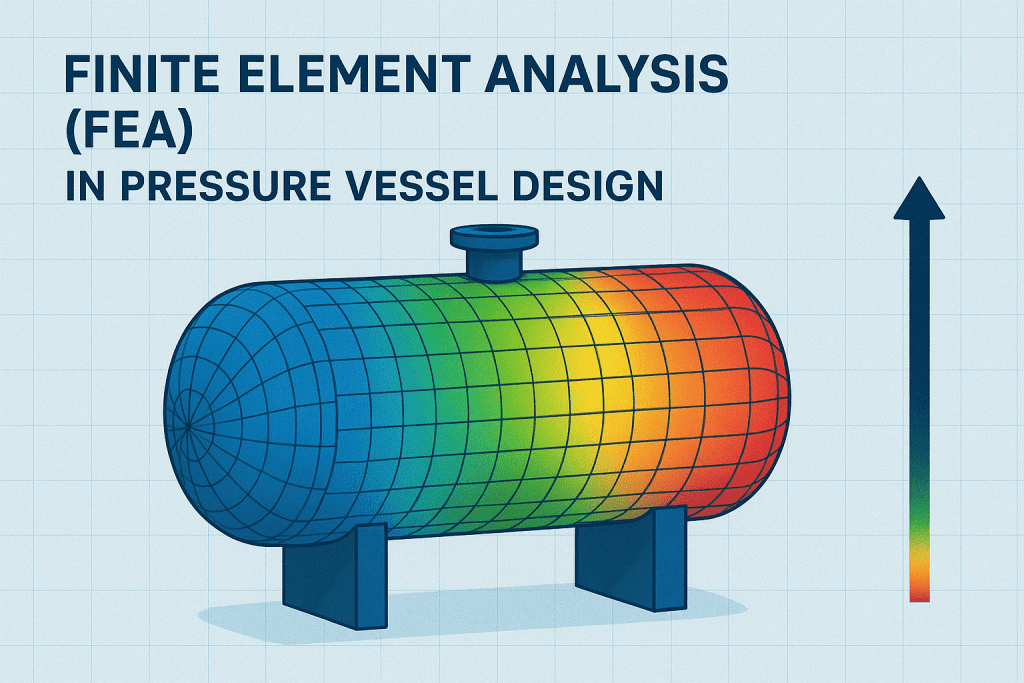
Finite Element Analysis (FEA) in Pressure Vessel Design: A Practical Guide Home / Learning In the field of mechanical and structural engineering, ensuring the safety and efficiency of pressure vessels is critical. These components operate under extreme conditions, where even a small design flaw can lead to catastrophic failure. This is where Finite Element Analysis (FEA) plays a crucial role. As part of Professional Engineering Services, FEA enables engineers to predict and prevent potential issues before manufacturing begins. 1. Understanding Finite Element Analysis (FEA) Finite Element Analysis (FEA) is a simulation-based method used to evaluate how a structure reacts to real-world forces such as pressure, heat, and vibration. By breaking down a complex pressure vessel into small, manageable elements, engineers can analyze stress distribution, deformation, and potential weak points with high precision. This analytical method allows Professional Engineering Services providers like MECS Engineering to deliver designs that meet stringent safety standards and comply with international codes, such as ASME and API. 2. The Role of FEA in Pressure Vessel Design Pressure vessels are exposed to internal and external loads that vary depending on the process they support. Using FEA, engineers can simulate these operating conditions digitally and assess how materials and geometries perform under stress. Key insights gained from FEA include: Stress concentration areas that may lead to fatigue or failure. Optimal thickness and material selection for the vessel wall. The effect of temperature and pressure variations on performance. Verification of design against code requirements. By identifying these factors early, Finite Element Analysis minimizes the need for physical prototypes, saving time and cost while enhancing design reliability. 3. Benefits of Using FEA in Engineering Projects Integrating FEA into Professional Engineering Services provides several advantages: Enhanced Safety: Detect potential weak spots before fabrication. Cost Efficiency: Reduce material waste and manufacturing errors. Improved Performance: Optimize design for durability and efficiency. Regulatory Compliance: Ensure designs meet ASME and industry codes. At MECS Engineering, FEA forms the backbone of every pressure vessel design, ensuring each project is not only efficient but also built to last. 4. Partnering with Experts in FEA and Pressure Vessel Design Choosing a trusted engineering partner is vital. MECS Engineering combines years of expertise with cutting-edge simulation tools to provide reliable, compliant, and cost-effective solutions. Whether you need detailed Finite Element Analysis or complete Professional Engineering Services, MECS Engineering ensures precision, performance, and peace of mind at every stage of your project.
When Do You Need a Piping Stress Analysis? Real-World Scenarios
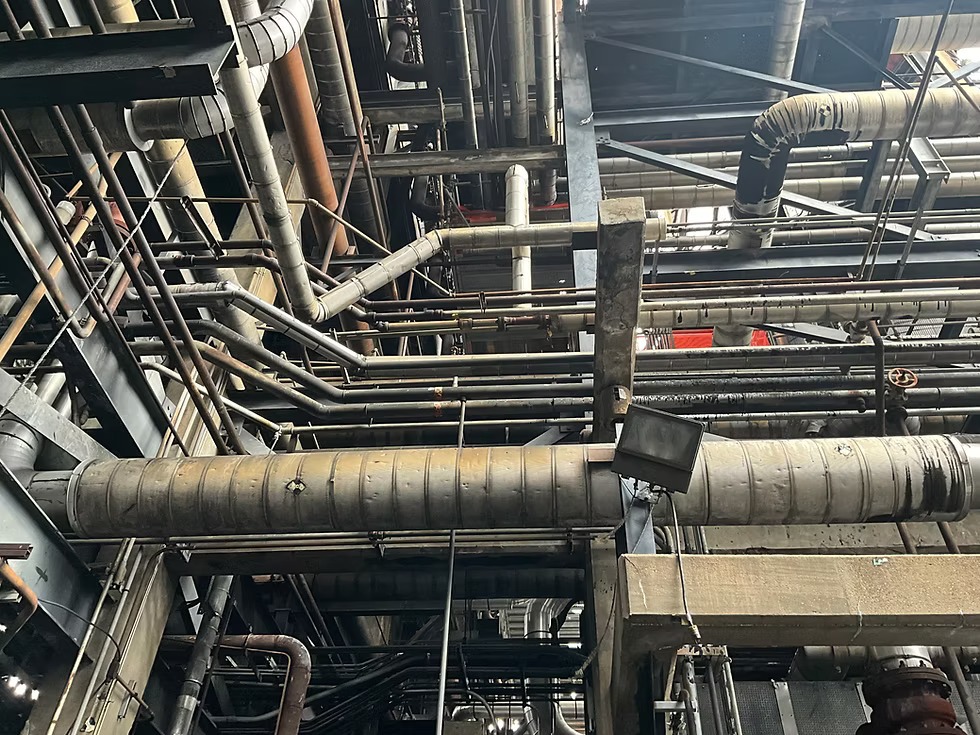
When Do You Need a Piping Stress Analysis? Real-World Scenarios Home / Learning In industrial systems, piping networks are more than just connectors between equipment—they’re critical infrastructure that must operate safely and efficiently under various mechanical and thermal conditions. One of the key tools to ensure this integrity is Piping Stress Analysis. At MECS Engineering, our team of Professional Engineering Consultants regularly performs stress analysis to support safe, compliant, and cost-effective designs. But when is this type of analysis necessary? Let’s explore real-world scenarios where Piping Stress Analysis becomes essential. 1. High-Temperature or High-Pressure Systems In industries such as oil and gas, chemical processing, or power generation, piping often carries fluids at extreme temperatures or pressures. These conditions can cause expansion, contraction, and stress concentrations that lead to fatigue or failure. Piping Stress Analysis helps predict how piping systems will behave under such extremes, ensuring proper supports, materials, and expansion loops are used to manage movement safely. 2. Connecting Rotating or Sensitive Equipment When piping is connected to pumps, compressors, turbines, or other sensitive machinery, excessive forces or misalignment can cause equipment failure or downtime. To avoid costly repairs or operational losses, stress analysis ensures that thermal growth or pipe loads do not exceed the allowable limits for connected equipment. 3. Code Compliance and Safety Regulations Australian and international standards such as ASME B31.3 or AS 4041 require stress analysis in certain design conditions to ensure safety and compliance. If your system falls under these categories, a Piping Stress Analysis is not optional—it’s mandatory. Our Professional Engineering Consultants at MECS Engineering ensure your designs meet these regulatory requirements, avoiding compliance issues during audits or inspections. 4. Pipe Routing Through Complex Structures Routing piping through tight or complex industrial layouts can lead to unintended stress points due to anchor placements or routing geometry. Stress analysis helps detect these hidden risks early in the design phase, allowing engineers to optimise support locations and prevent costly modifications later. 5. Expansion or Retrofit Projects Routing piping through tight or complex industrial layouts can lead to unintended stress points due to anchor placements or routing geometry. Stress analysis helps detect these hidden risks early in the design phase, allowing engineers to optimise support locations and prevent costly modifications later. Partner with Experts in Piping Analysis If you’re unsure whether your system needs Piping Stress Analysis, consult with the experts. At MECS Engineering, our Professional Engineering Consultants bring deep expertise in industrial engineering services, offering analysis and solutions that keep your plant running safely and efficiently.
Pressure Vessel Nozzle Reinforcement: What CRN Reviewers Look For
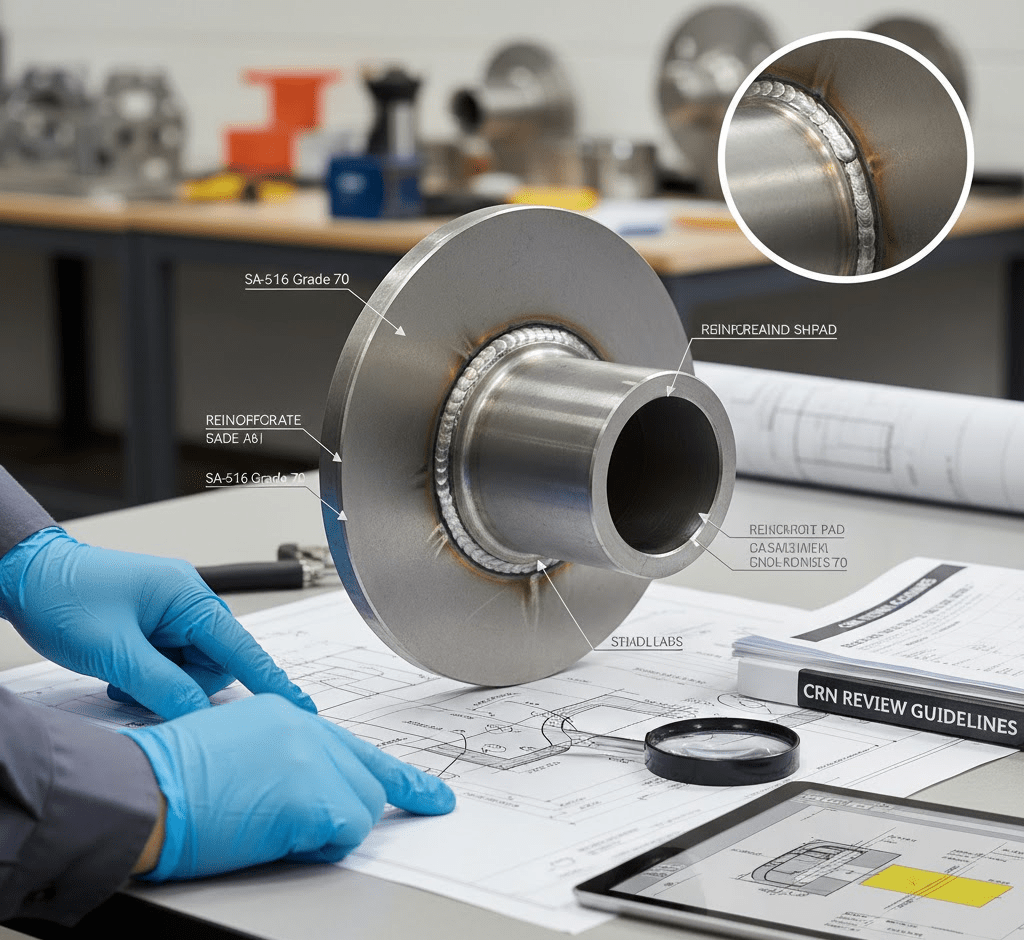
Pressure Vessel Nozzle Reinforcement: What CRN Reviewers Look For Home / Learning Nozzles may seem like minor components in the world of pressure vessel design, but they play a critical role in structural integrity and safe operation. When submitting designs for CRN (Canadian Registration Number) approval, reviewers pay particular attention to nozzle reinforcement — one of the most common areas that can lead to review comments or delays. Why Nozzle Reinforcement Matters? Nozzles are openings in a pressure vessel that allow the passage of fluids, gases, or inspection tools. These openings create localized stress concentrations, which can lead to fatigue, cracking, or even failure if not properly reinforced. That’s why CRN reviewers carefully check nozzle reinforcement calculations and details to ensure compliance with ASME Section VIII, Division 1 or 2, and to confirm that the vessel maintains adequate strength under design conditions. Key Areas CRN Reviewers Evaluate Adequacy of Reinforcement Area Reviewers verify that the nozzle reinforcement area — from weld buildup, reinforcing pads, or excess shell thickness — is sufficient to compensate for the material removed from the vessel wall. The reinforcement must satisfy the minimum requirements of ASME Section VIII. Compliance with Code Requirements All nozzle reinforcement calculations must align with applicable ASME code rules. Reviewers expect to see clear documentation that shows: – Correct use of material properties – Proper design pressures and allowable stresses – Accurate application of code equations and joint efficiencies Proper Detailing in Drawings Beyond calculations, CRN reviewers also look for well-detailed fabrication drawings. These should clearly show nozzle size, orientation, weld configuration, and reinforcement dimensions. Ambiguous or incomplete drawings often cause delays or resubmission requests. How MECS Engineering Supports the CRN Approval Process? At MECS Engineering, our team of Professional Engineering Services brings extensive experience in pressure vessel design and CRN registration. We: Perform detailed code-based reinforcement calculations Prepare complete, regulator-ready drawing packages Verify that all reinforcement requirements are met prior to submission. This proactive approach helps eliminate back-and-forth with provincial reviewers and reduces approval timelines. Experience You Can Trust With years of experience in ASME design and CRN submissions, MECS Engineering has earned a reputation for accuracy, compliance, and technical excellence. We help clients across industries achieve registration success — ensuring that every pressure vessel design meets safety standards without compromising efficiency or reliability.
ASME Section VIII Division 1 vs Division 2: Key Differences for Pressure Vessel Design
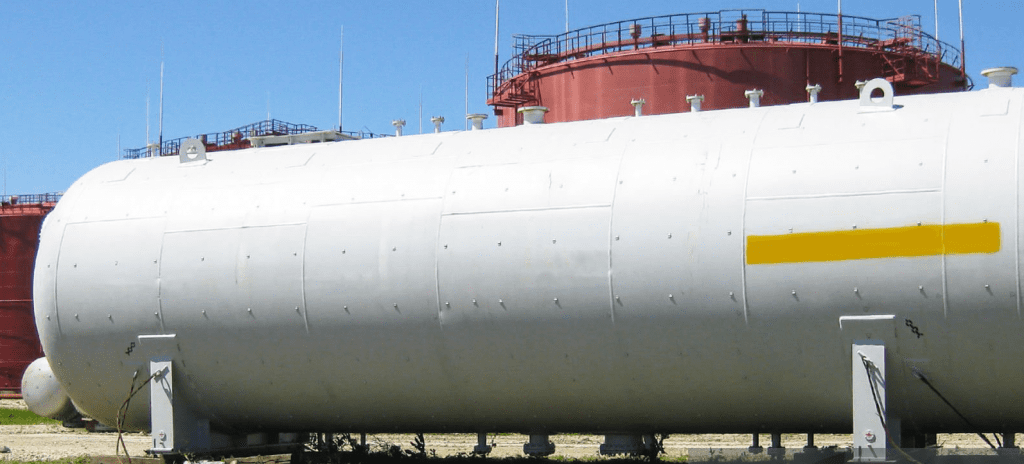
ASME Section VIII Division 1 vs Division 2: Key Differences for Pressure Vessel Design Home / Learning Designing pressure vessels is a critical aspect of industrial engineering. It requires a deep understanding of safety, efficiency, and compliance standards. The ASME Boiler and Pressure Vessel Code (BPVC) Section VIII governs the design and construction of pressure vessels, with Division 1 and Division 2. These are two most widely used standards. At MECS Engineering, our team of Professional Engineering Consultants helps industries navigate these complex codes to ensure safe and cost-effective pressure vessel design. Let’s break down the key differences between Division 1 and Division 2 to help you choose the right approach for your project. 1. Design Philosophy: Simplicity vs Efficiency Division 1 follows a design-by-rule approach. It uses conservative, standardized formulas and guidelines that are relatively straightforward and easy to apply. This division is ideal for most general-purpose vessels. Division 2, on the other hand, employs a design-by-analysis method, allowing for more efficient material use and thinner walls through detailed stress analysis. It’s commonly used for vessels operating at higher pressures or requiring compact designs. 2. Stress Allowances and Safety Factors One of the most significant differences lies in stress limits and safety factors. Division 1 uses a higher safety factor (typically 3.5), making it more conservative but often resulting in heavier, bulkier vessels. Division 2 allows for a lower safety factor (around 3.0) due to its rigorous analysis methods, which can reduce material costs and overall weight. For companies seeking optimization, Division 2 often delivers better long-term value. 3. Fabrication and Inspection Requirements Division 1 offers more flexibility in fabrication methods and typically involves standard inspections and non-destructive testing (NDT). Division 2 requires stricter quality control, more comprehensive documentation, and advanced NDT techniques due to its more complex designs. This makes Division 2 better suited for critical applications in industries like oil & gas, chemicals, and power generation. 4. Application and Cost Considerations While Division 1 is ideal for simple applications with moderate pressure requirements, Division 2 is preferred for high-pressure systems or when material and space savings are crucial. However, the engineering and analysis involved in Division 2 may result in higher upfront costs. At MECS Engineering, our industrial engineering services include evaluating your project’s needs and guiding you toward the most appropriate design code. CONCLUSION Choosing between ASME Division 1 and Division 2 depends on your project’s complexity, budget, and performance requirements. Our experienced Professional Engineering Consultants at MECS Engineering can help you make informed decisions, ensuring both compliance and efficiency.
Top 7 Reasons CRN Applications Get Rejected or delayed — and How to Avoid Them
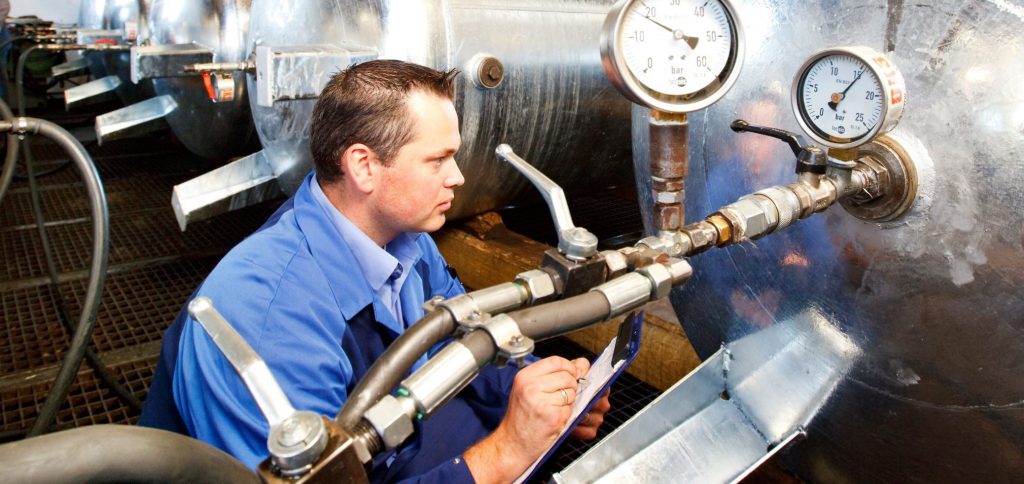
Top 7 Reasons CRN Applications Get Rejected or delayed — and How to Avoid Them Home / Learning If you’re involved in designing or manufacturing pressure equipment in Canada, obtaining a Canadian Registration Number (CRN) is a legal requirement under the provincial safety authorities. However, many applications face delays or rejections due to issues that are completely avoidable. At MECS Engineering, our team of Professional Engineers has helped clients successfully navigate the CRN approval process across multiple provinces.In this article, we outline the seven most common reasons CRN applications get rejected or delayed — and how to avoid them. 1. Incomplete or Inaccurate Documentation One of the most frequent reasons for rejection is missing or incorrect documentation — such as incomplete forms, missing specifications, or inconsistent calculations. 💡 Tip: Always double-check your submission. Use a checklist to ensure that all documents, calculations, and forms are complete and accurate. MECS Engineering’s team can help review your package to ensure it meets provincial requirements. 2. Non-Compliance with ASME or CSA Standards CRN reviewers immediately reject designs that don’t comply with recognized standards such as ASME Section VIII, ASME B31, or CSA B51. 💡 Tip: Ensure your design adheres to the applicable Canadian codes and standards. If you’re unsure, consult experienced CRN professionals like MECS Engineering for code verification and compliance review. 3. Poor Quality or Unclear Drawings Low-resolution, cluttered, or disorganized drawings make it difficult for reviewers to assess your design — and often result in rejection or delays. 💡 Tip: Submit clean, properly labelled engineering drawings that clearly show all relevant details. MECS Engineering provides required support to ensure submissions are professional and reviewer-friendly. 4. Missing or Incomplete Design Calculations Design calculations are the backbone of any pressure equipment submission. Missing or inconsistent data (e.g., stress, thickness, or pressure ratings) raises immediate red flags for reviewers. 💡 Tip: Always include complete and traceable calculations demonstrating that the design is structurally sound and code-compliant. There are alternates to calculations if performing the code calculations is not straight forward e.g. performing Pressure Burst test. Our engineers can guide how to meet these requirements. 5. Use of Unregistered or Non-Listed Materials If your equipment uses materials not recognized by the regulatory authority or not listed in accepted codes, your CRN application will be stopped. 💡 Tip: Use materials listed in ASME Section II or other accepted standards. If an unlisted material must be used, MECS Engineering can help guide how to obtain material acceptance or alternate material approval early in the process. 6. Not Accounting for Provincial Differences Each Canadian province and territory has its own boiler and pressure vessel authority and unique CRN submission requirements. A design accepted in one province may require additional information before being accepted in another. 💡 Tip: Work with Professional Engineers familiar with interprovincial differences to ensure your submission is correct and valid across all desired jurisdictions. 7. Limited Experience with the CRN Process Navigating the CRN process without prior experience can lead to incomplete submissions, errors, and long delays. 💡 Tip: Partner with an experienced engineering firm like MECS Engineering. Our team ensures every submission is accurate, complete, and compliant — minimizing review cycles and helping you get approval faster. CONCLUSION Avoiding CRN rejection starts with understanding the process, meeting code requirements, and submitting complete documentation. With MECS Engineering by your side, you gain access to a proven team of Professional Engineers who make CRN registration faster, easier, and stress-free. 📩 Ready to get started? Contact us today to discuss your pressure equipment design and CRN submission needs.
Step-by-Step Guide to Getting a Canadian Registration Number (CRN) for Pressure Vessels

Step-by-Step Guide to Getting a Canadian Registration Number (CRN) for Pressure Vessels Home / Learning A Canadian Registration Number (CRN) is the jurisdictional registration assigned to pressure equipment such as pressure vessels, boilers, certain fittings, and piping systems under CSA B51 and applicable provincial regulations. Registration is handled by a regulatory body in each province/territory, and equipment must be registered where it is to be installed/operated. This guide from MECS Engineering explains the process so you can stay compliant and avoid costly delays. What is a CRN and who needs it? A CRN is a unique identifier issued by the provincial/territorial authority having jurisdiction (AHJ) (e.g., ABSA in Alberta, TSSA in Ontario, BCSA in British Columbia). It confirms the design has been reviewed for compliance with CSA B51 and relevant ASME Codes (e.g., ASME Section VIII for vessels, ASME B31.1/31.3 for Piping). Without a valid CRN in the relevant jurisdiction(s), pressure equipment generally cannot be legally installed or operated. Step 1: Speak with a Professional Engineer (early) Engage a qualified Professional Engineer (P.Eng.) like the team at MECS Engineering early to confirm: Whether your equipment requires CRN (vessel vs. fitting vs. piping). Applicable codes and standards (ASME, CSA B51). If applying for national registration the best initial jurisdiction and expected timelines. Any special forms (e.g., statutory declarations) and stamping requirements. Step 2: Prepare a complete submission package Typical documentation includes: Design drawings (general arrangement, details, nameplate data) Engineering calculations (per applicable ASME/CSA) Material specifications and WPS/PQR as applicable Quality system evidence (e.g., ISO/QA certificates) Scope of registration (sizes, ratings, models) for generic designs Completed forms required by the authority (e.g., statutory declaration) P.Eng. stamp, where required Our industrial engineering services ensure that every document is clear, accurate, and fully compliant with relevant codes. Tip: Clear, consistent drawings and calcs reduce RFIs and shorten review time. Step 3: Submit to the jurisdictional Authority Submit to the regulatory body of the province/territory (e.g., Alberta – ABSA, Ontario -TSSA, BC – BCSA). The AHJ reviews for code compliance and may issue comments or RFIs. If you plan to install across Canada, you can use reciprocal (national) registration after the initial CRN. Additional provinces/territories still need to process and issue their own registrations. There is a process in place where the initial regulatory body can submit to other provinces/territories on your behalf. Step 4: Respond promptly to review comments Authorities often request clarifications, additional calculations, or minor drawing updates. MECS coordinates responses quickly to keep your schedule on track. Step 5: Receive your CRN and mark the equipment Upon approval, you receive the Canadian Registration Number (CRN). Mark the equipment and maintain records for audits/inspections. If pursuing reciprocal registration, proceed with the remaining provinces/territories. Timelines (typical, not guaranteed) Engineering review & initial submission (by MECS): ~2–3 weeks after PO, advance payment, and complete inputs. Initial jurisdiction approval: commonly 6–10 weeks, depending on AHJ workload and RFIs. Reciprocal registrations: often 12–16 additional weeks. How MECS Engineering helps Code pathway & scope: Determine if you need CRN (vessel vs. fitting vs. piping). Complete package prep: Drawings, calculations, and forms aligned to ASME and CSA B51. Submission & liaison: We manage AHJ communications and track comments to closure. National registration: Strategy for efficient multi-jurisdiction coverage. Note: Regulators make the final decision. MECS cannot guarantee approvals, but we minimize rework and delays. FAQs Do piping systems need CRN?It depends on the province and specific scope. Piping may be registered differently (e.g., there are exemptions depending on the authority having jurisdiction (AHJ). We will advise based on CSA B51 and local rules. What if I have a generic design (multiple sizes/ratings)?You’ll define a scope of registration (an envelope). Job-specific drawings/calcs must still fall within that envelope and match each other for stamping/verification. Do I need a Canadian P.Eng. stamp?Many authorities require P.Eng. review and stamping on drawings/calculations and statutory forms. Requirements vary by jurisdiction. Can I install the vessel with only one province’s CRN?You must register in each province/territory where the equipment will be installed/operated. Initial CRN facilitates reciprocity but does not automatically grant nationwide approval. Talk to MECS Need help scoping your CRN submission or planning national registration?Contact MECS Engineering for a quick assessment and timeline.
Thermal Expansion in Piping Systems: Design Mistakes to Avoid
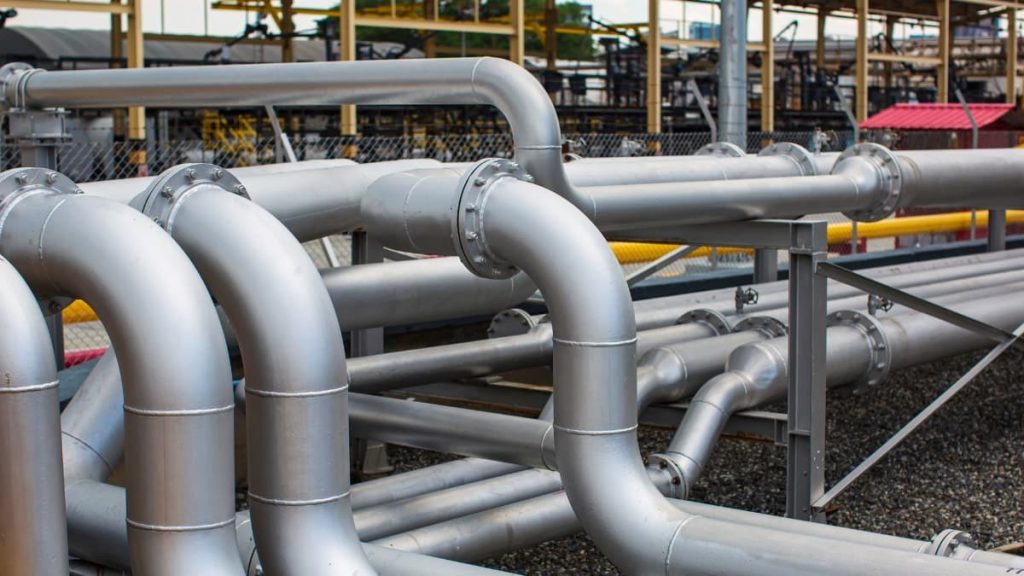
Thermal Expansion in Piping Systems: Design Mistakes to Avoid Home / Learning Thermal expansion is a critical factor in the design and performance of any piping system. Pipelines carry high-temperature fluids, naturally expand and contract. If the expansion and contraction of the pipes (caused by changes in temperature) are not considered during the design of the system, it can cause major problems— – Cracks in the pipes – Leaks at the joints (connections) – Or even the entire piping system failing to work properly. At MECS Engineering, our team of Professional Engineering Consultants helps industries prevent these issues through expert planning and Piping Stress Analysis. In today’s blog, we’ll see the most common design mistakes and their solutions. Mistake 1: Ignoring Thermal Movement in the Design Phase One of the biggest errors in piping system design is failing to allow for thermal expansion. Pipes need space to expand and move. If the design doesn’t allow pipes to safely handle temperature changes, the pressure inside them will grow and cause damage later on. Solution: Use detailed Piping Stress Analysis early in the design phase. Calculate expected expansion and plan accordingly. Mistake 2: Incorrect Placement of Expansion Joints Expansion joints are special parts added to a piping system to handle movement caused by temperature changes (like expansion or contraction). Poor positioning or misalignment may cause stress. And, shift to the other parts of the system. Solution: Engage Professional Engineering Consultants to accurately plan expansion joint placement based on pipe layout, temperature range, and support structures. Mistake 3: Using Rigid Supports for Expanding Pipes Rigid anchors and supports can restrict pipe movement. When thermal expansion is forced against these hard stops, it results in stress points that lead to cracks or leaks. Solution: Use a combination of smart supports that let the pipes move a little when needed. Keep everything strong and in-place. Mistake 4: Overlook Operational Changes Some engineers design based only on the initial operating conditions. They do not consider future temperature changes or equipment upgrades. Solution: Choose an experienced provider of Industrial Engineering Services like MECS Engineering to build flexibility into your system for future-proof performance. CONCLUSION Thermal Expansion is unavoidable. But we can plan for it so that it doesn’t cause any damage. By investing in expert Piping Stress Analysis and working with qualified Professional Engineering Consultants, you can reduce costly repairs. You can also ensure system longevity. At MECS Engineering, we offer advanced Industrial Engineering Services tailored to complex piping systems across industries. Visit us today for smart & stress-free solutions.
Understanding P.Eng. and P.E. Stamping and Certification: A Complete Guide
Understanding P.Eng. and P.E. Stamping and Certification: A Complete Guide Home / Learning You might wonder why some engineering plans feature a P.Eng. stamp and others do not. If you work in the world of piping engineering, knowing about P.Eng. stamping and P.E. certification isn’t just a box to tick—it can be the difference between a successfully operated project and one that ends up in costly delays. I recall in the early stages of my career, I was working on a piping project and the stamped designs actually saved the day during a regulatory audit. That’s the practical application of this certification, and here’s all you need to know about it. What Is P.Eng. and P.E. Certification? Simply put, P.Eng. (Professional Engineer) in Canada and P.E. (Professional Engineer) in the U.S. are official designations that show an engineer has the education, experience, and ethical grounding to take legal responsibility for their work. Here’s why this matters: Legal Accountability: Only licensed engineers can approve designs that meet safety and regulatory standards. Professional Credibility: Having the certification shows you’re trusted to make engineering decisions that others rely on. Career Development: Licenced engineers are often needed for many senior or consulting positions. For example, a piping engineering firm that is creating complex chemical pipelines can’t legally present their schematics to a client without a stamped signature from a licenced engineer. P.Eng. Stamping Explained Consider P.Eng. stamping as more than a signature—it’s a professional seal of approval. The engineer is stating: “I’ve personally gone through this, it complies with all codes and safety regulations, and I stand behind it.” When Do You Need a P.Eng. Stamp? Engineering Drawings: Close layouts of pipelines, pressure systems, or chemical procedures. Project Approvals: Necessary for submission to regulating bodies or customers. System Modifications: Any modifications with an impact on safety or operation integrity. Here’s a bit of insider information: Not all drawings require a stamp. Junior engineers or drafters often make up the initial drawings, but the licensed engineer inspects and stamps the final drawings. This system provides learning experience as well as compliance for safety. How to Obtain P.Eng. or P.E. Certification? The process is organized but within reach with perseverance. It typically includes: Accredited Education: A degree in engineering accepted by licensing authorities. Professional Experience: Usually 3–5 years under supervision of a licensed engineer. Professional Practice Exam: Examines ethics, law, and technical judgment. Application & References: Providing reports with endorsements from supervisors or licensed engineers. From my own experience, having a formal mentorship program in a piping engineering company can accelerate this process dramatically. Being able to see how senior engineers critique designs is priceless. Selecting the Correct Piping Engineering Company Asking the correct piping engineering company on board can make or break your project. Here’s why: Licensed Experts: Make sure P.Eng. or P.E. engineers are part of the team. Relevant Experience: They must have experience in your industry, be it oil & gas, chemical, or power. Proven Track Record: Look at previous projects and client reviews. Compliance Focus: Ethical practice and conformity to standards are non-negotiable. Quick Checklist Ensure licensing of senior staff Ask for stamped sample drawings Check experience with high-pressure piping systems Common Misconceptions About P.Eng. Stamping “It’s just a signature.” Not true—it’s a legal and ethical obligation. “All engineers can stamp designs.” Only licensed ones can. “It’s optional for small projects.” Regulations differ, but regulatory control usually mandates it. Advantages of Hiring Licensed Piping Engineers Safety First: Systems are structured to reduce dangers. Regulatory Compliance: Stay clear of fines or delays. Professional Accountability: Engineers adhere to professional and technical standards. Efficiency: Seasoned teams anticipate problems, keeping expensive revisions low. I’ve seen projects where a single stamped review caught a design flaw that could have caused months of rework. That’s why having licensed engineers on your team isn’t just formal—it’s practical. Tips for Aspiring Piping Engineers Document Your Work: Keep detailed notes on projects and responsibilities. Seek Mentorship: Shadow licensed engineers whenever possible. Stay Updated: Codes and regulations change; continuous learning is key. Volunteer for Challenging Tasks: Exposure to real problems accelerates your experience. Conclusion You need to know about P.Eng. stamping and P.E. certification if you work in piping engineering. It’s all about safety, responsibility, and professional credibility. Whether you’re a future engineer or selecting a piping engineering firm, you need to know these standards for easier, safer, and more professional projects. If you need your next project done perfectly, begin by working with certified experts—and continue learning.
