
Third Party Verification and P.Eng./P.E. Professional Sealing: Ensuring Compliance and Quality

Third Party Verification and P.Eng./P.E. Professional Sealing: Ensuring Compliance and Quality Engineering projects succeed when designs are technically sound, safely executed, and aligned with the requirements of the authority having jurisdiction. In many industrial and commercial applications, an independent engineering review (often called third party verification) and P.Eng./P.E. professional sealing of documents provide confidence that critical technical decisions have been checked and that accountability is clear. What third party verification means in practice Third party verification is an independent review performed by an engineering professional or engineering firm that is not the original designer. The purpose is to confirm that the design intent, calculations, drawings, and assumptions are consistent with the applicable codes, standards, and project requirements. Depending on the project, third party verification may include: design review of mechanical or structural systems review of pressure equipment documentation for registration readiness piping stress analysis review for code compliance and support load checks confirmation that drawings and calculations are consistent (for example, design pressure, corrosion allowance, MDMT, materials, joint efficiencies, and load cases) constructability and “field risk” checks where small drawing gaps can become major site issues Independent review is especially valuable when: schedules are tight and rework is expensive equipment will be operated in regulated service multiple parties contribute to the design package (fabricator, EPC, client, and specialist vendors) the project will be submitted to provincial regulators Understanding P.Eng. professional sealing P.Eng. professional sealing (stamp and signature) indicates that a licensed Professional Engineer has taken responsibility for the engineering work within the sealed documents, consistent with their scope of review and professional obligations. It is not merely an administrative step. It is an accountability mechanism tied to public safety, engineering practice standards, and the engineer’s duty to perform work with appropriate competence and diligence. Professional sealing is commonly required or expected for documents used for: regulatory submissions permitting and authority review construction and installation owner records and operational control Because regulatory expectations can differ by jurisdiction, professional sealing should be applied with an understanding of the local submission pathway and how the authority evaluates the package. Jurisdictional expectations and CRN-related design review For pressure equipment and related systems, requirements often depend on where the equipment will be installed and how it is classified. In Canada, provincial regulators such as ABSA (Alberta) and TSSA (Ontario) may require registration, supporting calculations, and documentation that meets specific provincial expectations. For CRN-related submissions, third party verification often focuses on practical registration readiness, for example: confirming the design basis and code of construction are consistent across drawings, calculations, and datasheets checking that design pressure, temperature, corrosion allowance, materials, and MDMT are consistent and properly justified reviewing nozzle loads, support details, and applicable load cases ensuring the submission package includes the right documents, forms, and traceability CRN-related piping stress reviewsMany projects include pressure equipment along with pressure piping that requires stress evaluation under codes such as ASME B31.3 (as applicable to the system). A piping stress review commonly addresses: thermal expansion and restraint loads at equipment nozzles sustained, occasional, and displacement stress compliance support selection, guide/stop placement, and load paths to structure special cases such as steam systems, vibration risk, and transient events (as applicable) When done early, this prevents late-stage redesign, nozzle load exceedances, and regulator questions that can delay approvals. Why combine independent verification with professional sealing Independent verification and professional sealing together reduce risk in different but complementary ways: better technical confidence: a qualified reviewer can identify errors, missing cases, or inconsistent assumptions before fabrication or installation fewer compliance surprises: documents can be aligned with jurisdictional expectations before submission clearer accountability: sealing documents establishes professional responsibility for the work within the sealed scope stronger project outcomes: fewer RFIs, fewer site changes, and fewer schedule impacts from rework How MECS Engineering supports clients MECS Engineering supports industrial clients with independent engineering review and professional sealing for submissions and project documentation, including pressure equipment and piping-related deliverables. Our team regularly interfaces with provincial regulators such as ABSA and TSSA and helps clients prepare packages that are technically complete, consistent, and ready for review. Typical support includes: third party design verification and gap review of drawings and calculations CRN submission readiness checks and documentation coordination piping stress analysis and review support to address code compliance and equipment interface loads clear comment packages that identify what must change for compliance versus what is optional for design optimization Choosing the right engineering partner When selecting a firm for third party verification and professional sealing, look for: demonstrated experience with the relevant codes and the specific equipment type familiarity with jurisdictional expectations and regulator review patterns disciplined review methods that focus on safety, compliance, and constructible deliverables clear scope definition that matches what will be sealed and submitted Conclusion Third party verification and P.Eng. professional sealing help organizations deliver safer and more compliant engineering outcomes. Independent review reduces errors and rework, while sealing provides professional accountability for the engineering work within the sealed documents. With the right approach and the right partner, projects move through authority review more smoothly and reach operation with higher confidence.
Professional Engineering Services for Regulated Industrial Projects

Professional Engineering Services for Regulated Industrial Projects In today’s regulated industrial environment, engineering decisions directly affect safety, operability, cost, and regulatory approval. Professional engineering consultants play a critical role in bridging design intent, real-world operating conditions, and jurisdictional compliance. Their involvement is not optional for most industrial projects; it is fundamental to avoiding costly redesigns, schedule delays, and regulatory rework. Why Professional Engineering Consultants Matter Industrial projects increasingly involve pressure equipment, piping systems, rotating machinery, structural supports, and complex interfaces between disciplines. Each of these elements is governed by applicable codes, standards, and provincial or state regulations. Professional engineering consultants provide the technical authority and accountability required to ensure that systems are designed, reviewed, and executed correctly. Engaging licensed professional engineers reduces risk at multiple levels. From verifying design assumptions and load cases to confirming code compliance and documenting engineering judgment, consultants help owners and EPCs avoid failures that can lead to shutdowns, rejected submissions, or safety incidents. Regulatory expectations are not uniform. Requirements vary by jurisdiction, application, and equipment type. Consultants with direct experience working with authorities having jurisdiction understand how regulators review submissions and where common deficiencies occur. This practical regulatory insight is often as important as technical design capability. Core Industrial Engineering Services Professional industrial engineering services extend beyond conceptual advice. In practice, they involve detailed technical work, formal verification, and regulator-ready documentation. Typical services include: Process and system design support, including review of operating conditions, design bases, and interface requirements across disciplines. Equipment and system engineering, such as pressure vessels, heat exchangers, piping systems, skids, and associated structural supports, designed and reviewed to applicable ASME, CSA, and other governing codes. Piping stress and flexibility analysis to evaluate thermal expansion, sustained loads, occasional loads, nozzle loads, and support design, often required for both operational reliability and regulatory acceptance. Safety and compliance reviews, including identification of code gaps, verification of allowable stresses, material selection, corrosion allowances, and minimum design metal temperatures. Regulatory support and submissions, including preparation and review of documentation required for Canadian Registration Numbers (CRN), coordination with regulators, and technical responses to review comments. These services are not theoretical. They are executed with the expectation that the work will withstand regulatory scrutiny and professional liability obligations. How MECS Engineering Supports Industrial Projects MECS Engineering provides professional engineering consulting services focused on regulated industrial equipment and systems. The firm works extensively with pressure vessels, pressure piping, skids, and integrated industrial packages for clients across the world especially Canada and the United States. MECS engineers routinely support projects requiring compliance with ASME Section VIII, ASME B31 piping codes, CSA B51, and provincial regulatory requirements. The team has direct experience coordinating with regulators such as ABSA and TSSA and understands the practical expectations behind formal code clauses and application forms. For example, when supporting new equipment installations or retrofits, MECS scope typically includes engineering review of drawings and calculations, verification of design assumptions, confirmation of applicable code scope, and preparation of submission packages suitable for regulator review. This approach helps clients avoid delays caused by incomplete or misaligned submissions. MECS also supports EPCs and owners during regulator review cycles, addressing technical comments, clarifying design intent, and revising documentation as required to achieve approval efficiently. Choosing the Right Professional Engineering Services Provider Selecting a professional engineering services provider should be based on more than general experience. Owners and EPCs should assess licensing, jurisdictional familiarity, depth of regulatory experience, and the consultant’s ability to take responsibility for engineering decisions. A firm with demonstrated experience in regulated industrial projects brings practical value beyond calculations. That value lies in understanding how designs are reviewed, where regulators focus, and how to structure engineering work so that approvals are achieved without unnecessary iteration. Conclusion Professional engineering consulting is not simply a support function. It is a strategic component of successful industrial project execution. Reliable engineering services protect safety, ensure compliance, and reduce long-term operational and regulatory risk. MECS Engineering exemplifies this approach by combining technical depth with hands-on regulatory experience. By engaging professional engineering consultants who understand both engineering fundamentals and jurisdictional expectations, industrial clients can execute projects with confidence, efficiency, and accountability.
Essential Guide to Piping Stress Analysis and Piping Flexibility
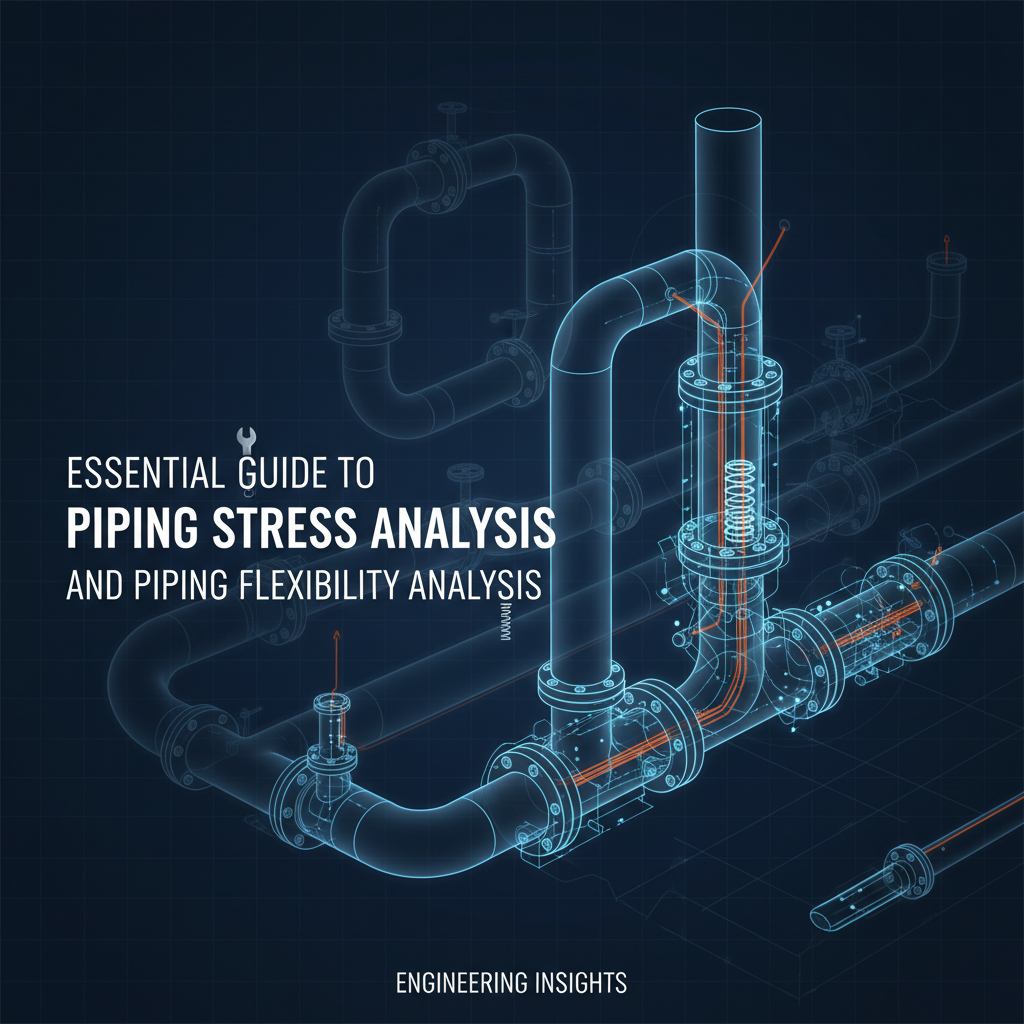
Essential Guide to Piping Stress Analysis and Piping Flexibility Industrial piping systems are subjected to pressure, temperature changes, weight, and external loads throughout their operating life. If these effects are not properly evaluated during design, the result can be excessive stresses, equipment damage, leaks, or premature failure. This is why piping stress analysis, including flexibility evaluation, is a critical part of safe and compliant piping system design. Understanding piping stress analysis Piping stress analysis is an engineering evaluation of how a piping system behaves under various loading conditions. These loads typically include internal pressure, pipe weight, fluid weight, thermal expansion, wind, seismic effects, and occasional loads such as relief valve discharge or slug flow. The objective is not only to check pipe stresses against allowable limits defined by applicable design codes, but also to verify that loads transmitted to connected equipment, supports, and structures remain within acceptable limits. Stress analysis is commonly required for: High-temperature systems Large-diameter or long pipe runs Systems connected to sensitive equipment such as pumps, compressors, turbines, and pressure vessels Why piping stress analysis is critical Failure to perform proper stress analysis can lead to: Excessive nozzle loads on equipment, resulting in misalignment or mechanical failure Cracked welds or flange leaks caused by thermal expansion Support failures or unexpected load transfer to structures From both safety and cost perspectives, identifying these issues during design is far more effective than correcting them after installation. Stress versus flexibility: clarifying the relationship Flexibility is not a separate analysis performed in isolation. It is an integral part of piping stress analysis. Piping flexibility evaluation focuses on whether a piping system can absorb thermal expansion and contraction without generating excessive stress or unacceptable equipment loads. This is achieved through routing, layout geometry, expansion loops, offsets, and appropriate support selection. A piping system may meet allowable stress limits but still be unacceptable if it imposes excessive loads on equipment nozzles or supports. Conversely, a flexible system with poor support design may experience vibration or fatigue issues. A proper stress analysis addresses both aspects together. Thermal expansion and movement Thermal expansion is one of the most significant drivers of piping stress. Even relatively short pipe runs can generate large forces when restrained. Stress analysis evaluates: Expansion stress ranges Anchor and restraint forces Displacements at key locations Effects of operating, startup, shutdown, and upset conditions Accounting for thermal movement early in the design stage helps avoid late-stage layout changes, additional supports, or expansion joints. Supports and restraint design Pipe supports are a critical part of the stress analysis model. Their type, location, and stiffness directly affect system behavior. Common considerations include: Rigid supports versus spring supports Vertical load distribution Line stops, guides, and anchors Cold versus operating loads Allowable loads on structures and foundations Improper support design is one of the most frequent causes of piping stress issues identified during review. Role of software and engineering judgement Specialized software such as CAESAR II is widely used to perform piping stress analysis. These tools allow engineers to model complex systems and evaluate multiple load cases efficiently. However, software alone does not ensure a correct design. Engineering judgement is required to: Define realistic boundary conditions Select appropriate load combinations Evaluate support behaviour Interpret results in line with code intent and project requirements Manual checks and independent verification remain an important part of good engineering practice. Practical best practices Integrate stress analysis early in layout and routing development Coordinate closely with piping designers, structural engineers, and equipment vendors Verify nozzle loads against vendor or code limits Review stress results together with support loads and displacements Revisit the analysis whenever significant design changes occur Frequently asked questions Why is piping stress analysis required by regulators and clients?Because it demonstrates that the piping system meets code requirements and will operate safely without overstressing pipes, equipment, or supports. Is flexibility analysis always required?Flexibility evaluation is required whenever thermal expansion or movement could cause excessive stress or loads. In practice, this applies to most industrial piping systems. When should stress analysis be updated?Whenever there are major routing changes, temperature or pressure changes, support modifications, or equipment changes. Conclusion Piping stress analysis, including flexibility evaluation, is essential for safe, reliable, and compliant piping systems. It reduces failure risk, protects connected equipment, and prevents costly modifications during construction and operation. For projects involving regulatory review or equipment registration interfaces, producing a clear and defensible package is as important as the calculations themselves. MECS Engineering supports clients with both the technical analysis and the documentation quality needed to reduce approval risk and keep projects moving.
What Is a CRN Number and Why It Matters for Safety in Canada
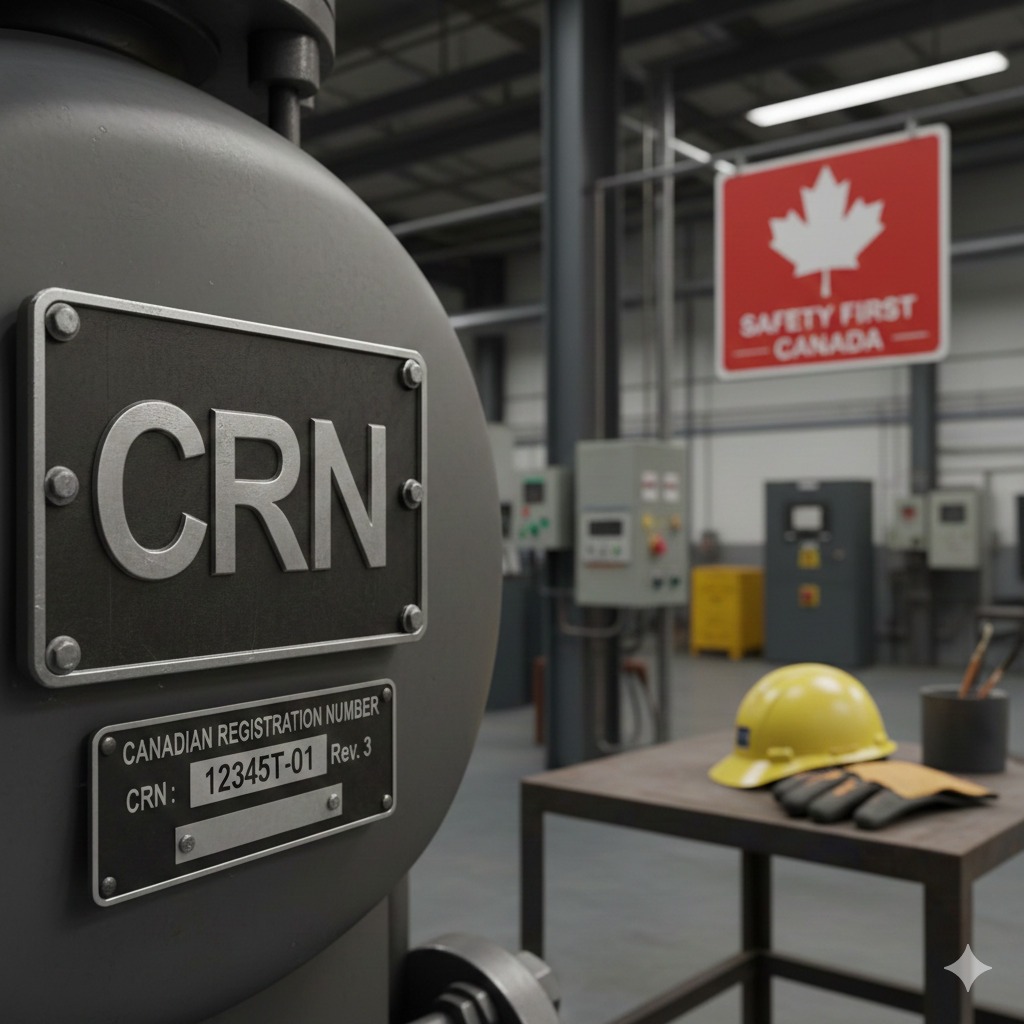
What Is a CRN Number and Why It Matters for Safety in Canada Small details on industrial equipment can sometimes feel like a puzzle, one of the most important being the CRN Number. This number is essential for ensuring safety and compliance for pressure equipment in Canada. But what exactly does it represent, and why is it so important? What Exactly is a CRN Number? The CRN, or Canadian Registration Number, is a unique identifier assigned to pressure vessels, fittings, and related equipment in Canada. It acts as the “ID” for equipment that must comply with provincial and national safety standards. Without a CRN, equipment cannot legally be installed or operated in Canada. The Importance of CRN in Operations Each Canadian province has its own registration and compliance requirements. The CRN ensures that equipment meets the relevant standards in the province where it will be used. This protects personnel, maintains safe operations, and ensures compliance with environmental and safety regulations. For engineers and operators, a valid CRN is not just a legal requirement, it’s a critical safety measure. How the CRN System Works A CRN links a specific piece of equipment to a province and confirms that the design meets the applicable codes. Each number contains information about the equipment type, the registration region, and other technical details. This system ensures that equipment is reviewed and approved before it is put into service, minimizing operational and safety risks. The Process of Obtaining a CRN Number Obtaining a CRN involves several key steps: Design Review – Submit equipment designs to an Authorized Inspection Agency (AIA) for evaluation against applicable codes. Provincial Submission – The designs are then submitted to the provincial regulator for approval. Processing times can vary by province. CRN Issuance – After approval, the CRN is issued, confirming that the equipment meets all necessary safety and regulatory requirements. Because requirements differ by province, working with experienced engineering teams, such as MECS, can simplify the process and ensure designs are compliant and properly stamped by a Professional Engineer (P.Eng.). Why the CRN Number Cannot Be Ignored Operating equipment without a valid CRN is illegal and unsafe. Unregistered equipment may fail inspections, incur regulatory fines, or create hazards for personnel and the environment. Case studies have shown that companies using unregistered equipment faced significant operational and financial penalties. Common Questions About CRN Numbers Do I Need a CRN for Every Province?Yes. Each province has unique requirements, so equipment used in multiple provinces typically needs a CRN for each jurisdiction. How Long Does CRN Approval Take?Approval timelines vary depending on the complexity of the design and the province’s review process. It can range from a few weeks to several months. Can I Use Equipment Without a CRN?No. Equipment cannot legally operate without a CRN. Doing so poses safety, legal, and financial risks. Conclusion Understanding and obtaining the CRN Number is essential for safe and compliant operation of pressure equipment in Canada. It ensures adherence to provincial and national standards, supports safe operations, and protects organizations from regulatory risks. Engaging professional engineering support, such as MECS, can streamline the process and help secure P.Eng. stamping for compliant designs, ensuring safe and legal operation from the start.
P.Eng. Certification/Stamping in Canada for Piping Projects: A Practical Guide
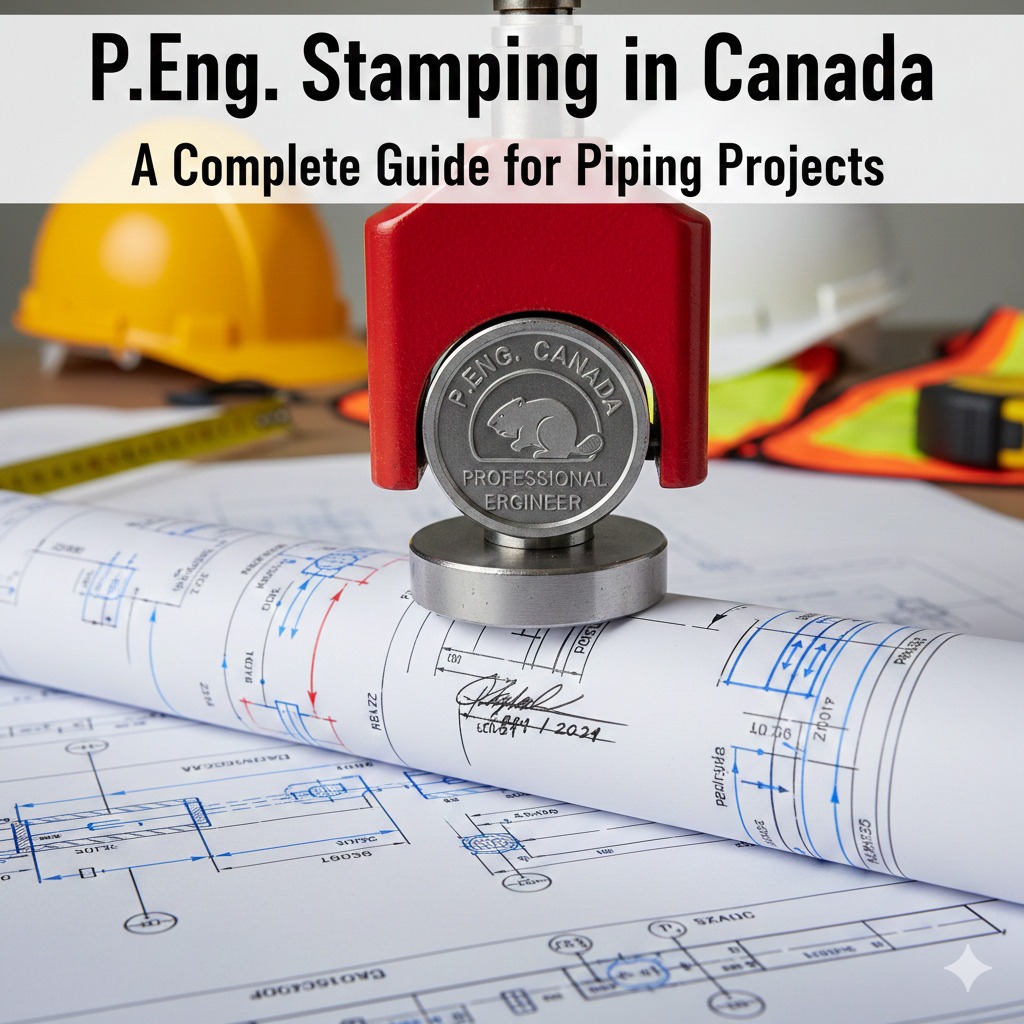
P.Eng. Certification/Stamping in Canada for Piping Projects: A Practical Guide If you work with piping systems in Canada, you’ve probably heard someone ask: “Do these drawings have a P.Eng stamp yet?” For many projects, that stamp is not just a formality. It’s a legal requirement and a key part of demonstrating that your design is safe, code-compliant, and reviewed by a licensed Professional Engineer. This guide explains what P.Eng stamping is, when you need it on piping projects, and how to prepare your design package so the stamping process is smooth instead of stressful. What is P.Eng. stamping? In Canada, a Professional Engineer (P.Eng) is licensed by a provincial or territorial regulator (such as PEO in Ontario or APEGA in Alberta). Their stamp or seal on a document means: The document contains engineering work. A licensed engineer has reviewed or prepared that work. That engineer is taking professional responsibility for the engineering content. In other words, the stamp is the engineer’s formal sign-off that the design meets applicable codes, standards, and regulatory expectations for safety and performance. When does a piping project need a P.Eng stamp? Each province and territory has its own legislation and practice guidelines, but in general, a P.Eng stamp is required when: The document is an engineering document (design, calculation, drawing, report, specification, etc.), and That document will be used by others to make decisions about construction, operation, or public safety. Typical piping-related documents that may need a P.Eng stamp include: Piping general arrangement (GA) drawings Piping isometrics for construction Pipe stress analysis reports Support design drawings and calculations Pressure design calculations (thickness, ratings, branch reinforcements, etc.) Design reports submitted to authorities or clients For pressure piping and pressure equipment, P.Eng stamping often goes hand-in-hand with Canadian Registration Number (CRN) or similar pressure equipment design registration. The stamp confirms professional responsibility; the registration confirms regulatory acceptance of the design. Important: The exact requirements vary by jurisdiction. Always check the rules for the province or territory where the equipment will be installed. Who can provide a P.Eng stamp? A P.Eng stamp can only be applied by: An engineer who holds a valid P.Eng licence in the province or territory where the project is located, and Is working within their area of competence (for example, piping / mechanical, not unrelated disciplines). In most provinces, if the engineering work is done as a business (consulting, design services, etc.), the company itself also needs: A Certificate of Authorization or Permit to Practice granting it the right to offer engineering services to the public. For owners and EPCs, this usually means one of two models: In-house P.Eng and Permit to Practice – your own engineering team stamps the documents. Specialist consulting firm – you outsource some or all of the piping design and have an external firm with the right licenses and permits review and stamp the work. How to prepare a “stamp-ready” piping package? A smooth stamping process starts long before the engineer picks up their seal. The more complete and clear your package is, the faster and more predictable the review becomes. At minimum, make sure you have: Clear design basis Design codes (e.g., ASME B31.1 / B31.3, etc.) Design pressures and temperatures Fluid properties and service category Load cases (thermal, weight, wind, seismic, occasional loads, etc.) Up-to-date drawings P&IDs, line list, and tie-in points Piping GAs and isometrics with consistent line numbers Equipment data sheets and nozzle loads Engineering calculations Pipe stress analysis reports (with load combinations and code compliance checks) Pipe wall thickness and rating checks Support design and structural checks where needed Nozzle load checks against equipment limits Materials and specifications Piping class / material specifications Weld details, inspection requirements, NDE levels Insulation, heat tracing, and coating requirements (if applicable) Safety and compliance notes Any identified special hazards Applicable regulatory or client specifications A P.Eng review is not just a quick stamp on the cover sheet. The engineer must be able to trace design decisions back to basis-of-design, codes, and calculations. Common pitfalls in P.Eng stamping for piping projects Here are issues that frequently cause delays or rework: Incomplete or inconsistent documentation Line lists don’t match P&IDs. Isometrics are missing or not coordinated with the stress model. Loads allowable by the vessel vendors don’t match the final stress analysis. “Stamp at the last minute” approach Documents are issued for construction and only then sent for stamping. Any changes required by the P.Eng become expensive and disruptive. Ignoring pressure equipment registration Assuming that “we have a P.Eng stamp, so Piping Registration (CRN) isn’t needed” in provinces where registration is mandatory for certain piping and equipment. For regulated pressure piping, you usually need both properly stamped documents and design registration with the relevant safety authority. Best practices to make stamping straightforward Engage a P.Eng earlyInvolve the reviewing engineer when you define the design basis and major assumptions, not after everything is frozen. Align on codes and scope upfrontGet written agreement on: Applicable codes and standards What exactly the P.Eng is taking responsibility for (which drawings, which calculations, which systems) Use standard templates and checklistsInternal or consultant-provided checklists for stress reports, drawings, and design notes reduce “back and forth” and catch issues before formal review. Track revisions and approvalsMaintain a clear revision history showing which versions were reviewed and stamped. Avoid multiple, conflicting “final” versions in circulation. FAQs about P.Eng stamping for piping projects What is a P.Eng stamp, in simple terms?It is a professional engineer’s seal, signature, and date on an engineering document, indicating that a licensed engineer has taken professional responsibility for the engineering content. Is P.Eng stamping mandatory for every piping project?Not for every single document, but many designs that affect public safety, pressure equipment, or are submitted to regulators, municipalities, or clients must be stamped under the applicable provincial engineering act. When in doubt, consult a licensed engineer in that jurisdiction. Does a P.Eng stamp replace CRN or pressure equipment registration?No. For regulated pressure equipment and piping, you typically need both: Engineering documents prepared/reviewed and stamped by a P.Eng, and Design registration (such as CRN) with the appropriate safety authority. How long does the stamping process take?It depends on the quality and completeness of the package.
The Ultimate Guide to Piping Flexibility and Stress Analysis Techniques
The Ultimate Guide to Piping Flexibility and Stress Analysis Techniques I remember the first time I bumped into the term “piping flexibility analysis.” Honestly, back then, I didn’t quite get it. Who really does at first? But if you’ve ever gotten yourself all tied up in piping systems—whether literally or just in your head—you’re catching my drift. Let’s be real, these setups might as well be a game of Twister, yet they’re crucial for many industrial setups. Nailing flexibility and stress analysis is critical. Yeah, really. It’s no walk in the park, trust me. Why Is Piping Flexibility Important? Ever wonder why some pipes last forever, while others burst outta nowhere? It’s all about flexibility. But here’s the twist—it doesn’t mean they’re flimsy. It’s like a dance between strength and flexibility. You want those pipes to take the pressure, literally, but also give a little with temperature changes. It’s basically yoga for pipes. The Basics You Can’t Skip Look, let’s break it down. Piping flexibility analysis makes sure pipes handle thermal expansion, movements, and avoid stressing out supports for no reason. The goal? Predict how pipes act in different scenarios. And imagine the mess if we hadn’t gotten it figured out. I learned the hard way, a little more effort in analysis saves a ton of trouble down the line—but it’s easy to forget about. Just like that one time, I thought duct-taping a leaky pipe would magically fix it. Spoiler alert: it didn’t. Too Rigid or Too Loose? It’s a delicate act. Too stiff, and the pipes might just crack under pressure. Too wobbly? Well, they’ll be all over the place. You need them to be stable—kind of like teens learning to drive. This means analyzing stress analysis to foresee how pipes hold up under different loads. Diving Deep: The Techniques So you’re not just gonna wing it? Smart move. Now, let’s dive into these techniques. I’ll guide you through some I’ve found both mesmerizing and sometimes frustratingly precise. Precision’s the game here, after all. Understanding Flexibility Factors Real talk: flexibility factors are like the coach for your pipes. They reveal just how much your pipes can take before they tap out. Gone through this balancing act? You factor in bending radius, materials and more (copper bends differently than steel, who knew?). One time, I underestimated those during a project, learned my lesson the expensive way. Nailing these numbers is like finding the perfect pinch of salt in a recipe—get it wrong and it’s disaster city. Stress Are Us: The Analysis Process Onto stress analysis. This is where the magic of engineering comes alive. You become Sherlock Holmes, sleuthing out potential fail points. You nail down stress levels and set those all-important limits to keep things safe and compliant. Fun, right? Establish a baseline: Know where your piping starts. Conduct static analysis: Grasp that starting stress level. Dynamic analysis: Often skipped but so vital, it’s like future-proofing. Dynamic analysis can feel like a labyrinth (and let’s be real, it can get costly), but skipping it is like skipping dessert. You’ll definitely miss something big. Lessons From the Field Real talk—every project ain’t the same, and you gotta roll with it. Here’s what my experience taught me in the piping analysis arena. Lesson One: Expect the Unexpected I remember this one time at a chemical plant where assumptions nearly caused a big crisis. The materials weren’t what the specs had promised. We had to re-analyze everything! It’s like never assuming life in the field will be all smooth sailing. Lesson Two: Software Is Your Friend In today’s world, turning a blind eye to simulation software? You can’t afford that. I’ve used tools like CAESAR II and ROHR2, which ran some serious analysis gigs. These tools can solve stress equations worthy of Einstein, no cap. Still relying on gut feeling? Rethink that. It’s the digital age. Let computers do the muscle work, for real. FAQs On Piping Flexibility Analysis I get asked a ton of questions on this, and it makes sense. So let’s dive into these frequent flyers. What’s the biggest mistake in flexibility analysis?People often lean too much on “rules of thumb.” They’ve got their place, but specialized analysis designed for your setup is king. How often should I carry out a stress analysis?Before any temperature rise or load changes rock the boat. Seriously, these can’t be stressed enough (pun intended). Is software analysis foolproof?From my perspective? Nothing’s perfect. Software rocks, but human insight remains priceless. Together? It’s magic. Can pipe flexibility save money?For sure. Proper analysis negates costly downtimes, plus skirts around safety hazards (and lawsuits, yikes!). How does temperature affect piping flexibility?Like, significantly. Temperature swings cause expansion or shrinking, left unchecked it can crumble everything. It’s like winterizing your home—don’t cut corners. Final Thoughts And that’s a wrap. Gotlar spiritsrudfreeze mastering piping flexibility analysis a saves you from being a cautionary tale. I’m still learning in this growing field. But these rules? They’re your fast track to saving months. Seriously, take it from me.
Est-il possible de changer ses informations personnelles sur Funbet ?
Funbet est une plateforme de jeux en ligne qui se distingue par son interface intuitive et son large choix de divertissements. Que vous soyez un joueur occasionnel ou régulier, la gestion de votre compte personnel est un élément essentiel de votre expérience. Parmi les questions fréquemment posées figure celle de la modification des informations personnelles. Peut-on vraiment changer ses données sur Funbet ? Cet article vous livre tout ce qu’il faut savoir à ce sujet. Dès la création d’un compte sur Funbet, la précision des données renseignées est cruciale pour garantir la sécurité et la conformité aux réglementations. Néanmoins, la vie change et il arrive que l’on doive mettre à jour ses coordonnées, son adresse, ou même ses documents d’identité. Voyons comment cela se passe concrètement sur la plateforme. Pourquoi changer ses informations personnelles sur Funbet ? La modification des données personnelles peut intervenir pour différentes raisons : Un changement d’adresse ou de numéro de téléphone L’actualisation des pièces justificatives demandées par la plateforme La correction d’erreurs lors de la saisie initiale La mise à jour des informations bancaires utilisées pour les transactions Pour un joueur sérieux, garder ses données à jour garantit un accès fluide aux paiements, un support efficace et une conformité aux exigences légales, notamment en matière de lutte contre la fraude et le blanchiment d’argent. Comment procéder pour modifier ses données ? Funbet adopte une politique stricte concernant les modifications de profil afin d’assurer la sécurité des comptes. Voici les étapes générales pour changer vos informations personnelles : Connexion au compte : Accédez à votre espace personnel en vous connectant avec vos identifiants. Accès à la section profil : Dans le menu, choisissez la rubrique « Mon profil » ou « Paramètres ». Modification des informations : Certaines données comme le numéro de téléphone ou l’adresse e-mail peuvent être modifiables directement. Pour d’autres, notamment l’adresse physique ou les documents d’identité, un processus d’approbation est souvent requis. Validation par le support : Pour confirmer les modifications sensibles, il est fréquent que Funbet demande des justificatifs ou une confirmation via le service client. Temps de traitement : Les changements sont généralement validés sous 24 à 72 heures selon la nature de la demande. Cette démarche assure que seules les modifications légitimes sont acceptées, protégeant ainsi les intérêts du joueur et ceux de la plateforme. Quelles informations peuvent être modifiées facilement ? Information Modifiable en libre accès Validation requise Adresse e-mail Oui Non Numéro de téléphone Oui Par sms ou e-mail Mot de passe Oui Confirmation requise Adresse postale Non Oui, avec justificatif Documents d’identité Non Oui, via support client Informations bancaires Partiellement Oui, selon méthode choisie Cette répartition aide à comprendre ce qui peut être ajusté rapidement, et ce qui demande un suivi plus rigoureux. Sur quelle base Funbet refuse-t-il les modifications ? Une plateforme comme Funbet doit respecter des obligations légales strictes. Ainsi, toute tentative de changement qui semble frauduleuse, incohérente ou qui ne s’appuie pas sur des justificatifs valables sera rejetée. Par exemple, une modification d’adresse sans preuve documentaire ou un changement suspect dans les informations bancaires peut entraîner un blocage temporaire du compte en attendant vérification. Quick facts – À savoir sur la modification des données sur Funbet La modification des informations sensibles nécessite souvent une identification renforcée. Le support client est disponible pour accompagner chaque étape. Les joueurs ont l’obligation de fournir des informations exactes pour éviter tout litige. Les mises à jour accélèrent les processus de retrait et de bonus. Retour d’expérience d’un joueur régulier « J’ai récemment changé de domicile et donc dû mettre à jour mon adresse sur Funbet. La procédure m’a paru très claire : après avoir envoyé un justificatif de domicile, la modification a été validée en deux jours. Ce contrôle me rassure car je sais que le site vérifie sérieusement l’identité de ses joueurs. » – Anthony, joueur depuis 2 ans FAQ sur la modification des données personnelles sur Funbet 1. Est-il possible de changer mon nom ou prénom ? Non, ces données sont généralement figées car liées à votre identité officielle. Toute erreur doit être corrigée via documents officiels. 2. Que faire si je ne peux pas modifier mon adresse en ligne ? Contactez le support client avec un justificatif de domicile récent. Ils vous guideront dans la procédure de mise à jour. 3. Combien de temps prend la validation des documents ? En moyenne, la validation prend entre 24 et 72 heures, selon la charge de travail du support. 4. Puis-je changer mes informations bancaires à tout moment ? Oui, mais cela peut nécessiter une vérification additionnelle pour des raisons de sécurité. 5. Que se passe-t-il si je ne mets pas à jour mes informations ? Un compte avec des données obsolètes peut engendrer des blocages lors des retraits ou des demandes de bonus. Mettre à jour ses informations personnelles sur Funbet est donc possible, mais encadré afin de garantir la sécurité et la conformité. Pour un joueur, le fait d’avoir des données exactes facilite la gestion quotidienne du compte et prévient les complications liées au jeu responsable et sécurisé. Pour en savoir plus sur les conditions et les options proposées, rendez-vous sur Funbet, où toutes les informations officielles sont accessibles en toute transparence.
FEA vs Traditional Engineering Calculations: When to Use Each Method

FEA vs Traditional Engineering Calculations: When to Use Each Method Home / Learning Choosing the right analysis method can significantly influence the accuracy, safety, and cost-effectiveness of a project, in modern engineering. Two approaches widely used in modern engineering play essential roles in design and evaluation. These are – FEA (Finite Element Analysis) and traditional engineering calculations. In today’s blog, we’ll understand when to apply each method. And, understand how it helps in reliable results and efficient workflows. Finite Element Analysis Finite Element Analysis is a computer-based technique. It breaks complex structures into smaller & manageable elements. This allows engineers to experience and calculate the real-world conditions, such as stress, heat, vibration, or pressure, with high precision. Companies like MECS Engineering offer Professional Engineering Services. They often rely on FEA for projects requiring detailed insights into how materials or components will behave under various loads. Traditional Engineering Calculations Traditional engineering is an earlier method based on calculations rely on formulas & principles. It is hand-based methods derived from engineering theory. These calculations are often used for simple designs, where the loads and materials behave in predictable ways. They are quick and cost-effective. Also, ideal for great sizing, standard components, and routine design work. When FEA Is the Better Choice FEA is ideal when high accuracy is required or when the structure is too complex for hand calculations. You should choose FEA when: Geometry is irregular or highly detailed, such as pressure vessels with openings or custom piping components. Loads are complex, including thermal, vibrational, or multi-directional stresses. New materials or unique designs are being used, where behavior cannot be easily predicted with formulas. Safety margins must be thoroughly validated. In certain industries, even small errors can cause failures. Finite Element Analysis helps identify weaknesses, optimize design, and reduce the risk of unexpected issues. When Traditional Calculations Are More Suitable Traditional engineering methods are efficient for: Early-stage design and feasibility checks. Simple systems with predictable load paths Code-compliant components, where standard formulas apply Quick assessments without the need for modeling software. These methods provide a strong foundation. They often complement FEA during later phases of the project. Using Both Methods for the Best Results In many cases, the most effective approach is a combination of both. Traditional calculations help narrow down initial design parameters, while FEA validates and refines the final structure. At MECS Engineering, our Professional Engineering Services integrate both approaches to ensure every project meets industry standards, safety requirements, and performance goals.
Why Outsourcing Piping Stress Analysis to Experts Saves Time & Money

Why Outsourcing Piping Stress Analysis to Experts Saves Time & Money Home / Learning It is important to make sure all piping systems work safely and smoothly in big industrial projects. Piping stress analysis plays an important role here. However, to complete this task, anyone can take a significant amount of time, costly software, and professional experts. That’s why many companies are outsourcing this work to specialists. Partnering with professionals not only improves accuracy but also delivers major savings in both time and budget. At MECS Engineering, we provide the best solutions to you for outsourcing piping stress analysis. Use of Advanced Expertise and Tools Outsourcing Piping Stress Analysis gives you direct access to experienced engineers who specialise in evaluating pipe flexibility, thermal expansion, vibration, and load conditions. These experts use advanced modelling tools and industry-leading software that many companies may not possess internally. By working with a team like MECS Engineering, that provides Professional Engineering Services, you ensure that your project complies with the latest codes and standards, which reduces risk and prevents costly design errors. On the other hand, handling this in-house without the right expertise may lead to rework, unexpected failures, or delays. Faster Project Delivery Time is one of the biggest advantages of outsourcing. Engineering organisations that offer specialised industrial engineering services have streamlined workflows to process Piping Stress Analysis efficiently. Their teams work on these calculations daily, meaning they can complete tasks quicker and more accurately than a general in-house team. Faster analysis means faster approvals, which ultimately speeds up the entire project timeline. This allows your internal staff to focus on core engineering tasks rather than getting tied down by complex stress calculations. Significant Cost Savings Outsourcing eliminates the need to invest in expensive software licences, training programs, and additional staff. Instead, you pay only for the services you need. This reduces overhead costs while still ensuring that the work is completed by qualified professionals. Moreover, accurate stress analysis helps avoid structural issues, pipe failures, safety hazards, and shutdowns—each of which can be extremely costly. Working with experts ensures that potential problems are identified early, preventing expensive repairs or downtime later on. Improved Safety Professional engineering teams ensure that your piping system meets all relevant industry codes, safety standards, and best practices. Their experience across various industrial environments—refineries, power plants, manufacturing facilities—means they understand real-world challenges and design solutions that enhance overall safety. Reliable compliance also increases the long-term performance of your systems, reducing maintenance issues and supporting smoother operations. CONCLUSION Companies require accuracy, efficiency, and cost savings. So, they do Outsourcing Piping Stress Analysis. It’s a smart choice. Partner with a team like MECS Engineering that offers Professional Engineering Services and comprehensive industrial engineering services. You can streamline your project, reduce risks, and ensure safe and efficient piping systems.
How Long Does CRN Approval Take? Timelines, Costs, and What to Expect

How Long Does CRN Approval Take? Timelines, Costs, and What to Expect Home / Learning When you’re seeking a Canadian Registration Number (CRN) for your equipment design, it’s vital to act with knowledge and preparation. As a provider of professional engineering services, MECS Engineering helps clients understand the entire process—from submission to approval—so you know what to expect, how long it takes, and what the cost implications are. Typical Timelines for CRN Approval The approval timeline for a CRN can vary widely based on jurisdiction, complexity, and completeness of the submission. According to industry sources, applications can be issued in as quickly as one week, but in some cases may take up to six months or more depending on the province and backlog. A more typical timeline when working with MECS Engineering might look like this: Internal engineering review and submission prep: approximately 2–3 weeks. Initial jurisdiction review: approximately 6–10 weeks, depending on complexity and workload. Reciprocal registration in additional provinces: often another 12–16 weeks. It’s important to recognise that delays can occur if your application lacks required documentation, if there are requests for revisions, or if the jurisdiction has heavy workload. What Costs Should You Expect? Costs for obtaining a CRN also vary based on scope (single jurisdiction vs multi-jurisdiction) and design complexity. According to the Technical Standards & Safety Authority (TSSA), for national service a deposit of CAD $1,200 is required, and total fees could exceed CAD $3,500. Another source estimates: Basic registration in central Canadian jurisdictions: approx. CAD $1,500. Full Canada-wide registration: CAD $3,800 to CAD $5,000 or more. These costs reflect not only filing fees but also engineering review time, administrative costs, and possible additional revisions requested by regulators. What to Expect During the Process When engaging in CRN registration as part of your professional engineering services: Begin early: Determine if your equipment needs a CRN and which jurisdictions apply. MECS Engineering helps with this. Prepare full documentation: Drawings, calculations, quality systems, scope of registration all need to be completed. Incomplete submissions are a major cause of delay. Respond promptly to regulator queries: Every ‘request for information’ (RFI) can add weeks to the timeline. Plan for multi-jurisdiction registration: If you target several provinces, expect additional time and cost. The mutual recognition scheme helps but does not eliminate follow-up in each region. Final Thoughts Securing a Canadian Registration Number is a necessary step for operating pressure equipment legally in Canada. With MECS Engineering’s expertise in professional engineering services, you can navigate the timelines and costs with confidence. While the process can be variable, being well-prepared means fewer surprises and a smoother path to approval. With the support of MECS Engineering, you can adjust the timelines, costs and your expectations. Reach out to MECS Engineering today to know more about us.
