
Piping Stress Analysis Services by MECS Engineering Inc.: Accuracy You Can Trust
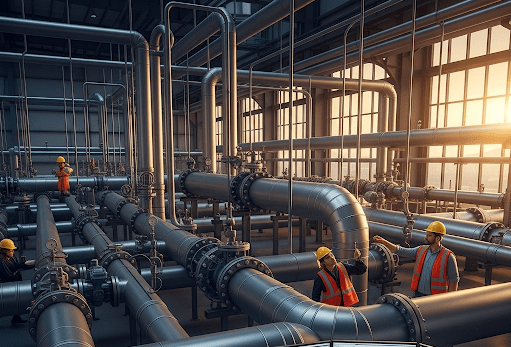
Piping Stress Analysis Services by MECS Engineering Inc.: Accuracy You Can Trust Home / Learning When you walk through a refinery, a chemical plant, or even a power station, you’ll notice miles of pipes running in every direction. These pipes carry steam, water, oil, chemicals, and gases all under pressure, at different temperatures, and often around the clock. Now imagine what would happen if just one of those pipes failed. The cost, the downtime, the safety risks… it could be huge. That’s why Piping Stress Analysis is so important. At MECS Engineering Inc., we take this responsibility seriously. Our team of experts ensures every piping system we work on is safe, reliable, and built to perform under real-world conditions. What Exactly is Piping Stress Analysis? Think of a pipe like a long, flexible straw. When hot liquid flows through it, it expands. When it cools, it contracts. If it bends too far or gets pushed too hard, it can crack. That’s basically what Piping Stress Analysis is all about: understanding how pipes will react to heat, pressure, movement, and weight. Instead of waiting for a problem to happen, engineers run tests and simulations ahead of time to spot weak points and prevent failures. It’s not about making things complicated. It’s about making sure the system works safely today, tomorrow, and years down the line. Why It Really Matters? A lot of people think pipes are just simple metal tubes. But in industries like oil & gas or power generation, they’re the backbone of the whole operation. Here’s why stress analysis is non-negotiable: Safety above all – Nobody wants leaks, bursts, or dangerous accidents. Money saved – Spotting a problem early is far cheaper than dealing with a breakdown later. Smooth operations – Well-designed systems mean fewer interruptions and better performance. Meeting the rules – Industry codes and regulations demand accurate stress analysis. In short, having a skilled stress analysis engineer on the job means peace of mind for everyone involved. The Human Side of a Stress Analysis Engineer Behind every report and calculation, there’s an engineer who cares about getting it right. A stress analysis engineer isn’t just crunching numbers; they’re problem solvers. Here’s what they typically do: Look over the piping layout and spot tricky areas. Run computer simulations to see how the system reacts under pressure and heat. Recommend small but powerful fixes – maybe adding a support, changing a bend, or adjusting materials. Help project managers feel confident their system will hold up when it’s needed most. At MECS Engineering Inc., our engineers are known not just for their technical skills, but also for being approachable and practical. They don’t just hand over a report – they explain the “why” behind it, in plain language. Who Needs Stress Analysis? The truth is, nearly every industry that depends on piping needs it. A few examples: Oil & Gas – Long pipelines under extreme pressure. Chemical Plants – Where leaks can be dangerous and costly. Power Plants – Steam and water lines that never stop running. Pharma & Food – Clean, safe systems that meet strict hygiene standards. Different industries, same goal: making sure the system is reliable. And that always starts with good Stress Analysis. What Makes MECS Engineering Inc. Different? Lots of firms claim they can handle stress analysis. But at MECS Engineering Inc., accuracy is more than a buzzword — it’s our standard. Here’s how we stand out: Real experience – We’ve handled projects in multiple industries and understand their unique challenges. Modern tools – Our software and methods are designed for accuracy. Practical advice – We don’t just give theory; we offer real, usable solutions. Partnership approach – Clients trust us because we listen, explain, and collaborate. We know that every project is different, and we tailor our work to fit exactly what you need. The Benefits of Doing It Right When you choose professionals for Piping Stress Analysis, here’s what you really gain: Less worry about accidents or shutdowns. Systems that run smoother and last longer. Lower repair costs over the years. Confidence that your system meets all standards. It’s about protecting your people, your plant, and your bottom line. Real Examples, Real Value Picture a refinery where heat expansion causes a pipe to push against a wall. Without stress analysis, that pressure could cause a dangerous leak. But with the right adjustments, the system stays safe. Or think of a power plant where pipes carry steam 24/7. Proper analysis means fewer breakdowns, which means more consistent power supply. These aren’t “what-ifs.” They’re real scenarios where Stress Analysis makes all the difference. Why Partner With Us? At MECS Engineering Inc., we don’t just run calculations — we build trust. We make sure you know your piping system is ready to handle whatever comes its way. Our team blends technical expertise with a human touch. We’re approachable, reliable, and always focused on delivering solutions that work in the real world. Final Thoughts Piping might not always get the spotlight, but without it, industries would grind to a halt. That’s why Piping Stress Analysis is so important. It keeps systems safe, efficient, and reliable. With the help of a skilled stress analysis engineer, companies can avoid costly surprises and keep things running smoothly. And with MECS Engineering Inc., you can count on accuracy, expertise, and a partner who truly cares about your success.
Professional Engineering Consultants For Innovative Solutions: MECS Engineering Inc.

Professional Engineering Consultants For Innovative Solutions: MECS Engineering Inc. Home / Learning If you’ve ever managed a big project, you’ll know one thing—something always comes up. A design snag, a compliance hurdle, a system that just won’t perform the way it should. That’s when having professional engineering consultants on your side makes all the difference. And in my experience, firms like MECS Engineering Inc. don’t just show up with technical drawings and calculations—they bring solutions you can actually use. Why Companies Rely on Engineering Consultants? Let’s be honest. Not every business has the time—or budget—to keep full-time specialists for every type of project. Sometimes you just need the right expertise, right now. That’s where consultants step in. They help you: Save money by avoiding trial-and-error fixes. Speed up timelines with proven processes. Bring in fresh ideas you might not have thought of. Reduce risks before they snowball into bigger issues. I once worked with a client who was struggling with a bottleneck in their production line. Their team had been going in circles for months. When they finally called in consultants, the problem was solved in a week. That’s the kind of value experts bring. What Sets MECS Engineering Inc. Apart So why MECS? Because they’re not just about ticking boxes. They take the time to understand your goals, then tailor solutions that make sense both technically and practically. A Few Areas They Excel In, Structural engineering for safe, lasting builds. Mechanical systems designed to improve performance and cut downtime. Project management that keeps work on track and budgets under control. Sustainable solutions to meet today’s environmental standards. For example, MECS recently helped a client in the energy sector modernize outdated infrastructure. Not only did they fix compliance issues, but the upgrades also shaved off operating costs—something the client hadn’t even considered possible. The Real Value of Professional Consultants Hiring engineering consultants isn’t just about filling knowledge gaps. It’s about perspective. Here’s what you gain when you work with teams like MECS: An outside view: Sometimes you’re too close to a problem to see it clearly. Custom solutions: Not cookie-cutter fixes, but tailored strategies. Flexibility: Bring in expertise when you need it—no long-term overhead. Less risk: Problems get spotted early, before they drain time and money. That outside perspective, especially, is often underestimated. It’s like having someone look at your messy desk and instantly knowing where everything should go. Tips for Working with Consultants If you’re considering hiring a firm like MECS, a few best practices can make the collaboration even smoother: Be clear about your scope: The more defined your goals, the faster progress happens. Stay communicative: Regular updates keep everyone on the same page. Use project tools: Even something as simple as shared dashboards saves headaches. Ask about case studies: Past successes give you confidence in their approach. At the end of the day, the best results come when you treat consultants as an extension of your team, not outsiders. Why MECS Is a Trusted Partner Clients stick with MECS because of how they work—not just what they deliver. They listen. They ask questions that sometimes you hadn’t thought of. And they make sure solutions don’t just look good on paper but actually hold up in the real world. Whether it’s a mid-sized construction project or a massive industrial upgrade, they bring that mix of technical skill and practical sense that saves clients both stress and money. Final Thoughts Choosing the right professional engineering consultants can mean the difference between constant firefighting and smooth, successful projects. With their track record of innovation and client-focused approach, MECS Engineering Inc. has proven they’re a reliable partner for businesses that can’t afford to get it wrong. If you’ve been putting off that tricky project because it feels too complex, maybe it’s time to see what experts like MECS can do for you.
Pipe Stress Analysis Explained: What It Is and How It’s Done

Pipe Stress Analysis Explained: What It Is and How It’s Done Home / Learning Pipe stress analysis is a critical engineering process used to ensure that piping systems can withstand internal and external forces without failure. At MECS Engineering Inc., our team of experienced stress analysis engineers provides reliable piping stress analysis services backed by industry-recognized certifications such as P.Eng. Certification, P.Eng. Stamping, and P.E. Certification. What Is Pipe Stress Analysis? Pipe stress analysis is the process of evaluating stresses, displacements, and loads in piping systems. It helps determine whether the system can handle thermal expansion, pressure, dead weight, and other external loads. Proper analysis ensures compliance with codes like ASME B31.1 and B31.3. Why Is Piping Stress Analysis Important? Performing accurate piping stress analysis is essential for: Preventing pipe failures or leaks Ensuring long-term system durability Meeting safety and code requirements Achieving certification and regulatory approval At MECS Engineering, we understand that both piping flexibility analysis and load assessments play a key role in the design and maintenance of safe systems. Steps to Perform Pipe Stress Analysis Our expert stress analysis engineers follow a structured process: 1. System Modeling Create a detailed 3D model of the piping system using software like CAESAR II or AutoPIPE. 2. Input Data Collection Include: Material specifications Operating pressure and temperature Pipe layout and support details External loads (e.g., wind, seismic) 3. Load Case Definitions Define load combinations (sustained, thermal, occasional) based on design codes. 4. Flexibility and Stress Check Run piping flexibility analysis to assess displacement, anchor loads, and stresses. 5. Code Compliance Verification Check results against standards such as ASME B31.1 and 31.3 to ensure the system passes stress limits. 6. Report and Certification Provide a detailed report along with P.Eng. Stamping, P.Eng. Certification, or P.E. Certification depending on regional requirements Tools We Use for Stress Analysis We utilize industry-leading tools such as: CAESAR II Rohr2 AutoPIPE These tools help simulate complex loading scenarios and validate the mechanical integrity of your piping system. Common Issues Identified During Stress Analysis Overstressed pipe sections Insufficient support spacing Excessive nozzle loads on equipment Thermal expansion causing misalignment These issues can be resolved by making layout changes, adding guides or anchors, and improving pipe flexibility. Industries That Rely on Stress Analysis Our piping stress analysis services are trusted across multiple sectors: Oil & Gas Power Generation Chemical Processing Food & Beverage Water Treatment Each project receives oversight by a certified stress analysis engineer and, where applicable, a stamped design with P.Eng. Certification or P.E. Certification. Why Choose MECS Engineering Inc. for Pipe Stress Analysis? Certified stress analysis engineers Detailed report with Eng. Stamping Experience in both greenfield and brownfield projects Advanced piping flexibility analysis Timely delivery and code-compliant results Summary: Key Benefits of Pipe Stress Analysis Ensures structural safety and performance Detects design flaws early Aids in code compliance and certification Increases equipment and system longevity Reduces risk of costly shutdowns Contact MECS Engineering today for professional analysis, full P.Eng. Certification, and precise piping flexibility analysis for your project.
Top 7 Mistakes to Avoid in Civil and Structure Design Projects

Top 7 Mistakes to Avoid in Civil and Structure Design Projects </h1 > Home / Learning Avoiding critical errors in civil and structure design projects is essential for ensuring safe, efficient, and cost-effective construction. From ignoring site conditions to miscommunication between teams, these mistakes can lead to costly delays and structural failures. In this blog, we will explore the top 7 mistakes to avoid in civil and structure design projects to help engineers, architects, and project managers achieve successful outcomes. 1. Inadequate Site Analysis and Soil Investigation A proper understanding of the site’s geology is the foundation of civil design. Ignoring soil type, bearing capacity, and water table data Overlooking environmental and topographical constraints Relying solely on outdated survey reports Tip: Always conduct geotechnical investigations before beginning the structural design phase. 2. Poor Coordination Between Civil and Structural Teams One of the biggest design risks is poor communication between stakeholders. Lack of integration between architectural, MEP, and structural teams Design conflicts that arise due to missing coordination Delayed revisions increasing project timelines Tip: Adopt BIM tools and regular design reviews to maintain synergy. 3. Underestimating Load Calculations Accurate load calculations are vital to prevent structural failures. Incorrect estimation of dead and live loads Ignoring seismic and wind load effects Inadequate allowance for future expansions Tip: Follow local and international codes like IS 456 or ACI 318 for standard load considerations. 4. Non-Compliance with Local Building Codes Legal issues and penalties can arise from code violations. Designing without considering municipal regulations Not updating plans with the latest code revisions Using obsolete design software that misses compliance checks Tip: Always cross-check designs with applicable civil and structure design regulations. 5. Overlooking Constructability and Site Constraints Practical challenges at the construction site are often ignored during design. Designs that cannot be practically executed onsite Ignoring crane, equipment, or workforce limitations Complex structural elements that delay execution Tip: Involve construction teams during the design phase for better feasibility. 6. Ignoring Sustainability and Material Optimization Overdesigning structures increases costs and environmental impact. Using unnecessarily large cross-sections or materials Not exploring high-performance or eco-friendly materials Excessive concrete usage increasing carbon footprint Tip: Optimize structures with value engineering and sustainable material selection. 7. Lack of Peer Review and Design Validation Skipping quality checks can result in major engineering errors. Designs not peer-reviewed by qualified professionals Absence of stress analysis or FEA where applicable No simulation of load conditions or serviceability Tip: Schedule independent design audits and simulations for large or critical structures. Key Takeaways: What to Remember Always start with a detailed site and soil investigation. Encourage interdisciplinary coordination for integrated design. Prioritize accurate load analysis using verified standards. Comply with building codes to avoid legal setbacks. Consider site constraints and construction feasibility early. Focus on sustainability and resource efficiency. Conduct peer reviews and simulations to validate designs. Avoid Mistakes, Build with Confidence – Partner with MECS Engineering At MECS Engineering, we specialize in civil and structure design solutions tailored to your project needs. Our team ensures full compliance, precision, and performance — from initial surveys to final design validation. Contact us today to schedule a consultation or learn more about how we can help your next project succeed without costly design errors.
