
Understanding CRN Numbers: A Vital Guide for Manufacturers and Engineers
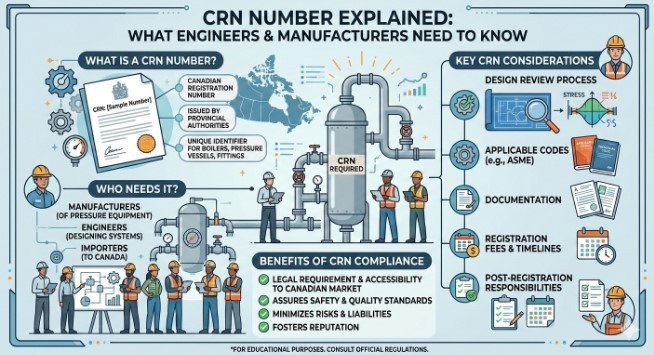
Understanding CRN Numbers: A Vital Guide for Manufacturers and Engineers In Canada, industrial systems utilizing pressure equipment are subject to rigorous safety and regulatory standards. A fundamental component of these regulations is the CRN, or CRN Number, which serves as official validation that a design has been scrutinized and approved by the relevant regulatory body. Navigating the CRN registration process is a necessity for project managers, engineers, and manufacturers dealing with piping systems, pressure vessels, and boilers. Mastering this system is key to maintaining operational safety, ensuring regulatory compliance, and preventing project setbacks across different provinces. This overview details the nature of the CRN Number, its necessity in the industry, and the standard procedures engineering teams employ for successful design registration. What Is a CRN Number? A CRN Number stands for Canadian Registration Number. It is issued by a provincial or territorial authority in Canada after reviewing pressure equipment designs to confirm they meet applicable safety codes and standards. The CRN applies to equipment such as: Pressure vessels Boilers Fittings Piping systems Heat exchangers Pressure retaining components Once a design is accepted, the CRN Number becomes a permanent reference that confirms the design complies with the applicable codes. This number is typically stamped on equipment nameplates or included in technical documentation. Many manufacturers working internationally encounter CRN requirements when supplying equipment for Canadian projects. How the CRN Number Approval Process Works While the exact process can vary by province, the overall workflow generally follows several steps. 1. Engineering Design Preparation The manufacturer or engineering consultant prepares design documentation for the equipment. This package may include: Engineering drawings Design calculations Material specifications Applicable code references Quality control documentation These documents must demonstrate compliance with recognized pressure equipment standards. 2. Professional Engineer Review In many cases, a Professional Engineer (P.Eng) must review and stamp the design documents before submission. This confirms that the engineering work meets professional standards and applicable codes. Engineering firms often provide services such as: Pressure vessel design validation Piping stress analysis Code compliance verification P.Eng stamping support 3. Submission to Provincial Authority The completed design package is submitted to the provincial regulator responsible for pressure equipment safety. Examples of regulatory bodies include organizations responsible for boilers, pressure vessels, and technical safety compliance. Requirements may vary by province, and applicants must follow local regulations. The authority reviews the documentation to confirm the design meets applicable standards. 4. Issuance of the CRN Number Once the design is accepted, the regulator issues a CRN Number for the equipment design. The number typically includes identifiers that indicate: The province where it was first registered The specific design registration sequence In many cases, the same CRN can later be registered in other provinces through a streamlined process. Provincial Differences in CRN Requirements Although the CRN Number system is used across Canada, regulatory requirements can differ between provinces and territories. For example, documentation formats, review timelines, and submission procedures may vary. Because of these differences, engineering teams often coordinate closely with local regulators. It is important to remember that: Pressure equipment regulations are enforced at the provincial level Codes such as ASME are commonly referenced but must still be accepted locally Additional documentation may be required depending on the jurisdiction Working with experienced engineers familiar with the CRN process can help prevent delays during design approval. Practical Tips for a Smooth CRN Approval A few best practices can help streamline the CRN registration process. First, ensure that the design follows recognized codes such as ASME from the beginning of the project. Second, prepare complete documentation before submission. Missing calculations or incomplete drawings are a common reason for delays. Third, confirm the requirements of the specific province where the equipment will be installed. Local regulations always apply. Finally, involve experienced engineering professionals early in the design stage, particularly when pressure equipment will be used in regulated environments.
Why Professional Engineering Consultants Are Essential for Modern Engineering Projects

Why Professional Engineering Consultants Are Essential for Modern Engineering Projects Engineering projects in the modern era are characterized by increasingly strict safety standards, highly complex technical requirements, and detailed regulatory processes that vary significantly by jurisdiction. Whether a company is developing sophisticated industrial equipment, high-pressure systems, or intricate specialized piping networks, expert guidance is a fundamental requirement to ensure the work meets professional standards and maintains public safety. This is where Professional Engineering Consultants play a critical role as strategic partners. These consultants provide specialized, high-level expertise in conceptual design, detailed mechanical analysis, regulatory compliance, and final project validation. Their involvement helps companies move projects forward efficiently, reducing the likelihood of costly delays while ensuring that all engineering work strictly meets applicable codes and professional requirements. What Do Professional Engineering Consultants Do? Professional Engineering Consultants provide comprehensive technical and regulatory support for engineering projects across various industrial sectors. Their role is multifaceted, typically encompassing design validation, advanced engineering analysis, rigorous compliance reviews, and thorough documentation support to facilitate external audits or registrations. Key responsibilities often include: Engineering Design and Review Consultants meticulously evaluate engineering designs to ensure they align with international safety standards, engineering best practices, and specific regulatory expectations. This comprehensive review process may include evaluating the integrity of mechanical systems, checking the layout of complex piping networks, or verifying the specifications of pressure equipment designs before they reach the manufacturing stage. Stress Analysis and Technical Evaluation Many projects require detailed stress analysis to verify that components can safely handle operating loads, pressure, temperature changes, and other environmental factors. Professional consultants help perform these calculations and assessments. Regulatory Compliance Guidance Engineering projects frequently involve compliance with industry codes, standards, and provincial or state regulations. Professional Engineering Consultants help organizations understand what requirements apply and how to meet them. Professional Engineer Stamping Certain engineering documents may require approval or certification by a Professional Engineer (P.Eng) depending on the jurisdiction and project type. Consultants can assist with reviewing and stamping engineering documents where appropriate. Design Registration Support In some cases, pressure equipment or specialized mechanical systems require design registration before installation or manufacturing. Consultants can support companies through the documentation and technical review process. How MECS Engineering Supports Clients Engineering consulting firms like MECS Engineering provide practical support for organizations managing complex technical projects. Services typically include: Piping system design Engineering stress analysis Design verification and review CRN documentation support Professional Engineer stamping where applicable These services help companies maintain compliance, improve design reliability, and move projects through approval processes more efficiently. For organizations seeking experienced Professional Engineering Consultants, working with specialists such as MECS Engineering can provide valuable technical insight and regulatory guidance. Explore the services offered by Professional Engineering Consultants athttps://mecsengineering.com Choosing the Right Professional Engineering Consultants Selecting the right engineering consultant is an important step for any project involving regulated systems or specialized technical requirements. When evaluating consultants, companies often consider: Professional licensing and credentials Experience with relevant codes and standards Industry-specific expertise Ability to provide documentation and compliance support Clear communication throughout the project Working with knowledgeable consultants helps ensure engineering work is performed responsibly and in accordance with professional standards. Conclusion Engineering projects often require specialized knowledge, careful documentation, and compliance with technical regulations. Professional Engineering Consultants help organizations navigate these requirements while maintaining safe and effective engineering practices.
How to Choose the Right Piping Engineering Company for Industrial Projects

How to Choose the Right Piping Engineering Company for Industrial Projects Industrial facilities rely on piping systems for the safe and efficient transport of liquids, gases, and steam. These systems are critical to plant operation, but they also carry significant technical and regulatory responsibilities. Poor piping design can lead to stress failures, leakage, downtime, safety risks, and costly project delays. That is why choosing the right piping engineering company is an important decision for any industrial project. An experienced engineering partner helps ensure that piping systems are designed properly, analyzed correctly, and aligned with applicable codes and jurisdictional requirements. Whether the project involves a new installation, a plant expansion, or modifications to an existing system, qualified piping engineers play a key role in supporting safety, compliance, and long-term performance. What a piping engineering company does A professional piping engineering company provides specialized engineering support for the design, analysis, review, and regulatory compliance of piping systems. Their involvement may begin at the concept stage and continue through detailed engineering, documentation, design review, and registration support. Typical services include: Piping system design Piping design includes the development of layouts, line routing, material specifications, pipe sizing, and coordination with connected equipment and structures. Good design must consider pressure, temperature, corrosion, flexibility, support locations, maintenance access, and constructability. A well-planned piping system reduces the likelihood of rework during fabrication and installation and helps improve long-term reliability in operation. Piping stress analysis Piping systems are exposed to various loads during operation, including internal pressure, thermal expansion, dead weight, vibration, wind, and equipment nozzle loads. Piping stress analysis evaluates how the system behaves under these conditions and confirms whether it meets the requirements of the applicable code. Without proper analysis, excessive stress can damage piping, overstress connected equipment, or lead to fatigue and failure over time. This is one of the most important technical areas in industrial piping engineering. Code compliance and design registration support Industrial piping systems must often comply with recognized codes and standards. Depending on the project location, this may also involve design registration and submissions to the applicable authority. An experienced piping engineering company supports this process by preparing calculations, reviewing drawings, organizing supporting documentation, and helping ensure the submission meets jurisdictional expectations. This reduces the risk of delays, comments, and resubmissions. Professional engineering review and stamping Many industrial projects require engineering documents to be reviewed and authenticated by a licensed Professional Engineer in the applicable jurisdiction. This may apply to design packages, calculations, stress reports, and other technical documents. Working with a qualified engineering firm helps ensure that the review process is handled properly and that documentation is prepared to an appropriate professional standard. Why piping engineering matters in industrial projects Piping is not just a layout exercise. It is an engineering discipline that directly affects safety, operability, maintenance, and compliance. In industrial environments, piping systems often operate under demanding conditions such as high pressure, elevated temperature, thermal cycling, corrosive media, or vibration. If these factors are not addressed correctly during the engineering stage, the result may be costly modifications, field problems, equipment damage, or regulatory issues later in the project. A capable piping engineering company helps project teams identify these risks early and address them through sound engineering design and analysis. Industries that commonly require piping engineering expertise Specialized piping engineering services are needed across many industrial sectors, including: Oil and gas facilities Chemical and petrochemical plants Power generation projects Manufacturing and process plants Utility and water treatment systems Steam and thermal fluid systems Each industry has its own technical and regulatory challenges. For example, chemical service may require careful attention to corrosion and material compatibility, while high-temperature systems may require detailed flexibility and support analysis. A qualified piping engineering company understands how these project conditions affect design requirements. What to look for in a piping engineering company Not all engineering firms offer the same level of piping expertise. When selecting a piping engineering company, it is important to look beyond general design capability and evaluate whether the firm has the technical depth and regulatory experience needed for industrial work. Key factors to consider include: Experience with industrial piping systems similar to your project Capability in piping stress analysis and load evaluation Knowledge of applicable piping codes and standards Familiarity with local registration and jurisdictional requirements Access to licensed Professional Engineers for review and stamping Ability to provide practical, construction-aware engineering solutions A strong engineering partner should be able to support both the technical and compliance aspects of the project, not just prepare drawings. The value of regulatory and registration experience One area often overlooked by project owners is the importance of jurisdictional knowledge. In many cases, industrial piping systems and related pressure equipment must meet province- or state-specific requirements. Documentation that may be technically sound still needs to be organized and submitted in a way that aligns with the expectations of the reviewing authority. This is where an experienced engineering consultancy adds real value. Firms that regularly support design registration and compliance can help avoid unnecessary delays and improve the overall efficiency of the approval process. How MECS Engineering supports industrial piping projects MECS Engineering provides professional engineering consulting services for industrial clients requiring piping design review, stress analysis, code compliance support, CRN-related services, and engineering review. With experience supporting industrial projects across different sectors and jurisdictions, MECS helps clients address both technical and regulatory requirements with a practical and professional approach. For industrial projects, choosing the right engineering partner is not only about completing calculations or producing drawings. It is about working with a team that understands how design decisions affect safety, compliance, constructability, and long-term performance. Conclusion Choosing the right piping engineering company can have a direct impact on the success of an industrial project. From piping layout and stress analysis to compliance support and professional review, the right firm helps reduce risk and improve confidence in the final design. For project owners, contractors, and manufacturers, the benefit of experienced piping engineering support is clear: safer
Piping Flexibility Analysis: A Guide to ASME B31 Compliance
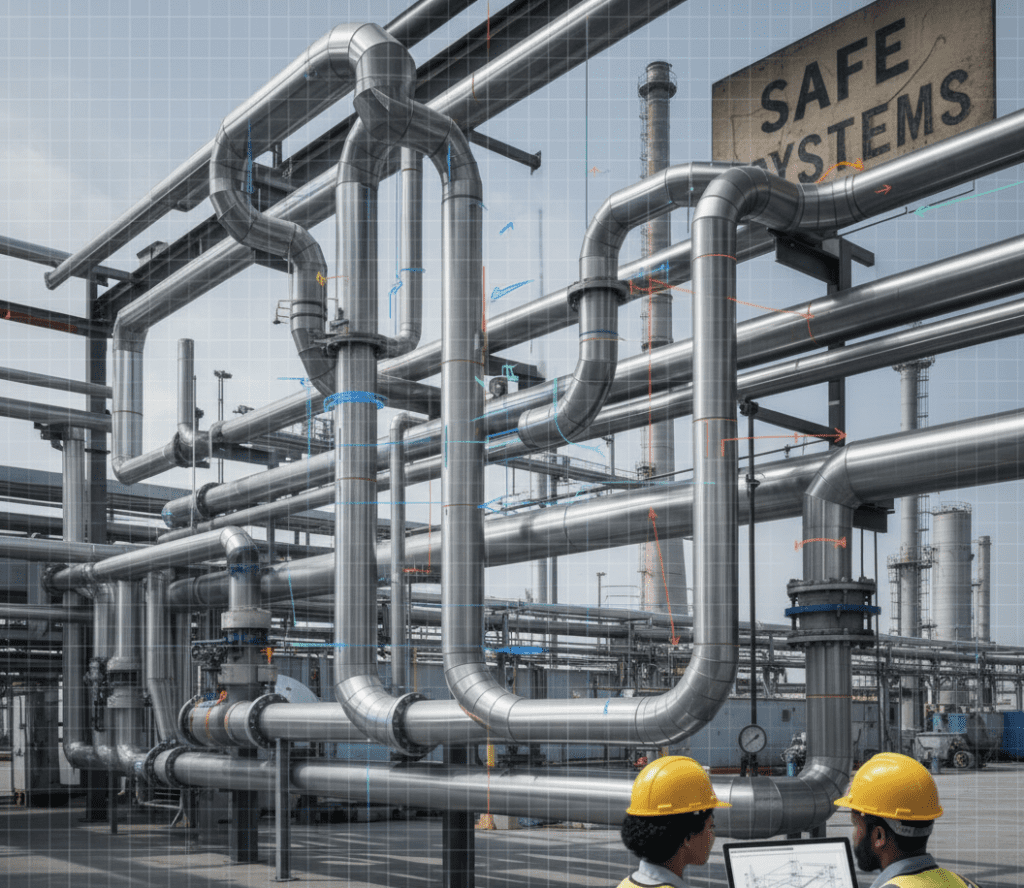
Piping Flexibility Analysis: A Guide to ASME B31 Compliance Piping Flexibility Analysis is a critical part of the design of industrial piping systems. Involved in sectors such as oil and gas, power generation, chemical processing, or manufacturing. For companies operating worldwide, aiming to supply / install piping systems in Canada understanding the requirements of local regulations is essential. Requirements can vary by country, province, or jurisdiction, and coordination with the relevant regulatory authority is always necessary. What Is Piping Flexibility Analysis? Piping Flexibility Analysis is the engineering process used to evaluate how a piping system responds to loads such as: Thermal expansion and contraction Internal pressure Dead weight of pipe and fluid Wind and seismic forces Equipment nozzle loads Flexibility analysis helps determine whether expansion loops, offsets, supports, or spring hangers are required to prevent excessive stress or equipment damage. Why Piping Flexibility Analysis Is Essential 1. Code Compliance Most major piping codes require flexibility analysis when thermal expansion or other loads could result in excessive stress. For example, ASME B31.3 Process Piping includes provisions for evaluating displacement stresses due to thermal expansion. Compliance requirements may differ depending on jurisdiction. In Canada, certain systems may also require design registration and review by a Professional Engineer licensed in the relevant province. In other countries, similar regulatory oversight may apply through local authorities. 2. Protection of Equipment Excessive piping loads can damage: Pumps Compressors Heat exchangers Pressure vessels Proper piping flexibility analysis ensures that nozzle loads remain within allowable limits defined by equipment manufacturers and applicable standards. This reduces the risk of premature failure and unplanned downtime. 3. Operational Reliability Uncontrolled thermal expansion can lead to: Pipe deformation Support failure Fatigue cracking A well-executed flexibility analysis improves long-term reliability and reduces maintenance costs. When Is Piping Flexibility Analysis Required? Not every piping system requires a detailed computer-based stress analysis. However, it is typically required when: The system operates at high temperature Large temperature differentials are expected The piping is connected to sensitive rotating equipment The system is subject to seismic or significant wind loads Regulatory authorities require formal stress documentation Engineering judgment plays an important role. Many codes state that formal analysis is required when flexibility is not “inherent” in the system layout. How Piping Flexibility Analysis Is Performed Step 1: Data Collection The engineer gathers: Piping layout and isometrics Material specifications Operating and design temperatures Pressure conditions Support details Applicable code requirements Step 2: Modeling and Load Cases Specialized software is used to create a 3D model of the piping system. Load cases are defined, such as: Sustained loads Thermal expansion loads Occasional loads like wind or seismic The software calculates stresses, displacements, and support reactions. Step 3: Code Evaluation Calculated stresses are compared against allowable limits specified in the applicable piping code. Equipment nozzle loads are checked against vendor allowable values. If results exceed allowable limits, the design is revised. This may include adding expansion loops, modifying support locations, or introducing spring supports. Step 4: Documentation and Stamping For regulated jurisdictions, final stress reports may need to be reviewed and stamped by a Professional Engineer licensed in the relevant region. Design registration requirements vary by country and province, and local regulations must always be confirmed. Key Standards and Regulatory Considerations Commonly referenced standards include: ASME B31.3 for process piping ASME B31.1 for power piping Local pressure equipment regulations Seismic and Wind codes depending on project location It is important to note that regulatory expectations can vary significantly. Some jurisdictions require submission of stress reports as part of design registration or CRN processes, while others may not. Engineering teams should verify all local compliance requirements before finalizing the design. Common Design Strategies to Improve Flexibility Effective piping flexibility analysis often leads to practical design improvements such as: Introducing expansion loops Adjusting anchor and guide locations Using spring hangers for vertical movement Optimizing support spacing Re-routing piping to increase natural flexibility These adjustments are most efficient when considered early in the design phase. How MECS Supports Piping Flexibility Analysis At MECS Engineering, piping flexibility analysis is integrated into broader engineering services, including piping design, structural stress analysis, CRN support, and Professional Engineer stamping where required. Our team provides detailed stress modeling, code compliance checks, and clear documentation tailored to project requirements worldwide. For complex systems, we coordinate flexibility analysis with structural design to ensure support structures and pipe stresses are aligned. Learn more about our approach to piping and structural stress analysis services and how we support safe, compliant piping systems. Conclusion Piping Flexibility Analysis is not simply a software exercise. It is a critical engineering process that ensures safety, regulatory compliance, and long-term reliability. Because regulatory and code requirements vary by country and jurisdiction, proper technical review and professional oversight are essential. Engaging experienced engineers early in the design process helps avoid costly revisions and operational risks. If your project requires piping flexibility analysis, stress documentation, or Professional Engineer review, MECS Engineering can provide practical, code-compliant support tailored to your location and industry. Contact our team to discuss your project requirements and ensure your piping system is designed for safety and performance.
Canadian Registration Number: What Manufacturers Need to Know
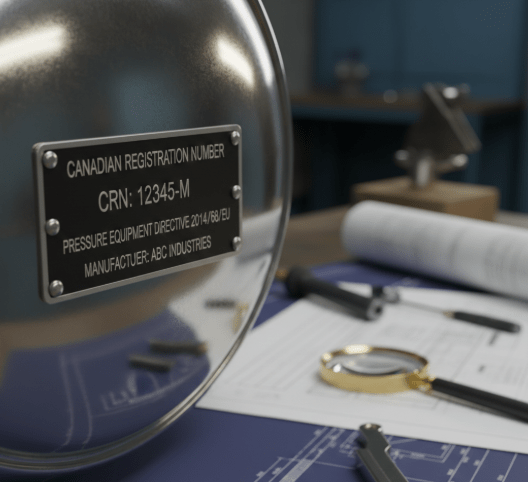
Canadian Registration Number: What Manufacturers Need to Know If you manufacture or supply pressure equipment to Canada, understanding the Canadian Registration Number is essential. Whether you are based in North America, Europe, or Asia, compliance with Canadian provincial regulations is mandatory before certain equipment can be installed or operated in Canada. This guide explains what a Canadian Registration Number is, when it is required, how the approval process works, and how MECS Engineering can simplify the path to compliance. What Is a Canadian Registration Number? A Canadian Registration Number is a unique registration string issued by a provincial or territorial regulator in Canada to indicate that the design of specific pressure equipment complies with applicable codes and safety regulations. Without a valid CRN, equipment cannot legally be installed or operated in Canada CRN generally applies to following pressure systems: Pressure vessels Boilers Heat exchangers Fittings Piping systems Unlike some countries that use a single national approval, Canada regulates pressure equipment at the provincial and territorial level. This means the requirements vary by each province and approval is granted by the local authority. When Is a Canadian Registration Number Required? A Canadian Registration Number is generally required before pressure equipment can be installed or operated in a specific province or territory. The requirement depends on: Type of equipment Pressure and volume thresholds Location of installation Applicable provincial legislation Because each province has its own regulatory framework, manufacturers must confirm requirements with the appropriate provincial regulator. For example, a pressure vessel approved in one province may not automatically be accepted in another unless it has been registered there as well. It is important to note that CRN approval relates to design registration. It does not replace other compliance obligations such as inspections, certifications, or quality control requirements. How the CRN Registration Process Works While details vary by jurisdiction, the typical Canadian Registration Number process includes the following steps: 1. Design Review and Code Compliance Engineering documentation must demonstrate compliance with applicable codes and standards. This often includes: Design calculations Material specifications Fabrication drawings Pressure and temperature ratings Code references Designs are usually based on applicable pressure vessels and piping codes such as ASME, PED, EN Codes and CSA B51. Additionally, local Canadian requirements must also be addressed. 2. P.Eng Authentication In many cases, documents submitted for CRN registration must be authenticated by a Professional Engineer of the relevant province. A Professional Engineer is licensed is responsible for ensuring the design meets applicable standards. This is where international manufacturers often require support. A Canadian licensed Professional Engineer can review, verify, and stamp documentation as required. 3. Submission to the Provincial Regulator The application package is submitted to the appropriate provincial authority. The regulator reviews the design for compliance with its legislation and safety codes. If the design is accepted, a Canadian Registration Number is issued for that jurisdiction. 4. Multi Province Registration If equipment will be used in multiple provinces, separate registrations may be required. Some jurisdictions participate in agreements that streamline multi province registration, but requirements can still differ. Careful planning at the design stage can reduce delays and rework. Common Challenges in CRN Applications Manufacturers worldwide often encounter similar issues when applying for a Canadian Registration Number: Incomplete or inconsistent calculations Drawings that do not clearly reflect code compliance Missing material traceability Incorrect assumptions about provincial acceptance Because regulations are administered provincially, small differences in interpretation can result in requests for clarification or revision. Working with engineers who understand Canadian regulatory expectations helps minimize these risks. How MECS Supports Canadian Registration Number Approvals As a professional engineering consultancy, MECS Engineering supports clients globally with CRN applications and pressure equipment compliance. Our services include: Piping design and stress analysis Pressure vessel design review Code compliance verification Preparation of CRN submission packages Professional Engineer authentication and stamping Technical liaison with provincial regulators We focus on practical compliance. That means aligning your existing design with Canadian requirements wherever possible, rather than recommending unnecessary redesign. If you are seeking support with your application, you can learn more about our dedicated Canadian Registration Number services here: mecsengineering.com/canadian-registration-number-crn Why Early Engineering Involvement Matters Engaging qualified engineers early in the design phase can significantly reduce approval timelines. Design adjustments made before fabrication are far more cost effective than modifications after submission or during inspection. For companies exporting to Canada for the first time, understanding the Canadian Registration Number process at the planning stage helps avoid delays in project execution, commissioning, and market entry. Final Thoughts on Canadian Registration Number Compliance A Canadian Registration Number is more than an administrative requirement. It is a formal confirmation that your pressure equipment design meets provincial safety expectations in Canada. Because requirements vary by province and are administered by local regulators, careful preparation and technical accuracy are essential. With the right engineering support, the CRN process becomes structured and manageable. If your organization needs guidance on Canadian Registration Number applications, code compliance, or Professional Engineer stamping, MECS Engineering is ready to assist. Contact our team to discuss your project and ensure your equipment meets Canadian regulatory requirements with confidence.
The Ultimate Guide to Piping Flexibility and Stress Analysis Techniques

The Ultimate Guide to Piping Flexibility and Stress Analysis Techniques In industrial plants, piping systems are more than just lines on a P&ID—they are critical assets that must safely carry fluids under pressure and temperature for decades. One key part of ensuring this reliability is piping flexibility analysis and stress analysis. In simple terms, flexibility analysis checks whether a piping system can safely expand, contract, and move under real operating conditions without overstressing the pipe, supports, or connected equipment. This guide walks through why flexibility matters, what engineers look at during analysis, and how software tools help ensure safe and compliant designs. Why Is Piping Flexibility Important? When piping is exposed to temperature changes, pressure, and external loads, it will try to move. If the system is too rigid, those movements are restrained and the resulting stresses can lead to: Excessive loads on equipment nozzles and flanges Premature gasket failures and leaks Pipe wall fatigue and cracking Support failures or excessive deflections Non-compliance with applicable design codes On the other hand, if the system is too flexible and poorly supported, you may see: Large displacements and sagging Vibration issues Interference with other systems Poor drainage or process problems A good design finds the right balance: enough flexibility to safely absorb movements, but enough stiffness and support to control displacement, vibration, and loads. What Does Piping Flexibility Analysis Actually Check? Piping flexibility analysis (often carried out as part of a full piping stress analysis) evaluates how a piping system behaves under various load conditions, such as: Thermal expansion and contraction (startup, shutdown, upset) Internal pressure (design, operating, and test conditions) Dead weight (pipe + fluid + insulation + fittings) Occasional loads (wind, seismic, relief loads, water hammer, etc.) Displacement loads (equipment settlement, nozzle movement, building movement) Using relevant codes and standards (e.g., ASME B31.1, B31.3, and others depending on service), engineers verify that: Calculated stresses stay within allowable limits. Forces and moments at equipment nozzles are within vendor or standard limits. Support loads and spans are acceptable. Displacements do not cause clashes, excessive sagging, or operating issues. Key Factors That Affect Piping Flexibility Some of the main inputs and decisions in flexibility analysis include: Temperature Range Maximum and minimum metal temperatures, including startup/shutdown and upset scenarios. Differential expansion between connected systems (e.g., hot pipe to cold equipment). Material and Pipe Size Hot modulus of elasticity and allowable stresses under design temperature. Differences between carbon steel, stainless steel, alloy steels, and non-metallic materials. Layout and Routing Lengths, offsets, and number of elbows/expansion loops. Routing around structures, equipment, and other lines. Supports and Restraints Types and locations of supports (rests, guides, line stops, springs, hangers). Use of expansion joints or flexible connectors where appropriate. Connected Equipment and Interfaces Pump, compressor, turbine, vessel, and heat exchanger nozzles. Vendor-specified allowable loads and movements. A well-planned layout makes flexibility analysis easier and often reduces the need for costly last-minute changes. Typical Steps in Piping Stress and Flexibility Analysis While details vary by project, a typical workflow looks like this: 1. Define the Design Basis Applicable design codes (e.g., ASME B31 series). Design pressures/temperatures, operating scenarios, and load cases. Material specifications and corrosion allowances. 2. Build the Piping Model Model the line in specialized software (such as CAESAR II, ROHR2, or similar tools), including all bends, tees, reducers, and equipment nozzles. Apply Loads and Boundary Conditions Weight, pressure, thermal expansion, wind, seismic, and displacement loads. Support conditions (rigid supports, variable springs, snubbers, guides, stops). 3. Run Static Analysis Evaluate sustained loads (pressure + weight). Evaluate expansion (thermal) stresses. Check occasional load cases (wind, seismic, relief loads, etc.). 4. Perform Dynamic Analysis (When Required) Used for vibration problems, water hammer, relief loads, seismic time-history, or rotating equipment issues. May include modal, harmonic, or time-history analyses to ensure no resonant conditions or excessive dynamic stresses. 5. Review Results and Optimize the Design Adjust routing, add or relocate supports, introduce expansion loops, or use flexible elements where necessary. Re-run the analysis until all code and equipment limits are satisfied. 6. Document and Communicate Prepare calculation reports, stress isometrics, and support drawings. Communicate required changes or recommendations to the piping design team and project stakeholders. The Role of Software in Piping Flexibility Analysis Modern piping stress analysis relies heavily on specialized software. These tools: Solve large systems of equations quickly and accurately. Handle multiple load cases and combinations. Provide detailed stress, displacement, and support load results. Help evaluate “what-if” scenarios efficiently. However, software is not a replacement for engineering judgment. Experienced stress engineers are needed to: Define realistic load cases and boundary conditions. Interpret results correctly. Ensure the model reflects actual field conditions. Make practical recommendations that can be implemented safely and economically. Lessons from Real Projects From real-world experience, a few consistent lessons emerge: Never assume “small” lines don’t need checks. Even relatively small bore lines can create high nozzle loads if routing or supports are poor. Field conditions matter. Mismatched materials, incorrect support installation, or undocumented changes can invalidate assumptions and require re-analysis. Early involvement saves time and cost. Involving stress engineers during the layout stage avoids expensive rework later in the project. Communication is key. Stress analysis results must be clearly communicated to design, construction, and operations teams. FAQs on Piping Flexibility Analysis 1. What is the biggest mistake people make in flexibility analysis?Relying only on rules of thumb or past experience without performing a proper analysis for the specific piping system. Each system has its own temperatures, routings, and constraints—copy-paste solutions can miss critical issues. 2. When should a piping stress or flexibility analysis be carried out?You should perform analysis for piping systems that are: High temperature or high pressure Connected to rotating equipment or sensitive machinery Subject to significant thermal expansion or large displacements Located in seismic or high-wind regions Critical to safety or production continuity Changes to operating conditions, routing, or supports often require the analysis to be updated as well. 3. Is software analysis foolproof?No. Software is a powerful tool, but it depends entirely on the quality of input data, load cases, and engineering judgment. A model built on wrong assumptions can still produce very
Canadian Registration Number (CRN) Guide for Engineers and Manufacturers

Canadian Registration Number (CRN) Guide for Engineers and Manufacturers The Canadian Registration Number (CRN) is a design registration identifier required for many types of pressure equipment used in Canada. Engineers, manufacturers, fabricators, and plant owners commonly encounter CRN requirements when designing, importing, or installing pressure vessels, boilers, pressure piping, fittings, and other pressure-retaining components. Understanding how CRN registration works is essential for meeting provincial and territorial safety regulations, avoiding project delays, and ensuring equipment can be legally installed and accepted during inspection. This guide explains what a Canadian Registration Number is, why it is required, which equipment is typically subject to registration, how the process works across jurisdictions, and how professional engineering support can simplify compliance for projects in Canada and the United States. What is a Canadian Registration Number (CRN)? A Canadian Registration Number (CRN) is a design registration identifier issued by a provincial or territorial pressure equipment safety authority in Canada. It indicates that the design submission has been reviewed and found to comply with the applicable codes, standards, and jurisdictional requirements (commonly CSA B51 and applicable ASME codes). CRN registration is a design registration process. It is not a replacement for other requirements that may apply, such as: shop quality program requirements (where applicable) Authorized Inspector involvement (where applicable) installation permits inspections and field verification requirements related to alterations or repairs In practical terms, CRN registration helps ensure that the equipment design package meets the minimum regulatory expectations before the equipment is installed and put into service. Why is CRN approval required? Pressure equipment can pose significant safety risks if it is not designed, fabricated, and installed correctly. Canadian regulators use CRN design registration to help ensure that key design inputs, calculations, materials, and drawings meet the adopted safety codes and standards. Common reasons CRN approval is required include: compliance with provincial and territorial safety legislation protection of workers, facilities, and the public verification that a design meets code requirements before installation legal acceptance of equipment during installation and inspection processes Which equipment typically requires a CRN? CRN requirements commonly apply to pressure-retaining equipment and components used in Canada, subject to jurisdictional rules and exemptions. Typical examples include: pressure vessels and heat exchangers boilers (including certain heating and power boiler applications) pressure piping and piping systems (depending on jurisdiction and service conditions) pressure fittings, flanges, valves, and components above specified limits expansion joints and custom pressure-containing components pressure relief devices and associated pressure-retaining parts (as applicable) Exact requirements vary by province and territory, and exemptions may apply based on pressure, volume, fluid service category, size limits, and other factors. Requirements also differ depending on whether the item is a complete assembly, a component, or a category fitting registration. For piping systems, confusion is common. Registration may apply to specific lines or systems based on service conditions and jurisdictional rules, rather than an entire facility’s piping. Provincial and territorial differences in CRN requirements Canada regulates pressure equipment at the provincial and territorial level. Each jurisdiction has its own authority and administrative processes, including submission portals, fees, and review workflows. Key points to understand: a single design may require registration in multiple jurisdictions, depending on where the equipment will be installed administrative expectations (forms, declarations, package format) can differ by jurisdiction some jurisdictions may issue registration identifiers in slightly different formats or with different internal tracking practices Many jurisdictions participate in mutual-recognition or reconciliation processes that can reduce duplicated technical review, but administrative steps and registration still typically occur for each jurisdiction. Because multi-jurisdiction registrations can become time-consuming, early planning and coordinated submissions often reduce delays. Codes and standards commonly used for CRN submissions CRN submissions typically reference recognized codes and standards adopted by the jurisdiction. Common examples include: CSA B51 (Boiler, pressure vessel, and pressure piping code) ASME BPVC Section VIII (pressure vessels) ASME B31.1 / B31.3 (power piping / process piping, where applicable) ASME Section I or Section IV (boilers, depending on service and jurisdictional classification) ASME B16 series standards (fittings, flanges, valves, pressure-temperature ratings, as applicable) The applicable code depends on the equipment type, service, and design conditions. Correct code selection and correct edition references are frequent review focus areas. What documents are typically required in a CRN design submission? While requirements vary by jurisdiction and equipment type, a typical CRN submission package may include: General Arrangement (GA) drawings, P&IDs and fabrication details bill of materials and material specifications (including code-listed materials where applicable) design conditions: design pressure, design temperature, MDMT, corrosion allowance, fluid/service, cyclic service assumptions (if applicable) code of construction and code edition/addenda references design calculations (design-by-rule, or design-by-analysis/FEA where required) weld joint details, efficiencies, and NDE assumptions (as applicable) pressure-temperature rating information (for fittings and valves, where applicable) declarations or statutory documentation for category fitting registrations (as applicable) marking and nameplate data (as applicable) supporting reports and clarifications requested by the reviewing authority Incomplete design inputs commonly lead to review questions and resubmissions. How the CRN application process works While steps differ by jurisdiction, the process generally follows a predictable workflow. Define scope and jurisdiction(s)Confirm where the equipment will be installed and which jurisdictions require registration. Prepare the design packagePrepare drawings, specifications, and calculations aligned with the applicable code and CSA B51 expectations. Engineering review and professional sealing (when required)A licensed Professional Engineer may be required to review, sign, and seal supporting documents depending on jurisdiction, equipment type, and submission pathway. Engineering review supports technical completeness and code compliance, but the authority issues the CRN. Submit to the jurisdictional authoritySubmit the design package through the regulator or delegated safety authority portal, including required forms. Regulatory review and clarificationsThe authority reviews the submission. Clarification requests are common, especially for unusual geometry, non-standard materials, complex piping systems, or design-by-analysis elements. CRN issuance and recordkeepingOnce accepted, the authority issues a CRN (or confirms registration). Maintain records, including jurisdictional acceptance letters and any conditions of acceptance. Fabrication, installation, and inspection After design registration, fabrication and installation proceed under applicable quality, inspection, and installation requirements. How long does CRN approval take? Timelines
Engineering Services for Reliable Industrial Projects in Canada and USA
Engineering Services for Reliable Industrial Projects in Canada and USA Engineering services play a critical role in the safety efficiency and long term success of industrial projects across Canada and the USA. From early concept design to regulatory approval and execution companies rely on experienced engineering partners to meet technical requirements while staying compliant with local codes and standards. For organizations operating in energy manufacturing chemicals and process industries choosing the right professional engineering services and consultancy can reduce risk, improve project timelines and support confident decision making. What Engineering Services Mean in a North American Context In Canada and the USA engineering services go beyond calculations and drawings. They involve regulated professional practice governed by provincial and state authorities. Requirements can vary by province or state and local regulations always apply. Professional engineering services typically include design analysis documentation and review performed or supervised by a licensed Professional Engineer. In Canada this often involves P Eng oversight while in the USA similar licensure requirements apply at the state level. Core Engineering Services Offered by Professional Consultancies A qualified engineering consultancy supports projects across multiple stages. Common services include the following. Piping Design and Layout Accurate piping design ensures safe flow efficient operation and maintainability. Engineers consider process requirements equipment interfaces and applicable codes such as ASME while adapting designs to site conditions. Stress Analysis and Flexibility Studies Stress analysis helps verify that piping systems can withstand thermal expansion pressure and external loads. This is essential for preventing fatigue leaks and long term reliability issues in operating plants. CRN Support and Design Registration In many Canadian provinces pressure equipment requires a Canadian Registration Number. Engineering services include preparation of calculations drawings and coordination with provincial regulators. Requirements vary by province and early planning helps avoid delays. P Eng Stamping and Engineering Review Professional Engineer stamping confirms that designs meet regulatory and safety requirements. This step is often mandatory for submission to authorities, owners and insurers. Multidisciplinary Engineering Support Engineering consultancies often integrate mechanical piping and process engineering to provide coordinated solutions that align with project goals and operational constraints. Why Businesses in Canada and USA Need Professional Engineering Services Industrial projects in North America face strict compliance expectations. Working with a professional engineering services provider helps organizations. Meet regulatory and safety requirements with confidence Reduce risk related to design errors and non compliance Improve coordination between design construction and operations Support approvals from provincial and state regulators Protect long term asset integrity and performance Many project challenges arise not from lack of effort but from unclear requirements or late involvement of engineering expertise. Early engagement with a qualified consultancy often leads to smoother project delivery. Choosing the Right Engineering Services Partner When selecting an engineering services provider in Canada or the USA consider the following factors. Experience with similar industrial facilities and systemsUnderstanding of local codes standards and approval processesAbility to provide P Eng oversight and regulatory supportClear communication and practical engineering approach A strong partner focuses on what clients need in practice rather than overcomplicating solutions. How MECS Engineering Supports Industrial Clients MECS Engineering provides professional engineering services and consultancy tailored to industrial projects across Canada and the USA. The team supports clients with piping design stress analysis CRN documentation and P Eng stamping while keeping regulatory requirements clear and manageable. By combining technical depth with practical project experience MECS helps organizations move from concept to approval with confidence. Learn more about their full range of engineering services by visiting the MECS Engineering website at https://mecsengineering.com. Final Thoughts on Engineering Services Engineering services are not just a project requirement. They are a strategic investment in safety compliance and long term performance. For companies operating in Canada and the USA working with an experienced professional engineering consultancy helps ensure that designs meet regulatory expectations and support reliable operations. If your project requires trusted engineering services for piping systems stress analysis or regulatory approval now is the right time to engage a qualified partner. Explore how MECS Engineering can support your next project and help you move forward with confidence.
Piping in Canada and Why a CRN Number Matters

Piping in Canada and Why a CRN Number Matters Across Canada, pressure piping and other pressure equipment must meet provincial safety requirements. One of the most important compliance items is the Canadian Registration Number (CRN), which confirms that a pressure equipment design has been accepted by a Canadian jurisdiction’s regulator. For companies executing piping projects in Canada, understanding when CRN registration applies and planning for it early can prevent schedule delays and costly rework. What is a CRN Number? A CRN is a unique identifier issued by a Canadian jurisdiction (province or territory) to indicate that a pressure equipment design has been reviewed and registered in accordance with applicable Canadian requirements. Depending on the scope, CRNs may apply to items such as pressure vessels, fittings, valves, and certain piping systems or assemblies. Because pressure equipment regulation is handled at the provincial/territorial level, registration is jurisdiction-specific. A design registered in one province may require registration in other provinces where the equipment will be manufactured, installed, or operated. Why CRN Planning Matters for Piping Projects in Canada For piping projects, CRN-related requirements can affect: procurement (purchasing “CRN-ready” components versus custom items needing registration) fabrication and inspection planning installation schedule and turnover documentation If a CRN is required and the design is not registered in time, projects can be delayed at the fabrication, installation, or commissioning stage. Early clarity on the registration scope (what needs a CRN and in which jurisdictions) is often the simplest way to protect schedule and budget. Jurisdictional Expectations and CRN-Related Piping Stress Review Regulator expectations can differ across Canada. For example, Alberta (ABSA) and Ontario (TSSA) may have different submission conventions, review focus areas, and documentation preferences. For pressure piping, regulators and authorized inspection agencies typically expect engineering packages that clearly demonstrate code compliance (commonly ASME B31.3/B31.1 or other applicable B31 codes, depending on service). Where applicable, a piping stress analysis is often part of demonstrating: adequate flexibility and thermal expansion control sustained and occasional load compliance support and restraint philosophy equipment nozzle load management (where required by the equipment vendor or project specifications) A well-prepared CRN submission avoids gaps such as unclear design conditions, incomplete material traceability, inconsistent code references, or missing stress justification where it is needed. How MECS Engineering Supports CRN Compliance MECS Engineering supports clients across Canada by aligning piping design documentation with regulator expectations and project realities. Our team routinely coordinates with jurisdictions such as ABSA and TSSA and helps clients reduce back-and-forth during review. Typical support includes: scope definition for CRN planning (what must be registered, and where) design review and compliance checks for pressure piping and related pressure equipment piping stress review/analysis support where required for compliance or risk reduction preparation and completion of submission packages and responses to regulator comments Why MECS Engineering MECS Engineering provides end-to-end support for pressure piping and pressure equipment compliance in Canada, with a practical focus on “getting it accepted” while protecting the project schedule. By addressing jurisdiction-specific requirements early, we help clients avoid common causes of CRN delays such as incomplete design conditions, documentation gaps, or inconsistent engineering basis. Summary CRN registration is more than paperwork—it is a critical compliance step that protects safety, reduces project risk, and supports smooth fabrication, installation, and inspection. If you are executing a piping project in Canada and need clarity on CRN scope or support with submissions, MECS EngineeringMECS Engineering can help you move from design to approval with fewer surprises.
Piping Engineering: Streamlining Industrial Systems with Expertise

Piping Engineering: Streamlining Industrial Systems with Expertise In industrial facilities, piping is the circulatory system that keeps operations running. Whether the service is steam, condensate, hydrogen, natural gas, chemicals, glycol, or utilities, piping must be engineered to operate safely under pressure and temperature, integrate properly with connected equipment, and meet code and provincial/state requirements. Piping engineering focuses on practical, buildable design that supports safe operation, maintainability, and long-term reliability. It includes routing and layout, material selection, flexibility and support philosophy, interface management with equipment and structures, and engineering checks that confirm the system will perform as intended throughout its life. Why piping engineering services are essential Poorly engineered piping can create consequences that are expensive and disruptive: unexpected loads on equipment nozzles, vibration and fatigue failures, thermal expansion problems, leaks, rework during installation, and delays during regulator or third-party reviews. Strong piping engineering reduces these risks early, when changes are least costly. Key components of piping engineering services Piping design and layoutDeveloping routing that is constructible and maintainable, selecting materials and components, defining insulation and heat tracing interfaces, and coordinating with structural and mechanical constraints. Piping flexibility and stress analysisEvaluating sustained, thermal expansion, and occasional loads to confirm compliance with the governing code and to protect connected equipment. This includes support locations, anchor and guide strategies, nozzle load checks (as applicable), and practical recommendations to reduce field changes. Isometrics and fabrication-ready deliverablesProducing accurate isometrics, bill of materials, weld maps (when required), and installation details that support fabrication and construction execution. Code and regulatory complianceConfirming alignment with applicable standards such as ASME B31.1, ASME B31.3, ASME B31.9, and project specifications, along with local jurisdictional requirements that vary by province and state. Jurisdictional expectations and pressure piping registrationIn Canada, pressure piping requirements are jurisdiction-driven. Expectations can differ between provinces, even when the same ASME piping code is used as the design basis. For example, Alberta and Ontario have established design submission practices through ABSA and TSSA, respectively, and reviewers typically expect a complete, coherent package that connects the engineering intent to code compliance. A pressure piping submission commonly requires items such as: piping line list and design conditions (pressure, temperature, fluid service, corrosion allowance) P&IDs tied to specifications piping material specifications and component standards supports and flexibility philosophy stress analysis (when required by service, size, temperature, layout complexity, or jurisdictional expectations) consistent documentation that aligns design basis, calculations, and drawings CRN-related piping stress review (where CRN fits) CRN registration applies to pressure-retaining components (such as fittings, valves, flanges, and some assemblies) that are registered for use in Canadian jurisdictions. Piping systems themselves are typically handled through pressure piping design registration requirements rather than CRN, but the two often intersect in real projects. MECS frequently supports clients where piping stress analysis and regulator-facing documentation must align with registered components and jurisdictional review expectations. When a project includes CRN-registered components (or requires new CRNs for specific items), the piping design and stress review should be consistent with: the component design limits and ratings the specified materials and corrosion allowances the project design basis and operating scenarios the submission package logic that regulators expect (traceability and consistency across documents) How MECS Engineering supports industrial projects MECS Engineering provides piping engineering services that are grounded in real execution and regulator expectations. Our team supports clients across multiple jurisdictions, including projects involving ABSA and TSSA reviews, where completeness, clarity, and code alignment matter as much as the calculations. MECS support can include: piping stress analysis and flexibility studies for critical systems design review and compliance verification for piping packages constructability input and support optimization to reduce field changes regulator-ready documentation support aligned with project scope and jurisdictional requirements coordination with mechanical, structural, and process disciplines to prevent interface issues Value of professional piping engineering Piping engineering is not only a design activity; it is risk control. A well-engineered piping system improves safety, reduces downtime, supports reliable operation, and prevents expensive construction rework. With MECS Engineering, clients get practical engineering backed by code knowledge and experience working with jurisdictional expectations.
