
When Do You Need a Piping Stress Analysis? Real-World Scenarios
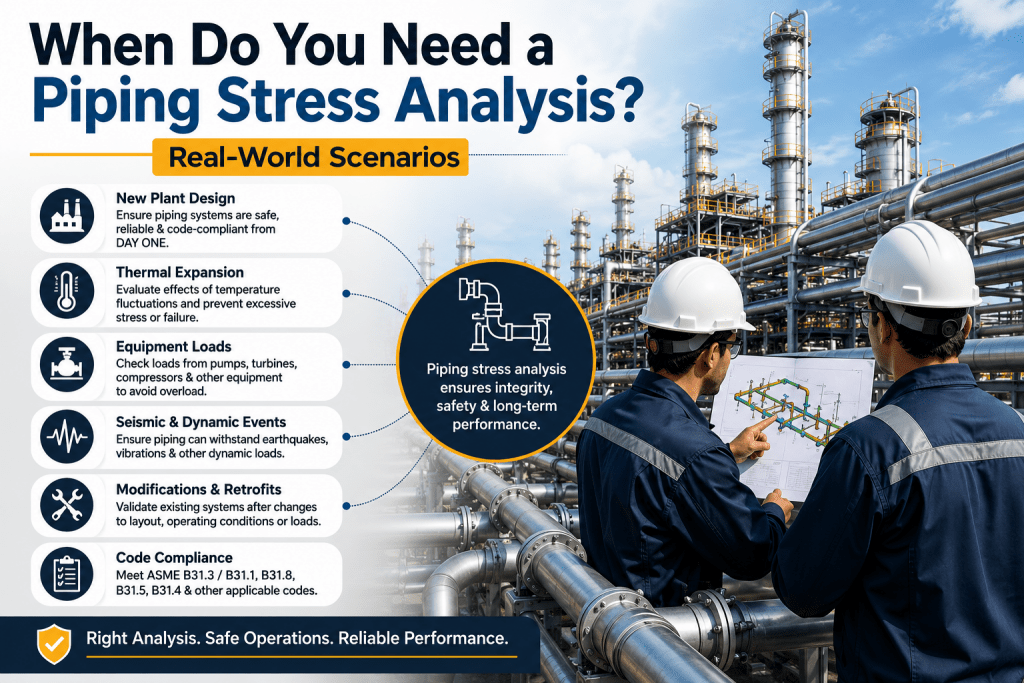
When Do You Need a Piping Stress Analysis? Real-World Scenarios Piping systems in industrial facilities are exposed to various operating conditions, including pressure, temperature changes, vibration, equipment movement, and external loads. While piping may appear simple, it plays a critical role in plant safety, reliability, and regulatory compliance. For companies involved in Piping Canada projects, piping stress analysis helps identify potential design issues before installation, reducing the risk of costly modifications and operational failures. What Is Piping Stress Analysis? Piping stress analysis is an engineering evaluation used to determine whether a piping system can safely withstand the loads it will experience during operation. The analysis typically considers: Internal pressure Thermal expansion and contraction Dead weight loads Equipment displacement Wind and seismic forces Vibration and dynamic loads Relief valve discharge forces The goal is to ensure the system complies with applicable standards such as ASME B31.1, ASME B31.3, CSA requirements, and relevant Canadian regulations. Why Is Piping Stress Analysis Important? A piping system that meets basic design requirements may still experience excessive stress during operation. Without proper analysis, facilities can face problems such as: Equipment nozzle overload Pipe support failures Excessive vibration Leaks and fatigue cracking Thermal expansion damage Increased maintenance costs Compliance concerns Conducting stress analysis early in the project helps improve safety, reliability, and long-term performance. Common Scenarios Where Stress Analysis Is Required High-Temperature Piping Systems Steam, hot oil, and other elevated-temperature systems expand as temperatures rise. Stress analysis helps verify that thermal growth can be accommodated without damaging equipment or supports. Critical Equipment Connections Piping connected to pumps, compressors, turbines, heat exchangers, and pressure vessels often requires stress evaluation to ensure nozzle loads remain within allowable limits. Long Pipe Runs Long piping networks experience greater thermal movement and flexibility challenges. Stress analysis helps determine support locations, anchor points, and expansion requirements. High-Pressure Applications Industries such as oil and gas, power generation, and chemical processing frequently operate at high pressures. Stress analysis helps verify compliance with allowable stress limits and design codes. Vibration-Prone Systems Systems connected to rotating equipment or high-velocity flow can experience vibration-related failures. Engineering analysis helps identify mitigation measures before problems occur. Plant Expansions and Modifications Equipment replacements, tie-ins, and process upgrades can alter load distribution within an existing piping system. Stress analysis helps confirm that the modified system remains safe and reliable. Industries That Commonly Require Piping Stress Analysis Stress analysis is commonly performed in: Oil and gas Petrochemical Power generation Chemical processing Mining Pulp and paper Water treatment Manufacturing facilities Each industry has unique operating conditions and compliance requirements that influence the level of analysis needed. How MECS Engineering Supports Piping Projects MECS Engineering provides engineering support for industrial piping and pressure equipment projects across Canada and international markets. Our services include: Piping stress analysis Piping design Pressure vessel engineering FEA studies CRN support Mechanical engineering consulting Code compliance reviews P.Eng-reviewed calculations We work with clients to develop practical, code-compliant solutions that support safe and reliable plant operation. Conclusion Piping stress analysis becomes essential whenever a system is exposed to temperature changes, pressure loads, vibration, equipment interaction, or significant modifications. Identifying potential issues early can help reduce project risks, improve reliability, and support compliance with applicable regulations. MECS Engineering provides practical piping stress analysis and engineering support for industrial projects across Canada, helping clients achieve safe, efficient, and compliant system designs.
How to Choose the Right Piping Engineering Company for Your Project

How to Choose the Right Piping Engineering Company for Your Project Industrial piping systems are at the heart of many facilities, from manufacturing plants and energy projects to chemical processing and water treatment operations. A well-designed piping system supports safe operations, reliable performance, and long-term efficiency. That is why selecting the right piping engineering company is an important decision for any project. Whether you are planning a new facility, expanding an existing plant, or upgrading critical infrastructure, experienced engineering support can help reduce risk, improve constructability, and support compliance with applicable codes and regulations. What Does a Piping Engineering Company Do? A piping engineering company provides technical expertise for the design, analysis, and evaluation of industrial piping systems. The scope of work can vary depending on project requirements but often includes: Piping design and layout development Piping stress analysis Pipe support design Pressure equipment integration Engineering calculations and documentation 3D modeling and drafting Code compliance reviews Construction and fabrication support The goal is to develop piping systems that operate safely while meeting performance, maintenance, and operational requirements. Why Specialized Piping Engineering Matters Safety and Reliability Industrial piping systems frequently operate under pressure, temperature fluctuations, and dynamic loading conditions. Engineering analysis helps ensure that systems can safely withstand these operating conditions throughout their service life. Without proper design review, piping systems may experience excessive stress, vibration, support failures, or equipment loading issues. Improved Project Efficiency Well-planned piping layouts help reduce construction challenges, improve maintenance access, and minimize costly field modifications. Early engineering involvement can also improve coordination between mechanical, structural, process, and fabrication teams. Compliance with Industry Standards Many piping systems must comply with recognized standards such as ASME B31.1, ASME B31.3, or other applicable codes. In Canada, some projects may also involve CRN-related requirements and Professional Engineer review depending on the equipment and jurisdiction. Requirements vary by province, state, and local authority, making project-specific engineering review essential. Key Services to Look for in a Piping Engineering Company Piping Design and Layout A strong engineering partner should be able to develop practical piping routes that balance safety, accessibility, constructability, and operational efficiency. Proper routing decisions can significantly impact installation costs and long-term maintenance requirements. Piping Stress Analysis Stress analysis is a critical part of piping engineering. It evaluates how a system responds to loads such as: Internal pressure Thermal expansion and contraction Equipment nozzle loads Dead weight loads Wind and seismic forces This analysis helps identify areas where flexibility, support modifications, or design changes may be needed. Pressure Equipment Support Many industrial projects involve pressure vessels, heat exchangers, tanks, and related equipment. A qualified piping engineering company should understand how piping systems interact with these assets and how loads affect equipment performance. Regulatory and Compliance Support For projects involving pressure equipment in Canada, engineering support may include CRN registration assistance, design reviews, and Professional Engineer stamping where required. Understanding local regulatory expectations can help avoid approval delays and project disruptions. What Sets a Good Piping Engineering Company Apart? Not all engineering firms offer the same level of expertise. When evaluating a partner, consider factors such as: Industry Experience Experience with industrial facilities, pressure systems, and fabrication practices often leads to more practical engineering solutions. Multidisciplinary Knowledge Piping systems interact closely with structural, mechanical, and process systems. Firms with multidisciplinary capabilities can provide better project coordination. Focus on Practical Solutions The best engineering recommendations are not only technically correct but also realistic to implement in the field. Clear Communication Well-organized documentation and responsive communication help keep projects moving efficiently. How MECS Supports Industrial Piping Projects MECS provides professional engineering services for industrial clients throughout Canada, the USA, and international markets. Our capabilities include: Piping system design Piping stress analysis Pipe support engineering Pressure equipment engineering CRN support services Professional Engineer stamping where required Technical documentation and drafting support By combining engineering expertise with practical project experience, MECS helps clients develop safe, efficient, and code-compliant solutions. Conclusion Choosing the right piping engineering company can have a significant impact on project safety, compliance, and long-term performance. From piping design and stress analysis to regulatory support and engineering review, experienced professionals help ensure that systems perform as intended throughout their lifecycle. MECS provides practical engineering solutions tailored to industrial projects across Canada, the USA, and worldwide. Contact our team to discuss your piping engineering requirements and learn how we can support your next project.
Stress Analysis: Why It Is Critical for Industrial Piping Systems
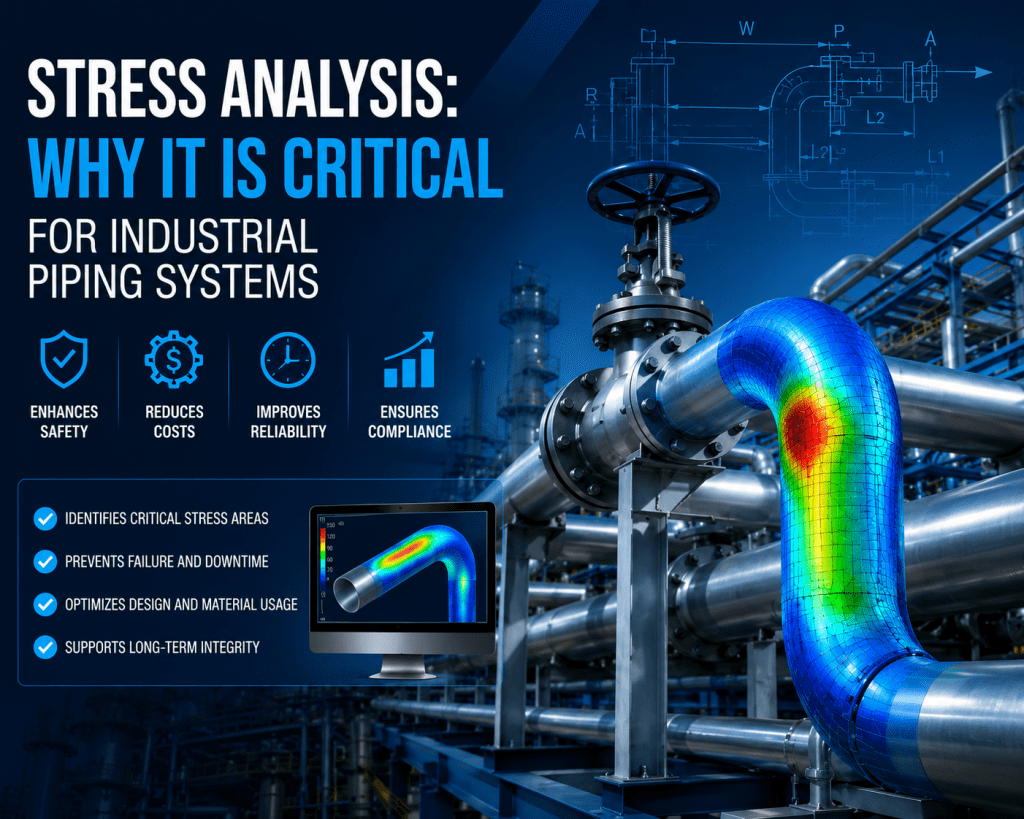
Stress Analysis: Why It Is Critical for Industrial Piping Systems Industrial piping systems operate under demanding conditions. Pressure, temperature changes, vibration, equipment loads, and environmental forces can all affect system performance over time. Without proper engineering review, these factors may lead to equipment strain, support failures, excessive movement, or unplanned downtime. What Is Stress Analysis? Stress Analysis is the engineering process used to evaluate how piping systems and structures respond to operational and environmental loads. In industrial projects, engineers assess conditions such as: Internal pressure Thermal expansion and contraction Pipe and equipment weight Wind and seismic loads Vibration and dynamic forces Equipment nozzle loads Specialized engineering software and calculations are used to determine whether the system remains within acceptable stress limits. The goal is not only to satisfy code requirements but also to improve long-term system reliability and operational safety. Why Stress Analysis Is Important Protecting Critical Equipment Industrial equipment such as pumps, compressors, vessels, and heat exchangers can be sensitive to piping loads. Excessive stress transferred to connected equipment may cause alignment issues, seal failures, or premature wear. Stress analysis helps engineers verify that loads remain within acceptable limits. Managing Thermal Expansion Piping systems expand and contract as operating temperatures change. Without proper flexibility, thermal movement can create excessive stress in the system. Engineering analysis helps identify where supports, expansion loops, or routing adjustments may be needed. When Is Stress Analysis Needed? Many industrial projects benefit from stress analysis, particularly when systems involve: High temperature piping Steam systems Long pipe runs Large diameter piping Critical rotating equipment Pressure equipment connections Frequent thermal cycling Complex support arrangements Plant modifications and brownfield projects also often require review because existing systems may experience different loads after changes are introduced. Typical Deliverables in a Stress Analysis Project Professional engineering stress analysis commonly includes several technical deliverables. Piping Stress Models Engineers create digital models to simulate operating conditions and evaluate sustained, expansion, and occasional loads. Support Recommendations Analysis may identify the need for guides, anchors, spring supports, or support relocation. Equipment Load Evaluation Loads transferred to pumps, vessels, and compressors are reviewed against allowable limits. Engineering Reports Documentation typically includes calculations, assumptions, code references, and recommended corrective actions where required. How MECS Supports Stress Analysis Projects MECS provides practical Stress Analysis services for industrial clients across multiple sectors. Our team supports projects involving: Piping stress analysis Structural stress review Pipe support engineering Pressure equipment systems CRN support documentation Professional Engineer stamping where required Coordination with mechanical and structural disciplines MECS works with plant owners, fabricators, EPC companies, and manufacturers to develop reliable engineering solutions that align with operational and project requirements. Choosing the Right Engineering Partner Effective stress analysis requires more than software capability alone. Engineers must also understand constructability, operations, maintenance access, and practical field conditions. A strong engineering partner should provide clear recommendations that support both compliance and efficient project execution. Conclusion Stress Analysis plays an important role in the safety, reliability, and performance of industrial piping systems. By evaluating operational loads and system behaviour, engineering teams can help reduce risk, improve equipment protection, and support code-compliant designs. MECS provides stress analysis and engineering support services for projects across Canada, the USA, and international markets. Contact our team to discuss your next piping or structural engineering project.
Piping Stress Analysis: Why It Matters for Safe and Compliant Facilities
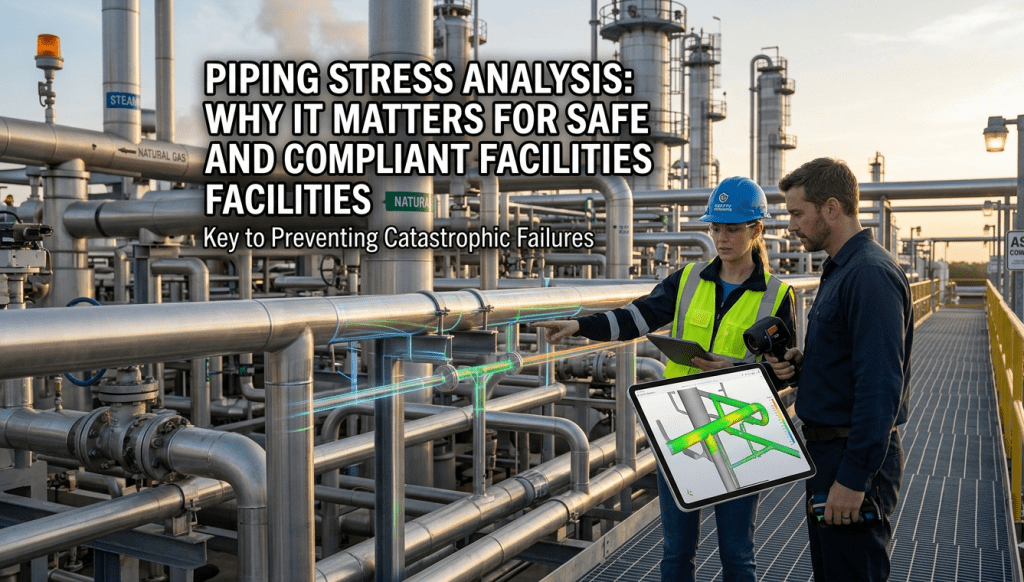
Piping Stress Analysis: Why It Matters for Safe and Compliant Facilities In industrial facilities, piping systems do much more than move fluids from one point to another. They operate under pressure, experience temperature changes, carry heavy loads, and connect to critical equipment. Without proper engineering review, these forces can lead to leaks, vibration, equipment nozzle failures, or costly downtime. That is why Piping Stress Analysis is a key part of safe and reliable plant design.Whether you are building a new system or modifying an existing one, understanding piping behaviour under real operating conditions helps reduce risk and improve long-term performance. What Is Piping Stress Analysis? Piping Stress Analysis is the engineering process of evaluating how a piping system responds to loads such as: Internal pressure Thermal expansion and contraction Dead weight of pipe, valves, and insulation Wind and seismic forces Vibration and dynamic loads Equipment nozzle loads Engineers use specialized software and sound engineering judgment to model the piping system, identify overstressed areas, and recommend practical design changes. The goal is not simply to pass a software check. It is to ensure the system can operate safely, maintain alignment, and avoid premature failure. Why Piping Stress Analysis Is Important 1. Protects Equipment Connections Pumps, compressors, vessels, and heat exchangers are sensitive to external piping loads. Excessive nozzle loads can create misalignment, seal failures, or equipment damage. A proper analysis helps confirm connected equipment remains within allowable load limits. 2. Manages Thermal Expansion As temperatures rise or fall, piping expands and contracts. If movement is restrained, high stresses can develop. Stress analysis identifies where flexibility is needed through routing changes, expansion loops, or spring supports. 3. Supports Code Compliance Many industrial projects must comply with codes such as ASME B31.1, ASME B31.3, or other jurisdictional requirements. In Canada, provincial regulations may also apply depending on the system and location. Engineering review helps document that the design meets applicable standards. Requirements can vary by province, state, and authority having jurisdiction. 4. Reduces Downtime and Maintenance Costs Unexpected vibration, fatigue cracking, and support failures can interrupt operations. Identifying these issues during design is far less expensive than correcting them after startup. When Should You Request Piping Stress Analysis? Many projects benefit from early stress review, especially when systems involve: High temperature service Large diameter piping Long pipe runs Critical rotating equipment Steam and condensate systems Frequent thermal cycling Complex support arrangements Revamps or tie-ins to existing plants Even smaller systems may require analysis if operating conditions or connected equipment make loads significant. Typical Deliverables from a Stress Analysis Study A professional engineering review often includes: Stress Model and Calculations A computer model is created to evaluate sustained, expansion, and occasional loads. Support Recommendations Engineers may recommend guides, anchors, spring supports, or layout adjustments. Equipment Load Review Loads at pumps, vessels, and other connections are checked against manufacturer or code limits. Practical Design Changes The best solution is often a simple routing change or support relocation rather than costly redesign later. Piping Stress Analysis in Canada and the USA Facilities across Canada and the USA often require a combination of code compliance, owner standards, and regulatory approvals. In Canada, projects may also involve CRN support, depending on the pressure equipment scope and jurisdiction. Professional Engineer review or stamping requirements can vary by province. In the USA, owner specifications, insurance requirements, and applicable state regulations may also influence project deliverables. Working with an experienced engineering team helps ensure the analysis aligns with the real approval pathway, not just theoretical calculations. How MECS Engineering Supports Clients MECS Engineering provides practical Piping Stress Analysis services for industrial clients, EPC firms, fabricators, and plant owners. Our team supports projects involving: New piping system design Brownfield modifications Pipe support design Pressure equipment packages CRN support documentation Professional Engineer stamping where required Coordination with piping, structural, and mechanical disciplines Learn more about our dedicated service here: Piping Structural Stress Analysis Choosing the Right Engineering Partner When selecting a consultant, look for more than software capability. You need engineers who understand constructability, plant operations, code requirements, and practical solutions. A good stress report should clearly explain risks, assumptions, and recommended actions. It should help move the project forward, not create confusion. Conclusion Piping Stress Analysis is an essential investment in safety, reliability, and compliance. It helps protect equipment, control thermal movement, reduce maintenance issues, and support code-ready designs for facilities in Canada, the USA, and worldwide. If you are planning a new installation, expansion, or retrofit, MECS Engineering can help you assess your piping system with practical, project-focused engineering support. Contact our team today to discuss your next project.
Piping Flexibility Analysis: A Practical Engineering Guide
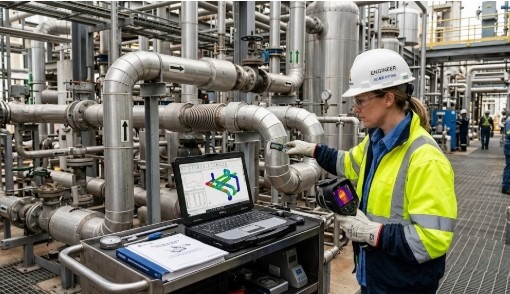
Piping Flexibility Analysis: A Practical Engineering Guide Piping systems are rarely static. Temperature changes, pressure fluctuations, and external loads can all introduce stress into a system. Piping Flexibility Analysis helps engineers evaluate how piping behaves under these conditions and ensures that systems remain safe, compliant, and reliable over time. What Is Piping Flexibility Analysis? Piping Flexibility Analysis is the process of evaluating how a piping system responds to thermal expansion, contraction, vibration, and external forces. The goal is to ensure that stresses, loads, and displacements remain within allowable limits defined by applicable codes and standards. This analysis typically considers: Thermal expansion and contraction Internal pressure loads Weight of piping, insulation, and contents External forces such as wind or seismic activity By identifying stress points early, engineers can adjust the design before fabrication and installation. Why Piping Flexibility Analysis Matters Ensuring System Integrity Without proper flexibility analysis, piping systems may experience excessive stress, leading to fatigue, deformation, or failure. This can impact safety and operational continuity. Protecting Equipment Improperly designed piping can transfer loads to connected equipment like pumps or vessels. Flexibility analysis helps prevent nozzle overload and ensures long-term equipment performance. Key Factors Considered in Analysis Thermal Expansion Temperature changes cause pipes to expand or contract. Even small changes can create significant stress in long pipe runs if not properly managed. Stress Limits Allowable stress limits are defined by design codes. Engineers compare calculated stresses against these limits to ensure compliance. Support Design Pipe supports, anchors, and guides play a critical role in controlling movement. Their placement and type directly affect system flexibility. Load Distribution Loads must be balanced across the system to avoid concentration in specific areas, which can lead to premature failure. Common Methods Used Manual Calculations For simple systems, engineers may use standard formulas to estimate stress and displacement. Software-Based Analysis For more complex systems, specialized tools are used to simulate real-world conditions and evaluate multiple load cases. Stress Modeling Detailed models allow engineers to assess different scenarios, including startup, shutdown, and upset conditions. Practical Design Considerations Expansion Loops and Offsets Introducing loops or offsets into piping routes helps absorb thermal expansion naturally. Flexible Connections Expansion joints or flexible connectors may be used where space constraints limit design options. Proper Support Placement Supports should be designed to guide movement while preventing excessive displacement. Collaboration with Engineering Experts Working with experienced engineering teams ensures that flexibility analysis aligns with overall system design, fabrication, and regulatory requirements. For projects requiring detailed evaluation, professional services such as piping stress analysis and design support can help ensure accuracy and compliance. Learn more about how this integrates with broader engineering services here: https://mecsengineering.com/piping-structural-stress-analysis/ Benefits of Professional Piping Flexibility Analysis Engaging a qualified engineering consultancy provides several advantages: Accurate stress evaluation using advanced tools Compliance with applicable codes and standards Reduced risk of system failure Improved operational efficiency and lifespan Support with documentation and regulatory approvals Companies offering engineering services, such as piping design and stress analysis, can also assist with CRN support, design validation, and P.Eng review where required. Conclusion Piping Flexibility Analysis is a fundamental part of modern engineering design. It ensures that piping systems can safely handle real-world conditions while meeting regulatory requirements. Whether you are designing a new system or evaluating an existing one, investing in proper analysis helps reduce risk, improve performance, and maintain compliance. If your project requires expert support in piping design, stress analysis, or regulatory compliance, working with an experienced engineering team can make a measurable difference.
Stress Analysis: Essential Guide for Piping and Structural Systems
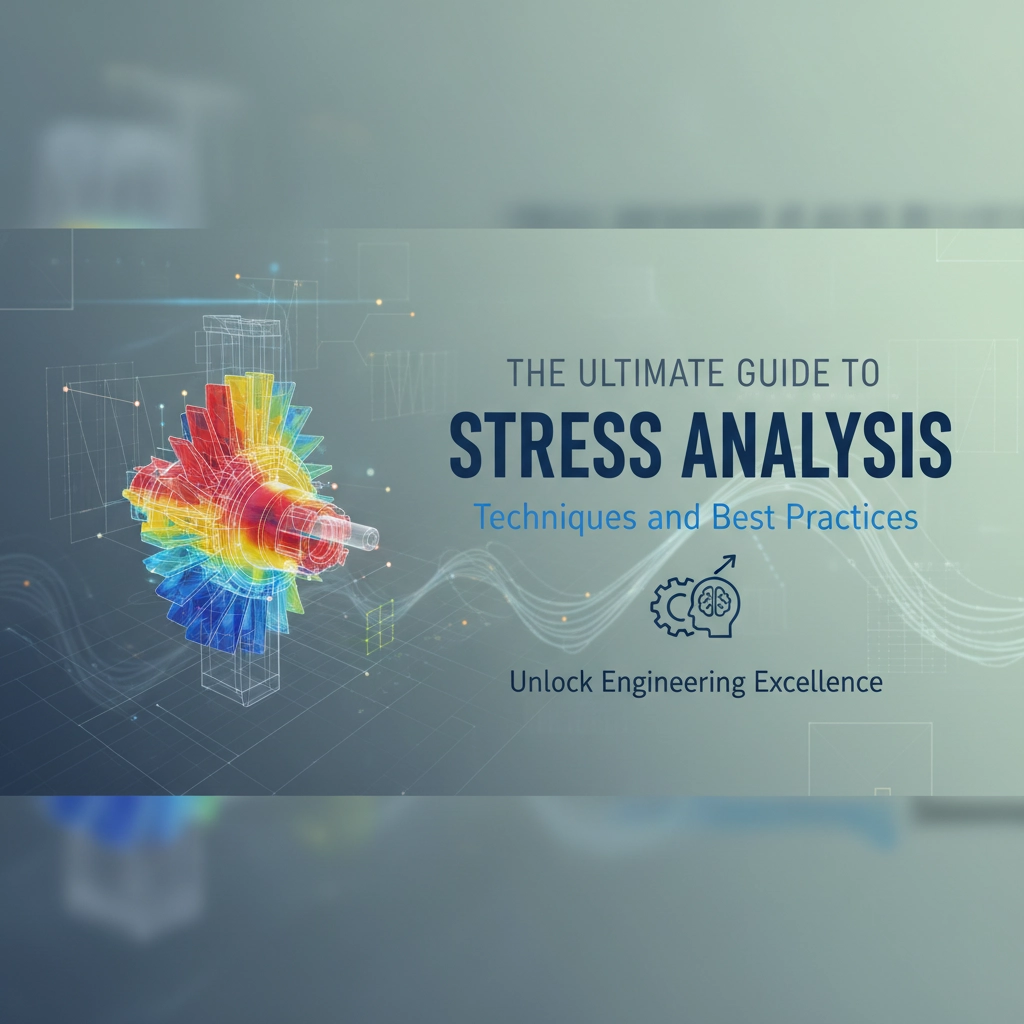
Stress Analysis: Essential Guide for Piping and Structural Systems What Is Stress Analysis? Stress analysis evaluates the internal forces, moments, and deformations that components experience under operational conditions. It identifies potential weak points in a system and predicts how structures or piping networks will respond to loads such as: Internal pressure Thermal expansion and contraction External mechanical forces Vibration and seismic activity By simulating these conditions, engineers can ensure that materials, joints, and supports are properly sized and compliant with relevant codes. Why Stress Analysis Matters in Piping and Structural Design Proper stress analysis benefits both safety and efficiency: Safety Compliance: Correct analysis reduces the risk of mechanical failure, leaks, or structural collapse. Operational Reliability: Ensures systems can handle expected loads, temperature variations, and environmental conditions without premature wear or damage. Key Considerations in Stress Analysis When performing stress analysis, engineers should focus on: Material Properties: Elastic modulus, yield strength, and thermal expansion coefficients. Boundary Conditions: Accurate representation of supports, restraints, and connections. Load Cases: Include all operational, environmental, and accidental conditions. Regulatory Requirements: Consider provincial or state-specific guidelines, especially for pressurized piping systems. Stress analysis software can model complex systems, but professional engineering judgment remains essential to interpret results correctly and implement safe design solutions. How MECS Supports Stress Analysis MECS provides comprehensive stress analysis services for both piping and structural systems. Our team ensures that designs meet safety and regulatory requirements while optimizing performance. Services include: Piping stress analysis for thermal expansion, pressure, and load management Structural analysis of steel and composite frameworks CRN support and P.Eng stamping for compliance Collaboration with project teams for design registration and certification By integrating stress analysis into the early stages of design, we help clients avoid costly rework and ensure operational reliability. Conclusion Stress analysis is essential for safe and efficient piping and structural systems. Whether addressing pressure, thermal loads, or mechanical stresses, professional engineering services ensure compliance, reliability, and optimized performance. For more detailed guidance on stress analysis and engineering support, explore MECS’ full range of services in piping and structural stress analysis.
Stress Analysis Services for Safe and Compliant Industrial Systems
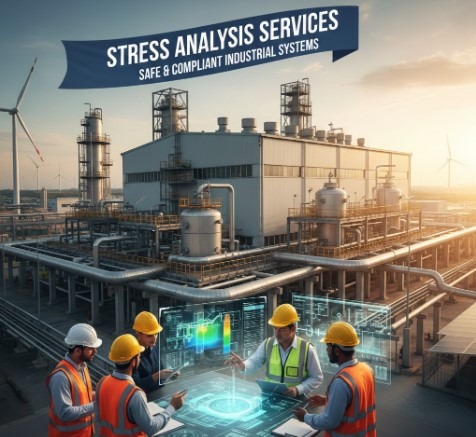
Stress Analysis Services for Safe and Compliant Industrial Systems Stress Analysis serves as a vital engineering discipline, ensuring that structural elements and piping systems can endure external forces, thermal variations, and operational loads without compromise. Throughout the industrial landscapes of the USA and Canada, meticulous Stress Analysis facilitates regulatory adherence, safeguards critical machinery, and minimizes the likelihood of expensive system failures. Within the scope of professional engineering consultancy and services, Stress Analysis is integral to compliance assessments, system upgrades, and plant design. Exhaustive evaluations are essential for both modifications and new builds to confirm that industrial systems operate reliably under actual service conditions. For comprehensive solutions, explore MECS’ specializedhttps://mecsengineering.com/piping-structural-stress-analysis/ What Is Stress Analysis in Industrial Engineering? Stress Analysis evaluates how piping systems and structures respond to loads such as pressure, weight, thermal expansion, wind, and seismic forces. Engineers calculate stresses, displacements, and support reactions to confirm that designs meet allowable limits defined by applicable codes. In practice, this includes: Sustained load evaluation from pressure and weight Thermal expansion and contraction assessment Occasional load checks such as wind or seismic events Equipment nozzle load verification Support and anchor load calculations Professional Stress Analysis ensures that systems comply with standards such as ASME B31.1 and ASME B31.3, while also aligning with provincial and state regulatory requirements. Why Stress Analysis Matters for Compliance and Safety Meeting Code and Regulatory Requirements Industrial projects must comply with recognized engineering codes and, where required, provincial design registration processes. Requirements can vary by province and state, so working with experienced engineers is essential. A properly documented Stress Analysis supports: Design validation before construction Regulatory submissions and reviews P.Eng stamping where required Inspection readiness Applications of Stress Analysis in Piping and Structures Piping Stress Analysis In process and power facilities, piping systems experience significant thermal growth and pressure fluctuations. Piping Stress Analysis ensures flexibility is adequate and support placement is optimized. Structural Stress Analysis Steel structures, pipe racks, and equipment supports must handle combined loads safely. Structural Stress Analysis verifies stability and compliance with applicable building and industrial standards. Choosing the Right Engineering Partner When selecting a provider for Stress Analysis, consider: Experience with North American codes and regulators Capability to provide P.Eng stamped calculations where required Expertise in piping design and structural engineering Clear, practical reporting tailored to regulatory needs An experienced consultancy not only performs calculations but also provides actionable design recommendations that improve constructability and compliance. Conclusion Stress Analysis is more than a technical requirement. It is a fundamental step in ensuring industrial systems operate safely, meet code requirements, and protect long term investments. From piping flexibility reviews to structural load verification, professional engineering expertise makes a measurable difference. If your project requires reliable Stress Analysis backed by practical industry experience, connect with MECS to discuss how our piping and structural stress analysis services can support your next phase of development.
How to Choose the Right Piping Engineering Company for Industrial Projects

How to Choose the Right Piping Engineering Company for Industrial Projects Industrial facilities rely on piping systems for the safe and efficient transport of liquids, gases, and steam. These systems are critical to plant operation, but they also carry significant technical and regulatory responsibilities. Poor piping design can lead to stress failures, leakage, downtime, safety risks, and costly project delays. That is why choosing the right piping engineering company is an important decision for any industrial project. An experienced engineering partner helps ensure that piping systems are designed properly, analyzed correctly, and aligned with applicable codes and jurisdictional requirements. Whether the project involves a new installation, a plant expansion, or modifications to an existing system, qualified piping engineers play a key role in supporting safety, compliance, and long-term performance. What a piping engineering company does A professional piping engineering company provides specialized engineering support for the design, analysis, review, and regulatory compliance of piping systems. Their involvement may begin at the concept stage and continue through detailed engineering, documentation, design review, and registration support. Typical services include: Piping system design Piping design includes the development of layouts, line routing, material specifications, pipe sizing, and coordination with connected equipment and structures. Good design must consider pressure, temperature, corrosion, flexibility, support locations, maintenance access, and constructability. A well-planned piping system reduces the likelihood of rework during fabrication and installation and helps improve long-term reliability in operation. Piping stress analysis Piping systems are exposed to various loads during operation, including internal pressure, thermal expansion, dead weight, vibration, wind, and equipment nozzle loads. Piping stress analysis evaluates how the system behaves under these conditions and confirms whether it meets the requirements of the applicable code. Without proper analysis, excessive stress can damage piping, overstress connected equipment, or lead to fatigue and failure over time. This is one of the most important technical areas in industrial piping engineering. Code compliance and design registration support Industrial piping systems must often comply with recognized codes and standards. Depending on the project location, this may also involve design registration and submissions to the applicable authority. An experienced piping engineering company supports this process by preparing calculations, reviewing drawings, organizing supporting documentation, and helping ensure the submission meets jurisdictional expectations. This reduces the risk of delays, comments, and resubmissions. Professional engineering review and stamping Many industrial projects require engineering documents to be reviewed and authenticated by a licensed Professional Engineer in the applicable jurisdiction. This may apply to design packages, calculations, stress reports, and other technical documents. Working with a qualified engineering firm helps ensure that the review process is handled properly and that documentation is prepared to an appropriate professional standard. Why piping engineering matters in industrial projects Piping is not just a layout exercise. It is an engineering discipline that directly affects safety, operability, maintenance, and compliance. In industrial environments, piping systems often operate under demanding conditions such as high pressure, elevated temperature, thermal cycling, corrosive media, or vibration. If these factors are not addressed correctly during the engineering stage, the result may be costly modifications, field problems, equipment damage, or regulatory issues later in the project. A capable piping engineering company helps project teams identify these risks early and address them through sound engineering design and analysis. Industries that commonly require piping engineering expertise Specialized piping engineering services are needed across many industrial sectors, including: Oil and gas facilities Chemical and petrochemical plants Power generation projects Manufacturing and process plants Utility and water treatment systems Steam and thermal fluid systems Each industry has its own technical and regulatory challenges. For example, chemical service may require careful attention to corrosion and material compatibility, while high-temperature systems may require detailed flexibility and support analysis. A qualified piping engineering company understands how these project conditions affect design requirements. What to look for in a piping engineering company Not all engineering firms offer the same level of piping expertise. When selecting a piping engineering company, it is important to look beyond general design capability and evaluate whether the firm has the technical depth and regulatory experience needed for industrial work. Key factors to consider include: Experience with industrial piping systems similar to your project Capability in piping stress analysis and load evaluation Knowledge of applicable piping codes and standards Familiarity with local registration and jurisdictional requirements Access to licensed Professional Engineers for review and stamping Ability to provide practical, construction-aware engineering solutions A strong engineering partner should be able to support both the technical and compliance aspects of the project, not just prepare drawings. The value of regulatory and registration experience One area often overlooked by project owners is the importance of jurisdictional knowledge. In many cases, industrial piping systems and related pressure equipment must meet province- or state-specific requirements. Documentation that may be technically sound still needs to be organized and submitted in a way that aligns with the expectations of the reviewing authority. This is where an experienced engineering consultancy adds real value. Firms that regularly support design registration and compliance can help avoid unnecessary delays and improve the overall efficiency of the approval process. How MECS Engineering supports industrial piping projects MECS Engineering provides professional engineering consulting services for industrial clients requiring piping design review, stress analysis, code compliance support, CRN-related services, and engineering review. With experience supporting industrial projects across different sectors and jurisdictions, MECS helps clients address both technical and regulatory requirements with a practical and professional approach. For industrial projects, choosing the right engineering partner is not only about completing calculations or producing drawings. It is about working with a team that understands how design decisions affect safety, compliance, constructability, and long-term performance. Conclusion Choosing the right piping engineering company can have a direct impact on the success of an industrial project. From piping layout and stress analysis to compliance support and professional review, the right firm helps reduce risk and improve confidence in the final design. For project owners, contractors, and manufacturers, the benefit of experienced piping engineering support is clear: safer
Piping Flexibility Analysis: A Guide to ASME B31 Compliance
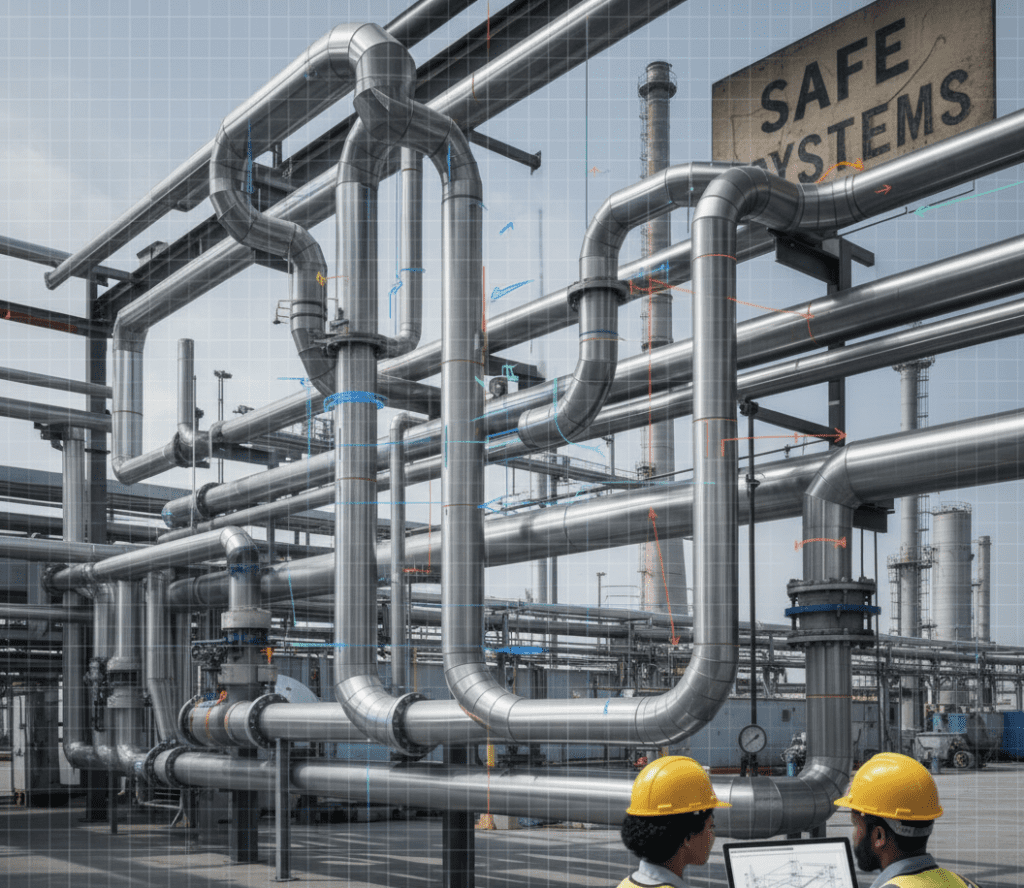
Piping Flexibility Analysis: A Guide to ASME B31 Compliance Piping Flexibility Analysis is a critical part of the design of industrial piping systems. Involved in sectors such as oil and gas, power generation, chemical processing, or manufacturing. For companies operating worldwide, aiming to supply / install piping systems in Canada understanding the requirements of local regulations is essential. Requirements can vary by country, province, or jurisdiction, and coordination with the relevant regulatory authority is always necessary. What Is Piping Flexibility Analysis? Piping Flexibility Analysis is the engineering process used to evaluate how a piping system responds to loads such as: Thermal expansion and contraction Internal pressure Dead weight of pipe and fluid Wind and seismic forces Equipment nozzle loads Flexibility analysis helps determine whether expansion loops, offsets, supports, or spring hangers are required to prevent excessive stress or equipment damage. Why Piping Flexibility Analysis Is Essential 1. Code Compliance Most major piping codes require flexibility analysis when thermal expansion or other loads could result in excessive stress. For example, ASME B31.3 Process Piping includes provisions for evaluating displacement stresses due to thermal expansion. Compliance requirements may differ depending on jurisdiction. In Canada, certain systems may also require design registration and review by a Professional Engineer licensed in the relevant province. In other countries, similar regulatory oversight may apply through local authorities. 2. Protection of Equipment Excessive piping loads can damage: Pumps Compressors Heat exchangers Pressure vessels Proper piping flexibility analysis ensures that nozzle loads remain within allowable limits defined by equipment manufacturers and applicable standards. This reduces the risk of premature failure and unplanned downtime. 3. Operational Reliability Uncontrolled thermal expansion can lead to: Pipe deformation Support failure Fatigue cracking A well-executed flexibility analysis improves long-term reliability and reduces maintenance costs. When Is Piping Flexibility Analysis Required? Not every piping system requires a detailed computer-based stress analysis. However, it is typically required when: The system operates at high temperature Large temperature differentials are expected The piping is connected to sensitive rotating equipment The system is subject to seismic or significant wind loads Regulatory authorities require formal stress documentation Engineering judgment plays an important role. Many codes state that formal analysis is required when flexibility is not “inherent” in the system layout. How Piping Flexibility Analysis Is Performed Step 1: Data Collection The engineer gathers: Piping layout and isometrics Material specifications Operating and design temperatures Pressure conditions Support details Applicable code requirements Step 2: Modeling and Load Cases Specialized software is used to create a 3D model of the piping system. Load cases are defined, such as: Sustained loads Thermal expansion loads Occasional loads like wind or seismic The software calculates stresses, displacements, and support reactions. Step 3: Code Evaluation Calculated stresses are compared against allowable limits specified in the applicable piping code. Equipment nozzle loads are checked against vendor allowable values. If results exceed allowable limits, the design is revised. This may include adding expansion loops, modifying support locations, or introducing spring supports. Step 4: Documentation and Stamping For regulated jurisdictions, final stress reports may need to be reviewed and stamped by a Professional Engineer licensed in the relevant region. Design registration requirements vary by country and province, and local regulations must always be confirmed. Key Standards and Regulatory Considerations Commonly referenced standards include: ASME B31.3 for process piping ASME B31.1 for power piping Local pressure equipment regulations Seismic and Wind codes depending on project location It is important to note that regulatory expectations can vary significantly. Some jurisdictions require submission of stress reports as part of design registration or CRN processes, while others may not. Engineering teams should verify all local compliance requirements before finalizing the design. Common Design Strategies to Improve Flexibility Effective piping flexibility analysis often leads to practical design improvements such as: Introducing expansion loops Adjusting anchor and guide locations Using spring hangers for vertical movement Optimizing support spacing Re-routing piping to increase natural flexibility These adjustments are most efficient when considered early in the design phase. How MECS Supports Piping Flexibility Analysis At MECS Engineering, piping flexibility analysis is integrated into broader engineering services, including piping design, structural stress analysis, CRN support, and Professional Engineer stamping where required. Our team provides detailed stress modeling, code compliance checks, and clear documentation tailored to project requirements worldwide. For complex systems, we coordinate flexibility analysis with structural design to ensure support structures and pipe stresses are aligned. Learn more about our approach to piping and structural stress analysis services and how we support safe, compliant piping systems. Conclusion Piping Flexibility Analysis is not simply a software exercise. It is a critical engineering process that ensures safety, regulatory compliance, and long-term reliability. Because regulatory and code requirements vary by country and jurisdiction, proper technical review and professional oversight are essential. Engaging experienced engineers early in the design process helps avoid costly revisions and operational risks. If your project requires piping flexibility analysis, stress documentation, or Professional Engineer review, MECS Engineering can provide practical, code-compliant support tailored to your location and industry. Contact our team to discuss your project requirements and ensure your piping system is designed for safety and performance.
The Ultimate Guide to Piping Flexibility and Stress Analysis Techniques

The Ultimate Guide to Piping Flexibility and Stress Analysis Techniques In industrial plants, piping systems are more than just lines on a P&ID—they are critical assets that must safely carry fluids under pressure and temperature for decades. One key part of ensuring this reliability is piping flexibility analysis and stress analysis. In simple terms, flexibility analysis checks whether a piping system can safely expand, contract, and move under real operating conditions without overstressing the pipe, supports, or connected equipment. This guide walks through why flexibility matters, what engineers look at during analysis, and how software tools help ensure safe and compliant designs. Why Is Piping Flexibility Important? When piping is exposed to temperature changes, pressure, and external loads, it will try to move. If the system is too rigid, those movements are restrained and the resulting stresses can lead to: Excessive loads on equipment nozzles and flanges Premature gasket failures and leaks Pipe wall fatigue and cracking Support failures or excessive deflections Non-compliance with applicable design codes On the other hand, if the system is too flexible and poorly supported, you may see: Large displacements and sagging Vibration issues Interference with other systems Poor drainage or process problems A good design finds the right balance: enough flexibility to safely absorb movements, but enough stiffness and support to control displacement, vibration, and loads. What Does Piping Flexibility Analysis Actually Check? Piping flexibility analysis (often carried out as part of a full piping stress analysis) evaluates how a piping system behaves under various load conditions, such as: Thermal expansion and contraction (startup, shutdown, upset) Internal pressure (design, operating, and test conditions) Dead weight (pipe + fluid + insulation + fittings) Occasional loads (wind, seismic, relief loads, water hammer, etc.) Displacement loads (equipment settlement, nozzle movement, building movement) Using relevant codes and standards (e.g., ASME B31.1, B31.3, and others depending on service), engineers verify that: Calculated stresses stay within allowable limits. Forces and moments at equipment nozzles are within vendor or standard limits. Support loads and spans are acceptable. Displacements do not cause clashes, excessive sagging, or operating issues. Key Factors That Affect Piping Flexibility Some of the main inputs and decisions in flexibility analysis include: Temperature Range Maximum and minimum metal temperatures, including startup/shutdown and upset scenarios. Differential expansion between connected systems (e.g., hot pipe to cold equipment). Material and Pipe Size Hot modulus of elasticity and allowable stresses under design temperature. Differences between carbon steel, stainless steel, alloy steels, and non-metallic materials. Layout and Routing Lengths, offsets, and number of elbows/expansion loops. Routing around structures, equipment, and other lines. Supports and Restraints Types and locations of supports (rests, guides, line stops, springs, hangers). Use of expansion joints or flexible connectors where appropriate. Connected Equipment and Interfaces Pump, compressor, turbine, vessel, and heat exchanger nozzles. Vendor-specified allowable loads and movements. A well-planned layout makes flexibility analysis easier and often reduces the need for costly last-minute changes. Typical Steps in Piping Stress and Flexibility Analysis While details vary by project, a typical workflow looks like this: 1. Define the Design Basis Applicable design codes (e.g., ASME B31 series). Design pressures/temperatures, operating scenarios, and load cases. Material specifications and corrosion allowances. 2. Build the Piping Model Model the line in specialized software (such as CAESAR II, ROHR2, or similar tools), including all bends, tees, reducers, and equipment nozzles. Apply Loads and Boundary Conditions Weight, pressure, thermal expansion, wind, seismic, and displacement loads. Support conditions (rigid supports, variable springs, snubbers, guides, stops). 3. Run Static Analysis Evaluate sustained loads (pressure + weight). Evaluate expansion (thermal) stresses. Check occasional load cases (wind, seismic, relief loads, etc.). 4. Perform Dynamic Analysis (When Required) Used for vibration problems, water hammer, relief loads, seismic time-history, or rotating equipment issues. May include modal, harmonic, or time-history analyses to ensure no resonant conditions or excessive dynamic stresses. 5. Review Results and Optimize the Design Adjust routing, add or relocate supports, introduce expansion loops, or use flexible elements where necessary. Re-run the analysis until all code and equipment limits are satisfied. 6. Document and Communicate Prepare calculation reports, stress isometrics, and support drawings. Communicate required changes or recommendations to the piping design team and project stakeholders. The Role of Software in Piping Flexibility Analysis Modern piping stress analysis relies heavily on specialized software. These tools: Solve large systems of equations quickly and accurately. Handle multiple load cases and combinations. Provide detailed stress, displacement, and support load results. Help evaluate “what-if” scenarios efficiently. However, software is not a replacement for engineering judgment. Experienced stress engineers are needed to: Define realistic load cases and boundary conditions. Interpret results correctly. Ensure the model reflects actual field conditions. Make practical recommendations that can be implemented safely and economically. Lessons from Real Projects From real-world experience, a few consistent lessons emerge: Never assume “small” lines don’t need checks. Even relatively small bore lines can create high nozzle loads if routing or supports are poor. Field conditions matter. Mismatched materials, incorrect support installation, or undocumented changes can invalidate assumptions and require re-analysis. Early involvement saves time and cost. Involving stress engineers during the layout stage avoids expensive rework later in the project. Communication is key. Stress analysis results must be clearly communicated to design, construction, and operations teams. FAQs on Piping Flexibility Analysis 1. What is the biggest mistake people make in flexibility analysis?Relying only on rules of thumb or past experience without performing a proper analysis for the specific piping system. Each system has its own temperatures, routings, and constraints—copy-paste solutions can miss critical issues. 2. When should a piping stress or flexibility analysis be carried out?You should perform analysis for piping systems that are: High temperature or high pressure Connected to rotating equipment or sensitive machinery Subject to significant thermal expansion or large displacements Located in seismic or high-wind regions Critical to safety or production continuity Changes to operating conditions, routing, or supports often require the analysis to be updated as well. 3. Is software analysis foolproof?No. Software is a powerful tool, but it depends entirely on the quality of input data, load cases, and engineering judgment. A model built on wrong assumptions can still produce very
