
Why Professional Engineering Consultants Are Essential for Industrial Projects

Why Professional Engineering Consultants Are Essential for Industrial Projects Industrial projects require more than technical calculations and design drawings. They demand practical engineering expertise, regulatory awareness, and solutions that support safe, reliable, and efficient operations. This is where Professional Engineering Consultants play a critical role. Whether developing a new facility, modifying existing equipment, or preparing documentation for regulatory approvals, organizations often rely on experienced engineering consultants to guide projects from concept through execution. For businesses operating in Canada, the USA, and international markets, working with qualified engineering professionals can help reduce project risks and improve overall outcomes. What Do Professional Engineering Consultants Do? Professional Engineering Consultants provide technical expertise and advisory services across a wide range of engineering disciplines. Their role is to help clients solve engineering challenges while ensuring designs align with applicable standards, project requirements, and operational objectives. Services commonly include: Mechanical and piping design Piping stress analysis Structural engineering support Pressure equipment design review Technical calculations and documentation Regulatory compliance assessments Design registration support Professional Engineer review and stamping where required The specific scope varies depending on the industry, project complexity, and jurisdiction. Why Businesses Work with Professional Engineering Consultants Access to Specialized Expertise Many projects require technical knowledge that may not be available within an organization’s internal team. Engineering consultants bring experience from multiple industries and project types, helping clients address complex technical requirements efficiently. Improved Project Planning Engineering decisions made early in a project can affect safety, cost, constructability, and long-term maintenance. Consultants help identify potential challenges before they become costly problems. Support for Compliance Requirements Industrial projects often involve engineering codes, standards, and regulatory approvals. In Canada, some projects may require design registration, CRN support, or review by a licensed Professional Engineer. Requirements can vary by province, state, and local authority. Understanding these differences is important for successful project execution. Independent Technical Review Professional engineering consultants can provide objective assessments of designs, calculations, and project documentation, helping organizations make informed decisions. Key Services Provided by Professional Engineering Consultants Piping Design and Stress Analysis Piping systems are subject to pressure, temperature changes, equipment loads, and environmental forces. Proper design and stress analysis help ensure systems operate safely and reliably. Engineering reviews can identify areas requiring additional flexibility, support modifications, or routing improvements. Pressure Equipment Engineering Pressure vessels, heat exchangers, and related equipment require detailed engineering analysis and documentation. Consultants help verify compliance with applicable standards while supporting fabrication, installation, and regulatory approval processes. CRN Support and Design Registration Companies supplying pressure equipment to Canada often need assistance with Canadian Registration Number applications and supporting documentation. Professional consultants can help prepare calculations, review drawings, and coordinate registration submissions with the applicable authorities. Structural Engineering Support Industrial facilities rely on properly designed supports, platforms, and structural systems. Engineering analysis helps confirm these structures can safely handle operational and environmental loads. Choosing the Right Professional Engineering Consultants Not all consulting firms offer the same capabilities. When selecting a partner, consider several important factors. Industry Experience Consultants with experience in industrial projects often provide more practical recommendations and a stronger understanding of field conditions. Regulatory Knowledge Understanding local regulations and approval requirements is particularly important for projects involving pressure equipment, CRN registrations, or Professional Engineer authentication. Multidisciplinary Capabilities Projects often require coordination between mechanical, structural, piping, and fabrication disciplines. Firms that offer integrated services can improve efficiency and communication. Clear Communication Effective consultants provide organized documentation, practical recommendations, and timely responses throughout the project lifecycle. How MECS Supports Industrial Clients MECS provides professional engineering consulting services for industrial clients across Canada, the USA, and international markets. Our expertise includes: Piping design and engineering Piping stress analysis Pressure equipment engineering Structural analysis and support design CRN support and design registration Professional Engineer stamping where required Technical documentation and compliance support By combining technical expertise with practical industry experience, MECS helps clients address engineering challenges while supporting project goals and regulatory requirements. The Value of Professional Engineering Consultants Industrial projects involve numerous technical, operational, and regulatory considerations. Experienced consultants help organizations navigate these challenges with greater confidence. From concept development and detailed design to compliance support and technical review, professional engineering expertise can contribute to safer, more efficient, and more reliable project outcomes. Conclusion Professional Engineering Consultants play an important role in helping industrial projects achieve technical excellence, regulatory compliance, and operational reliability. Their expertise supports informed decision-making throughout every stage of a project. MECS provides practical engineering consulting services tailored to industrial clients in Canada, the USA, and around the world. Contact our team today to discuss how we can support your next engineering project.
P.Eng. Stamping for Pressure Equipment Projects: What Manufacturers and Engineering Teams Need to Know
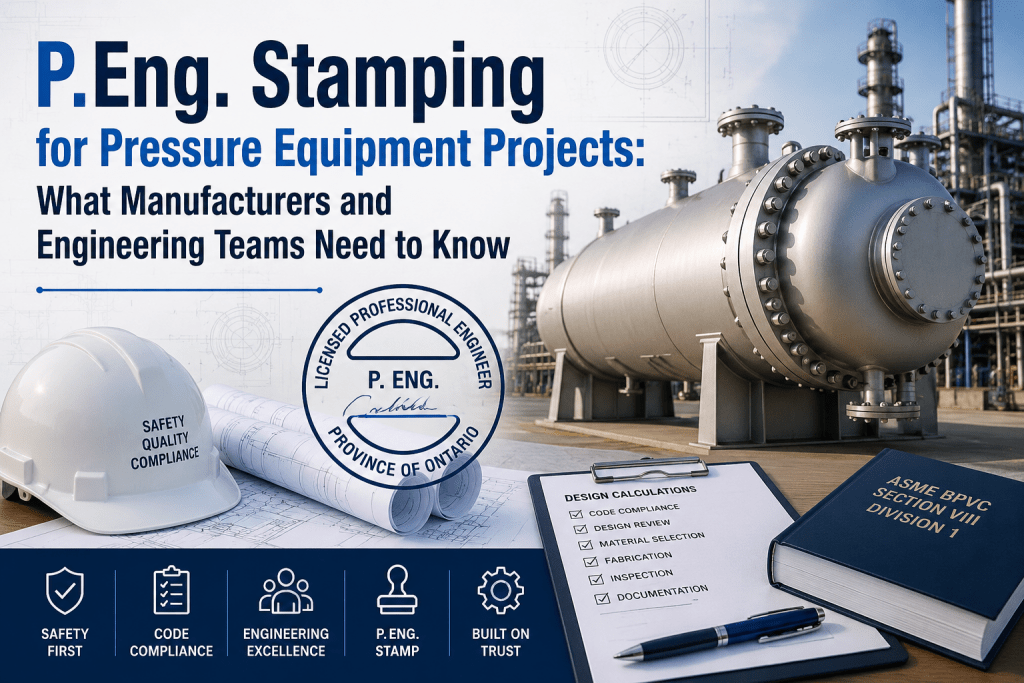
P.Eng. Stamping for Pressure Equipment Projects: What Manufacturers and Engineering Teams Need to Know In pressure equipment and industrial piping projects, engineering documentation is more than a technical formality. Design calculations, drawings, stress analysis reports, and code compliance documents often require review and authentication by a licensed Professional Engineer before they can be submitted to clients, authorities, or provincial regulators. For organizations involved in pressure vessels, piping systems, process plants, or CRN registration, understanding how P.Eng. stamping works are an important part of project planning and regulatory compliance. This article explains what P.Eng. stamping is, where it is commonly required, and how engineering firms support manufacturers, EPC contractors, and plant operators through the process. What Is P.Eng. Stamping? A P.Eng. stamp refers to the professional authentication of engineering work by a licensed Professional Engineer (P.Eng.). In Canada, Professional Engineers are regulated at the provincial level, and licensing requirements vary between jurisdictions. When an engineer applies their professional seal and signature to engineering documents, they are confirming that: The work has been reviewed under their professional responsibility The engineering complies with applicable codes and standards The design is suitable for its intended use within the defined scope Appropriate engineering judgment has been exercised For pressure equipment projects, stamped documentation may include: Pressure vessel design calculations Piping stress analysis reports Finite Element Analysis (FEA) reports Fabrication drawings CRN submission packages Structural support calculations Engineering design reviews Inspection and compliance documentation P.Eng. stamping is commonly associated with regulatory submissions, owner requirements, insurance compliance, and third-party engineering verification. Why P.Eng. Stamping Matters in Pressure Equipment Projects In industries such as oil and gas, petrochemical, power generation, chemical processing, and manufacturing, pressure equipment failures can create significant operational and safety risks. Engineering review and authentication help establish confidence that systems have been designed according to recognized engineering practices and applicable codes. A professionally reviewed design can also help organizations: Support CRN registration applications Demonstrate code compliance Meet client engineering specifications Reduce delays during regulatory review Improve documentation quality Address technical issues before fabrication or installation For many projects, stamped engineering documentation becomes part of the official project record and may be reviewed by regulators, inspectors, clients, or authorized inspection agencies. Where P.Eng. Stamping Is Commonly Required Requirements depend on the project scope, equipment type, province, client specifications, and applicable regulations. In practice, P.Eng. authentication is frequently requested for: Pressure Vessel Design Pressure vessel calculations prepared to ASME Section VIII requirements are often reviewed and stamped before submission for CRN registration or client approval. Typical examples include: Horizontal pressure vessels Vertical separators Heat exchangers Storage vessels Custom fabricated pressure equipment Piping System Design and Stress Analysis Industrial piping systems exposed to thermal expansion, vibration, pressure loading, or external forces may require engineering review and stress analysis. Stamped reports may include: Caesar II stress analysis Pipe support calculations Flexibility analysis Sustained and expansion load evaluations Nozzle load verification CRN Registration Packages Canadian Registration Number (CRN) submissions often require professionally prepared or reviewed documentation, depending on provincial requirements and project conditions. This may include: Design calculations Data reports Drawings Material specifications Code compliance documentation Because CRN processes vary between provinces, applicants should verify requirements with the applicable authority having jurisdiction. Understanding Provincial Requirements Engineering regulation and pressure equipment registration in Canada are administered provincially. Requirements can differ between jurisdictions, particularly regarding authentication expectations, submission procedures, and accepted documentation. Organizations commonly encounter regulators such as: Alberta Boilers Safety Association (ABSA) Technical Standards and Safety Authority (TSSA) Technical Safety BC Régie du bâtiment du Québec (RBQ) Project teams working across multiple provinces should ensure that submissions align with the requirements of each jurisdiction. For international manufacturers supplying equipment into Canada, this is often one of the more challenging aspects of the CRN process. Common Challenges in P.Eng. Stamping and Compliance Review Incomplete Design Documentation One of the most common issues during engineering review is incomplete supporting documentation. Examples include: Missing material traceability Incomplete nozzle load information Unverified external loads Missing code references Inconsistent drawing revisions These issues can delay CRN submissions and increase review cycles. Misalignment Between Design Codes and Project Requirements Projects sometimes combine multiple standards, client specifications, and jurisdictional requirements. Without careful coordination, this can create conflicts between: ASME code requirements Provincial expectations Owner specifications International design standards Early engineering review helps identify these issues before fabrication begins. Piping Flexibility and Thermal Expansion Concerns Thermal expansion remains a common source of piping design problems. Systems that appear acceptable in layout drawings may experience excessive loads, nozzle stress, or support issues during operation. Professional stress analysis and engineering review can help identify: Excessive displacement High nozzle loads Support overload conditions Expansion joint concerns Fatigue-related risks The Role of Third-Party Engineering Verification Independent engineering review is commonly used when: Manufacturers require Canadian compliance support Owners want additional technical verification EPC contractors need stamped calculations International suppliers are unfamiliar with CRN requirements Existing systems require reassessment or modification Third-party engineering firms may provide services such as: Pressure vessel calculations Piping stress analysis FEA review CRN preparation support Professional engineering authentication Code compliance assessments This type of support can help organizations streamline regulatory review and improve overall documentation quality. How MECS Supports Pressure Equipment Compliance Projects MECS Engineering provides engineering support for pressure equipment and industrial projects involving: Piping design and stress analysis Pressure vessel engineering CRN registration support FEA and structural review Professional engineering authentication Third-party verification services The company works with manufacturers, engineering contractors, fabricators, and industrial facilities across a range of sectors. For projects requiring independent engineering review and authentication, the Third-Party Verification Services page outlines available support for code compliance and engineering documentation review. Best Practices Before Submitting Documents for P.Eng. Review To improve review efficiency and reduce revision cycles, project teams should prepare: Complete Design Inputs Ensure that all operating conditions, design temperatures, pressures, and external loads are clearly defined before calculations begin. Updated Drawings and Revisions Drawings should match the latest calculation packages and fabrication details. Applicable Code References Clearly identify which editions of ASME,
When Do You Need a Piping Stress Analysis? Real-World Scenarios
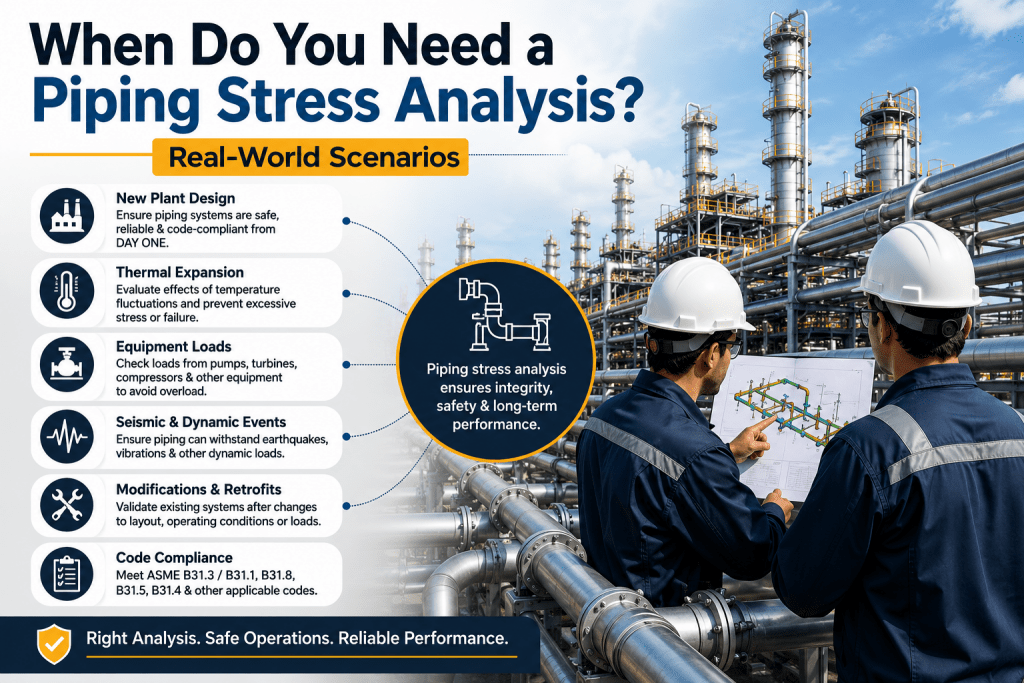
When Do You Need a Piping Stress Analysis? Real-World Scenarios Piping systems in industrial facilities are exposed to various operating conditions, including pressure, temperature changes, vibration, equipment movement, and external loads. While piping may appear simple, it plays a critical role in plant safety, reliability, and regulatory compliance. For companies involved in Piping Canada projects, piping stress analysis helps identify potential design issues before installation, reducing the risk of costly modifications and operational failures. What Is Piping Stress Analysis? Piping stress analysis is an engineering evaluation used to determine whether a piping system can safely withstand the loads it will experience during operation. The analysis typically considers: Internal pressure Thermal expansion and contraction Dead weight loads Equipment displacement Wind and seismic forces Vibration and dynamic loads Relief valve discharge forces The goal is to ensure the system complies with applicable standards such as ASME B31.1, ASME B31.3, CSA requirements, and relevant Canadian regulations. Why Is Piping Stress Analysis Important? A piping system that meets basic design requirements may still experience excessive stress during operation. Without proper analysis, facilities can face problems such as: Equipment nozzle overload Pipe support failures Excessive vibration Leaks and fatigue cracking Thermal expansion damage Increased maintenance costs Compliance concerns Conducting stress analysis early in the project helps improve safety, reliability, and long-term performance. Common Scenarios Where Stress Analysis Is Required High-Temperature Piping Systems Steam, hot oil, and other elevated-temperature systems expand as temperatures rise. Stress analysis helps verify that thermal growth can be accommodated without damaging equipment or supports. Critical Equipment Connections Piping connected to pumps, compressors, turbines, heat exchangers, and pressure vessels often requires stress evaluation to ensure nozzle loads remain within allowable limits. Long Pipe Runs Long piping networks experience greater thermal movement and flexibility challenges. Stress analysis helps determine support locations, anchor points, and expansion requirements. High-Pressure Applications Industries such as oil and gas, power generation, and chemical processing frequently operate at high pressures. Stress analysis helps verify compliance with allowable stress limits and design codes. Vibration-Prone Systems Systems connected to rotating equipment or high-velocity flow can experience vibration-related failures. Engineering analysis helps identify mitigation measures before problems occur. Plant Expansions and Modifications Equipment replacements, tie-ins, and process upgrades can alter load distribution within an existing piping system. Stress analysis helps confirm that the modified system remains safe and reliable. Industries That Commonly Require Piping Stress Analysis Stress analysis is commonly performed in: Oil and gas Petrochemical Power generation Chemical processing Mining Pulp and paper Water treatment Manufacturing facilities Each industry has unique operating conditions and compliance requirements that influence the level of analysis needed. How MECS Engineering Supports Piping Projects MECS Engineering provides engineering support for industrial piping and pressure equipment projects across Canada and international markets. Our services include: Piping stress analysis Piping design Pressure vessel engineering FEA studies CRN support Mechanical engineering consulting Code compliance reviews P.Eng-reviewed calculations We work with clients to develop practical, code-compliant solutions that support safe and reliable plant operation. Conclusion Piping stress analysis becomes essential whenever a system is exposed to temperature changes, pressure loads, vibration, equipment interaction, or significant modifications. Identifying potential issues early can help reduce project risks, improve reliability, and support compliance with applicable regulations. MECS Engineering provides practical piping stress analysis and engineering support for industrial projects across Canada, helping clients achieve safe, efficient, and compliant system designs.
CRN: What Manufacturers and Facility Owners Need to Know

CRN: What Manufacturers and Facility Owners Need to Know If you manufacture, import, design, or install pressure equipment in Canada, understanding CRN requirements is an important part of project planning. Many pressure-retaining components must be registered before they can be installed or operated within a Canadian jurisdiction. For companies in Canada, the USA, and international markets, CRN approval is often one of the key steps in bringing equipment to market. Understanding the process early can help avoid project delays, improve compliance, and support a smoother approval pathway. What Is a CRN? CRN, or Canadian Registration Number, is a registration identifier assigned to pressure equipment designs that have been reviewed and accepted by a Canadian provincial or territorial authority. The registration process is commonly used for: Pressure vessels Heat exchangers Boilers Pressure piping systems Valves and fittings Expansion tanks Other pressure-retaining components The purpose of the CRN system is to help verify that equipment designs meet applicable regulatory and code requirements before installation. Why Is CRN Important? Supports Regulatory Compliance Many categories of pressure equipment require registration before use in Canada. A valid CRN demonstrates that the design has undergone the required review process. Because regulations vary by jurisdiction, requirements should always be confirmed for the province or territory where the equipment will be installed. Helps Prevent Project Delays Missing or incomplete registration documentation can affect manufacturing schedules, equipment delivery, and project startup timelines. Obtaining CRN approval early in the project lifecycle often helps avoid unexpected setbacks. Provides Confidence in Design Documentation The review process evaluates engineering calculations, drawings, materials, and code compliance information. This helps ensure that submitted designs meet applicable standards. Who Needs a CRN? A CRN may be required for: Equipment manufacturers Fabricators Engineering firms EPC contractors Plant owners International suppliers exporting equipment to Canada Companies outside Canada are often surprised by the registration requirements because they may differ from approval processes used in other countries. Understanding the CRN Registration Process While each jurisdiction has its own procedures, the registration process generally follows a similar path. Prepare Engineering Documentation The application package typically includes: Engineering drawings Design calculations Material specifications Pressure ratings Applicable code references Complete and accurate documentation is one of the most important factors in achieving a successful review. Submit for Regulatory Review The design package is submitted to the applicable provincial or territorial authority for assessment. Reviewers evaluate whether the design complies with relevant pressure equipment regulations and recognized industry codes. Address Technical Comments In some cases, authorities may request additional information or revisions before approval can be granted. Receive CRN Approval Once the design is accepted, a CRN is issued and can be referenced in future manufacturing and project documentation. Common Challenges with CRN Applications Many registration delays result from documentation issues rather than fundamental design problems. Common challenges include: Incomplete calculations Drawing inconsistencies Incorrect code references Missing material information Unclear pressure boundary definitions Jurisdiction-specific requirements Working with experienced engineering professionals can help identify these issues before submission. CRN Requirements Across Canada One of the most important things to understand about CRN approvals is that Canada does not have a single national registration authority. Each province and territory administers its own pressure equipment regulations. While many technical requirements are similar, submission procedures and documentation expectations may differ. Because local regulations apply, companies should always verify the requirements of the intended installation jurisdiction. How MECS Supports CRN Projects MECS provides engineering support for companies navigating the CRN registration process across Canada. Our services include: CRN application preparation Pressure vessel calculations Piping system engineering Design reviews and compliance assessments Technical documentation support Professional Engineer review where required Coordination with regulatory authorities We work with manufacturers, fabricators, EPC contractors, and facility owners to help streamline the registration process and reduce approval challenges. Why Engineering Support Matters CRN registration involves both technical engineering requirements and regulatory expectations. An experienced engineering team can help ensure that calculations, drawings, and supporting documentation align with applicable requirements before submission. This often results in fewer revisions, improved efficiency, and a smoother approval process. Conclusion A CRN is an important requirement for many pressure equipment projects in Canada. Understanding the registration process, preparing accurate documentation, and addressing jurisdiction-specific requirements can help support successful project execution. MECS provides practical engineering solutions for CRN registration, pressure equipment design, piping engineering, and compliance support. Contact our team to learn how we can assist with your next project in Canada or abroad.
How to Choose the Right Piping Engineering Company for Your Project

How to Choose the Right Piping Engineering Company for Your Project Industrial piping systems are at the heart of many facilities, from manufacturing plants and energy projects to chemical processing and water treatment operations. A well-designed piping system supports safe operations, reliable performance, and long-term efficiency. That is why selecting the right piping engineering company is an important decision for any project. Whether you are planning a new facility, expanding an existing plant, or upgrading critical infrastructure, experienced engineering support can help reduce risk, improve constructability, and support compliance with applicable codes and regulations. What Does a Piping Engineering Company Do? A piping engineering company provides technical expertise for the design, analysis, and evaluation of industrial piping systems. The scope of work can vary depending on project requirements but often includes: Piping design and layout development Piping stress analysis Pipe support design Pressure equipment integration Engineering calculations and documentation 3D modeling and drafting Code compliance reviews Construction and fabrication support The goal is to develop piping systems that operate safely while meeting performance, maintenance, and operational requirements. Why Specialized Piping Engineering Matters Safety and Reliability Industrial piping systems frequently operate under pressure, temperature fluctuations, and dynamic loading conditions. Engineering analysis helps ensure that systems can safely withstand these operating conditions throughout their service life. Without proper design review, piping systems may experience excessive stress, vibration, support failures, or equipment loading issues. Improved Project Efficiency Well-planned piping layouts help reduce construction challenges, improve maintenance access, and minimize costly field modifications. Early engineering involvement can also improve coordination between mechanical, structural, process, and fabrication teams. Compliance with Industry Standards Many piping systems must comply with recognized standards such as ASME B31.1, ASME B31.3, or other applicable codes. In Canada, some projects may also involve CRN-related requirements and Professional Engineer review depending on the equipment and jurisdiction. Requirements vary by province, state, and local authority, making project-specific engineering review essential. Key Services to Look for in a Piping Engineering Company Piping Design and Layout A strong engineering partner should be able to develop practical piping routes that balance safety, accessibility, constructability, and operational efficiency. Proper routing decisions can significantly impact installation costs and long-term maintenance requirements. Piping Stress Analysis Stress analysis is a critical part of piping engineering. It evaluates how a system responds to loads such as: Internal pressure Thermal expansion and contraction Equipment nozzle loads Dead weight loads Wind and seismic forces This analysis helps identify areas where flexibility, support modifications, or design changes may be needed. Pressure Equipment Support Many industrial projects involve pressure vessels, heat exchangers, tanks, and related equipment. A qualified piping engineering company should understand how piping systems interact with these assets and how loads affect equipment performance. Regulatory and Compliance Support For projects involving pressure equipment in Canada, engineering support may include CRN registration assistance, design reviews, and Professional Engineer stamping where required. Understanding local regulatory expectations can help avoid approval delays and project disruptions. What Sets a Good Piping Engineering Company Apart? Not all engineering firms offer the same level of expertise. When evaluating a partner, consider factors such as: Industry Experience Experience with industrial facilities, pressure systems, and fabrication practices often leads to more practical engineering solutions. Multidisciplinary Knowledge Piping systems interact closely with structural, mechanical, and process systems. Firms with multidisciplinary capabilities can provide better project coordination. Focus on Practical Solutions The best engineering recommendations are not only technically correct but also realistic to implement in the field. Clear Communication Well-organized documentation and responsive communication help keep projects moving efficiently. How MECS Supports Industrial Piping Projects MECS provides professional engineering services for industrial clients throughout Canada, the USA, and international markets. Our capabilities include: Piping system design Piping stress analysis Pipe support engineering Pressure equipment engineering CRN support services Professional Engineer stamping where required Technical documentation and drafting support By combining engineering expertise with practical project experience, MECS helps clients develop safe, efficient, and code-compliant solutions. Conclusion Choosing the right piping engineering company can have a significant impact on project safety, compliance, and long-term performance. From piping design and stress analysis to regulatory support and engineering review, experienced professionals help ensure that systems perform as intended throughout their lifecycle. MECS provides practical engineering solutions tailored to industrial projects across Canada, the USA, and worldwide. Contact our team to discuss your piping engineering requirements and learn how we can support your next project.
Third Party Verification: Why It Matters in Industrial Engineering

Third Party Verification: Why It Matters in Industrial Engineering Industrial projects often involve strict technical requirements, regulatory expectations, and complex engineering documentation. Whether a project includes pressure equipment, piping systems, structural components, or fabrication packages, owners and contractors need confidence that designs and deliverables meet applicable standards. This is where Third Party Verification becomes valuable. Independent engineering review helps identify issues early, improve quality control, and support compliance with project specifications and regulatory requirements. For projects across Canada, the USA, and international markets, third party verification can provide an additional layer of technical assurance before equipment is installed or commissioned. What Is Third Party Verification? Third Party Verification is an independent engineering review performed by a qualified organization that is separate from the original designer, manufacturer, or contractor. The purpose of the review is to assess whether engineering documents, calculations, fabrication details, or designs align with applicable codes, standards, and project requirements. Verification may apply to: Pressure vessels Piping systems Structural supports Fabrication drawings Design calculations Stress analysis reports CRN application packages Quality and compliance documentation The level of review depends on the project scope and industry requirements. Why Third Party Verification Is Important Improves Engineering Confidence Independent review can help identify technical concerns, missing information, or inconsistencies before fabrication or installation begins. This helps project teams reduce the risk of costly revisions later in the project lifecycle. Supports Compliance Requirements Some projects require external review as part of regulatory, client, or insurance requirements. In Canada, pressure equipment projects may also involve provincial regulators and CRN-related review processes depending on the equipment type and jurisdiction. Requirements can vary by province, state, and local authority, so project-specific review obligations should always be confirmed. Helps Reduce Project Delays Incomplete calculations, drawing conflicts, or documentation gaps can slow approvals and fabrication schedules. Early verification often improves coordination between engineering, fabrication, and compliance teams. Provides Additional Quality Assurance Third party review supports consistency and accountability across engineering deliverables, especially on large or technically demanding projects. When Is Third Party Verification Commonly Used? Many industries rely on Third Party Verification during design, fabrication, or regulatory approval stages. Typical applications include: Pressure equipment manufacturing Industrial piping systems Oil and gas facilities Chemical processing plants Power generation projects Fabrication and modular skid packages CRN registration submissions Brownfield modifications and upgrades Verification is particularly useful when projects involve multiple contractors, international suppliers, or complex code requirements. What Does the Verification Process Include? The exact scope depends on the project, but the process often includes several technical review steps. Design Review Engineering calculations, material specifications, and drawings are checked against applicable standards and project requirements. Code Compliance Assessment Reviewers assess whether the design aligns with recognized codes such as ASME standards or relevant jurisdictional requirements. Documentation Verification Technical documentation is reviewed for completeness, consistency, and traceability. Comment Resolution Any identified concerns are documented so corrections or clarifications can be addressed before project completion. Third Party Verification in Canada and International Projects Canadian industrial projects may involve additional regulatory considerations, particularly for pressure equipment and CRN-related applications. Some projects also require review or authentication by a licensed Professional Engineer depending on local regulations. International manufacturers supplying equipment into Canada often benefit from third party engineering support because documentation expectations may differ from other jurisdictions. Since local regulations apply, verification requirements should always be reviewed according to the installation location and project scope. How MECS Supports Third Party Verification MECS provides practical Third Party Verification services for industrial clients across Canada, the USA, and global markets. Our engineering team supports projects involving: Pressure equipment review Piping and stress analysis verification CRN support documentation Structural engineering assessments Design calculation review Fabrication package verification Professional Engineer support where required MECS works closely with manufacturers, EPC contractors, fabricators, and facility owners to help improve technical accuracy and project readiness. Choosing the Right Verification Partner Effective verification requires both technical expertise and practical industry experience. The review team should understand engineering standards, fabrication practices, and real project constraints. Clear communication and organized reporting are also important to help project teams resolve issues efficiently. Conclusion Third Party Verification provides an important layer of technical review for industrial projects involving pressure equipment, piping systems, and engineering documentation. Independent assessment can help improve quality, support compliance, and reduce the risk of costly project delays. MECS offers third party verification and engineering support services tailored to industrial projects in Canada, the USA, and international markets. Contact our team to discuss your project requirements and verification needs.
Stress Analysis: Why It Is Critical for Industrial Piping Systems
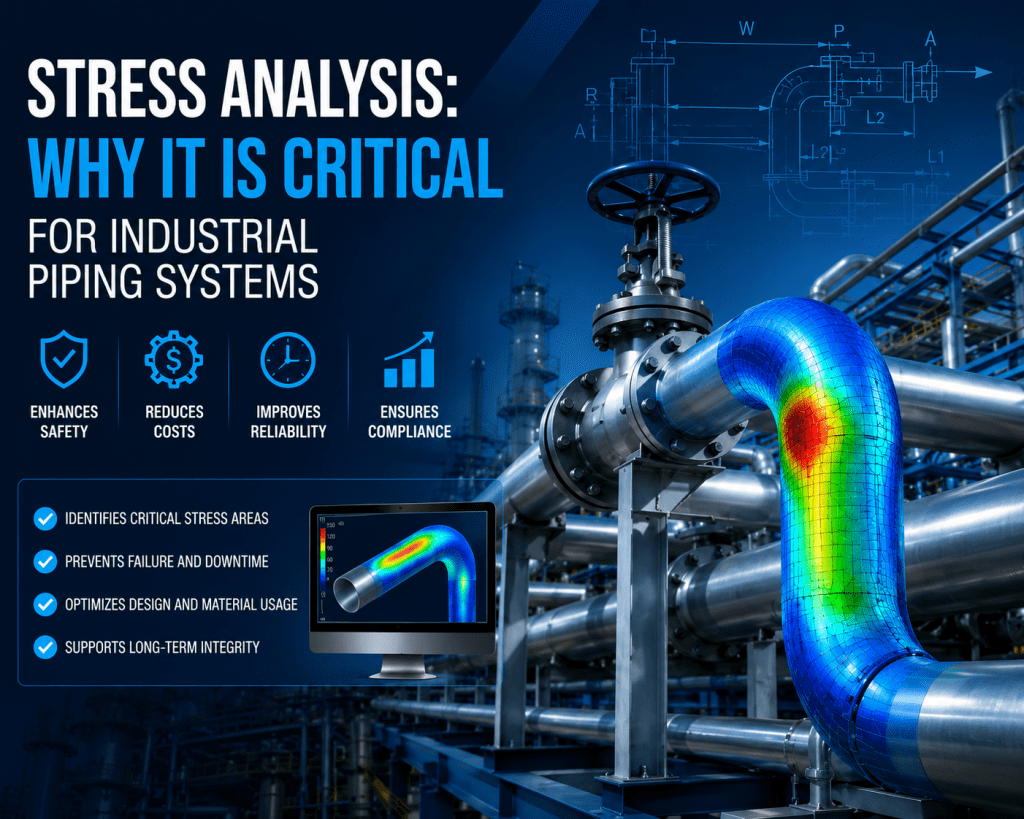
Stress Analysis: Why It Is Critical for Industrial Piping Systems Industrial piping systems operate under demanding conditions. Pressure, temperature changes, vibration, equipment loads, and environmental forces can all affect system performance over time. Without proper engineering review, these factors may lead to equipment strain, support failures, excessive movement, or unplanned downtime. What Is Stress Analysis? Stress Analysis is the engineering process used to evaluate how piping systems and structures respond to operational and environmental loads. In industrial projects, engineers assess conditions such as: Internal pressure Thermal expansion and contraction Pipe and equipment weight Wind and seismic loads Vibration and dynamic forces Equipment nozzle loads Specialized engineering software and calculations are used to determine whether the system remains within acceptable stress limits. The goal is not only to satisfy code requirements but also to improve long-term system reliability and operational safety. Why Stress Analysis Is Important Protecting Critical Equipment Industrial equipment such as pumps, compressors, vessels, and heat exchangers can be sensitive to piping loads. Excessive stress transferred to connected equipment may cause alignment issues, seal failures, or premature wear. Stress analysis helps engineers verify that loads remain within acceptable limits. Managing Thermal Expansion Piping systems expand and contract as operating temperatures change. Without proper flexibility, thermal movement can create excessive stress in the system. Engineering analysis helps identify where supports, expansion loops, or routing adjustments may be needed. When Is Stress Analysis Needed? Many industrial projects benefit from stress analysis, particularly when systems involve: High temperature piping Steam systems Long pipe runs Large diameter piping Critical rotating equipment Pressure equipment connections Frequent thermal cycling Complex support arrangements Plant modifications and brownfield projects also often require review because existing systems may experience different loads after changes are introduced. Typical Deliverables in a Stress Analysis Project Professional engineering stress analysis commonly includes several technical deliverables. Piping Stress Models Engineers create digital models to simulate operating conditions and evaluate sustained, expansion, and occasional loads. Support Recommendations Analysis may identify the need for guides, anchors, spring supports, or support relocation. Equipment Load Evaluation Loads transferred to pumps, vessels, and compressors are reviewed against allowable limits. Engineering Reports Documentation typically includes calculations, assumptions, code references, and recommended corrective actions where required. How MECS Supports Stress Analysis Projects MECS provides practical Stress Analysis services for industrial clients across multiple sectors. Our team supports projects involving: Piping stress analysis Structural stress review Pipe support engineering Pressure equipment systems CRN support documentation Professional Engineer stamping where required Coordination with mechanical and structural disciplines MECS works with plant owners, fabricators, EPC companies, and manufacturers to develop reliable engineering solutions that align with operational and project requirements. Choosing the Right Engineering Partner Effective stress analysis requires more than software capability alone. Engineers must also understand constructability, operations, maintenance access, and practical field conditions. A strong engineering partner should provide clear recommendations that support both compliance and efficient project execution. Conclusion Stress Analysis plays an important role in the safety, reliability, and performance of industrial piping systems. By evaluating operational loads and system behaviour, engineering teams can help reduce risk, improve equipment protection, and support code-compliant designs. MECS provides stress analysis and engineering support services for projects across Canada, the USA, and international markets. Contact our team to discuss your next piping or structural engineering project.
Canadian Registration Number: What Manufacturers Need to Know
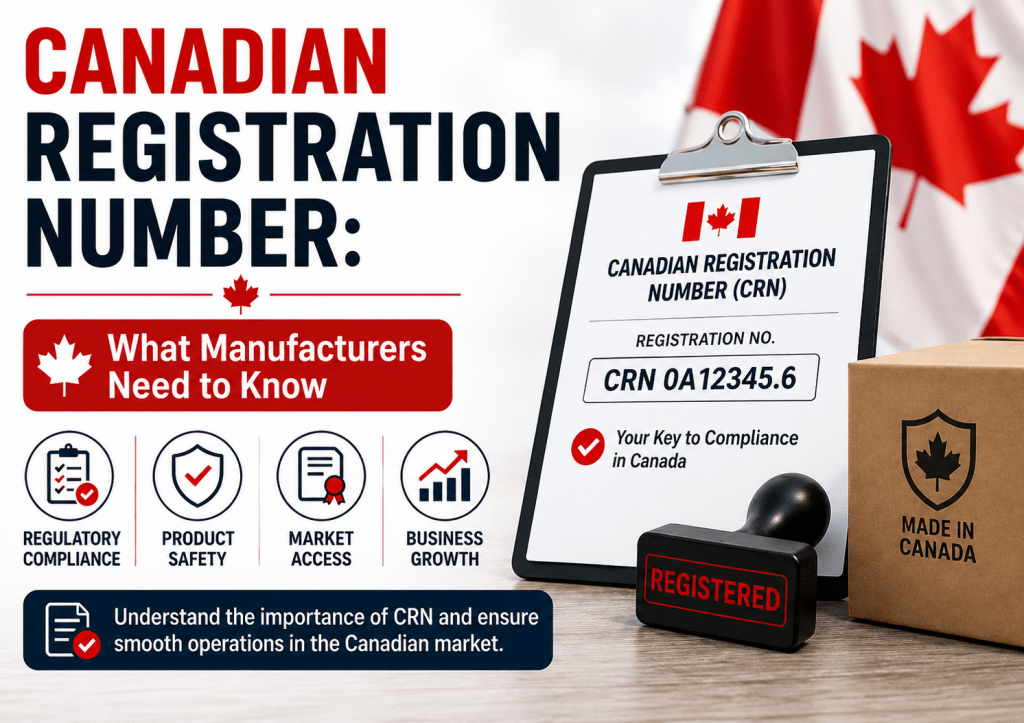
Canadian Registration Number: What Manufacturers Need to Know For companies supplying pressure equipment into Canada, understanding the Canadian Registration Number process is an important part of project planning. Whether you manufacture pressure vessels, piping systems, fittings, or heat exchangers, registration requirements can directly affect approvals, schedules, and installation readiness. Many organizations outside Canada first encounter CRN requirements when preparing equipment for industrial facilities, energy projects, or manufacturing operations. While the process can appear technical, the purpose is straightforward. A Canadian Registration Number helps confirm that pressure equipment designs meet applicable regulatory and code requirements before use within a Canadian jurisdiction. What Is a Canadian Registration Number? A Canadian Registration Number, commonly called a CRN, is a registration identifier issued by a provincial or territorial authority in Canada for pressure equipment designs. The CRN system applies to many types of pressure-retaining equipment, including: Pressure vessels Boilers Heat exchangers Pressure piping systems Valves and fittings Expansion tanks and related components The registration process helps authorities review whether a design complies with applicable codes and safety requirements. Why a Canadian Registration Number Matters Required for Many Canadian Projects In many cases, pressure equipment cannot legally be installed or operated in Canada without proper registration. Requirements vary by province and by equipment type, so it is important to confirm the applicable rules early in the project. Supports Code Compliance CRN applications are typically reviewed against recognized standards such as ASME codes and relevant provincial regulations. The review process helps confirm that calculations, materials, and design details align with applicable requirements. Helps Avoid Delays Registration issues can affect manufacturing schedules, delivery timelines, and project startup dates. Early planning and complete documentation often help reduce approval delays. Builds Confidence with Clients and Regulators Canadian facility owners and EPC companies generally expect suppliers to understand CRN obligations and provide organized engineering documentation. Who Typically Needs a Canadian Registration Number? A Canadian Registration Number may be required for: Manufacturers exporting equipment into Canada Fabricators producing pressure-retaining systems Companies modifying existing registered designs EPC contractors managing industrial projects Plant owners installing new pressure equipment International companies often require additional support because Canadian registration procedures may differ from those used in other countries. The Canadian Registration Number Process While each jurisdiction has its own review procedures, the process generally includes several key steps. Design Preparation Engineering drawings, calculations, material specifications, and code references are assembled for review. Engineering Review The design package is checked for compliance with applicable standards and pressure equipment regulations. Submission to the Jurisdiction Applications are submitted to the relevant provincial or territorial regulator. Comment Resolution Authorities may request clarifications or revisions before granting approval. Registration Approval Once accepted, the design receives its CRN registration identifier. Common Challenges with CRN Applications Many registration delays are caused by documentation gaps rather than major engineering problems. Common issues include: Incomplete calculations Drawing inconsistencies Incorrect code references Missing material information Unclear pressure boundary definitions Jurisdiction-specific formatting requirements Because provincial expectations can differ, experience with multi-jurisdiction submissions is often valuable. Canadian Registration Number Requirements Across Provinces Canada does not use a single national approval authority for pressure equipment registration. Each province and territory administers its own process through the applicable regulator. For example, one jurisdiction may request additional supporting documents while another may have different review timelines or submission requirements. Local regulations always apply, and project requirements should be confirmed for the intended installation location. How MECS Supports Canadian Registration Number Projects MECS provides practical engineering support for Canadian Registration Number applications across multiple industries. Our services include: Pressure vessel and piping calculations CRN application preparation Design review and compliance assessments Drawing updates and documentation support Multi-province registration strategies Professional Engineer review where required Coordination with fabricators and project teams Why Engineering Support Makes a Difference The CRN process involves both technical engineering review and regulatory coordination. Working with experienced professionals can help identify issues early, improve documentation quality, and reduce unnecessary revisions. For manufacturers entering the Canadian market, this can support smoother project execution and more predictable timelines. Conclusion A Canadian Registration Number is an important requirement for many pressure equipment projects in Canada. Proper registration helps support compliance, reduce approval delays, and improve confidence with regulators and project stakeholders. MECS provides engineering and CRN support services for clients in Canada, the USA, and international markets. If your project requires pressure equipment registration or related engineering assistance, our team is ready to help.
Engineering Services for Reliable Industrial Projects
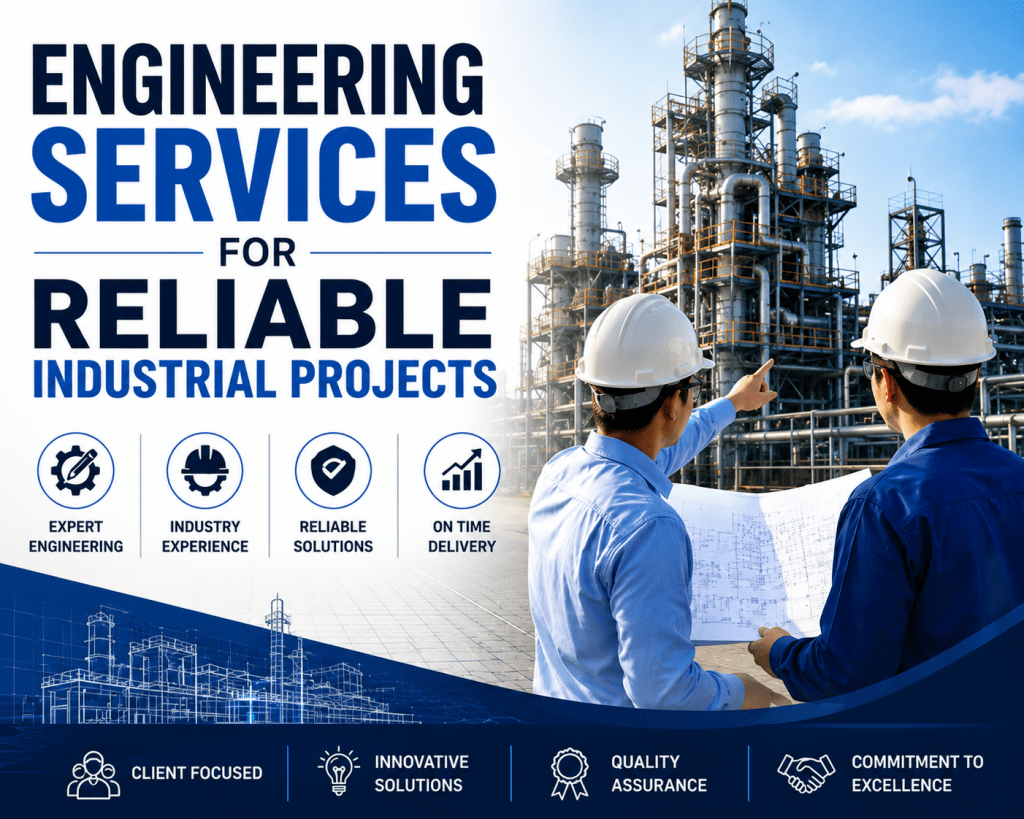
Engineering Services for Reliable Industrial Projects Industrial projects depend on more than drawings and calculations. Successful execution requires practical planning, code compliance, coordination between disciplines, and engineering decisions that support long term reliability. That is where professional Engineering Services play an important role. From piping systems and pressure equipment to structural analysis and design registration support, engineering services help manufacturers, plant owners, and EPC companies move projects forward with confidence. For companies operating in Canada, the USA, and international markets, working with an experienced engineering partner can improve project efficiency while helping meet applicable regulatory and operational requirements. What Are Engineering Services? Engineering Services refer to technical and professional support provided throughout the lifecycle of an industrial project. These services may include: Mechanical and piping design Piping stress analysis Structural engineering support Pressure vessel calculations CRN registration assistance Professional Engineer review and stamping Drafting and 3D modeling Code compliance assessments The exact scope depends on the industry, project size, and jurisdictional requirements. Why Engineering Services Matter Improving Safety and Reliability Industrial systems often operate under high pressure, elevated temperatures, or demanding environmental conditions. Proper engineering review helps identify design risks before fabrication or installation begins. For example, piping stress analysis can help prevent excessive nozzle loads, vibration issues, or thermal expansion problems that could affect equipment performance. Supporting Regulatory Compliance Projects across Canada and the USA are frequently subject to industry codes, standards, and provincial or state regulations. In Canada, pressure equipment projects may also require CRN registration depending on the application. Requirements can vary by province and local authority, so it is important to confirm the specific obligations for each project location. Reducing Delays and Rework Engineering coordination early in the project can reduce fabrication changes, installation conflicts, and approval delays later in the process. Clear calculations, accurate drawings, and organized documentation often help projects move more efficiently through procurement and regulatory review. Common Engineering Services Used in Industrial Projects Piping Design and Stress Analysis Piping systems must safely manage pressure, temperature, and operational loads. Engineering reviews help ensure systems remain flexible, properly supported, and compliant with applicable codes. This is especially important for steam systems, process piping, and critical equipment connections. CRN Registration Support Many pressure-retaining items used in Canada require Canadian Registration Number approval before installation. Engineering support may include: Design calculations Drawing preparation Code compliance review Submission coordination with provincial regulators For international manufacturers, understanding Canadian registration requirements can be particularly important when entering the market. Professional Engineer Review Certain projects require review or authentication by a licensed Professional Engineer depending on local regulations and project scope. Professional engineering oversight helps confirm that designs align with applicable standards and engineering practices. Structural and Equipment Support Design Industrial facilities rely on properly designed supports for piping, vessels, skids, and related systems. Structural analysis helps verify that supports can safely manage operational and environmental loads. Engineering Services in Canada and the USA Engineering requirements can differ significantly between jurisdictions. Canadian projects may involve provincial regulators, CRN requirements, and Professional Engineer licensing obligations. In the USA, project requirements may vary by state, client specification, and industry sector. Because regulations and approval pathways differ, companies benefit from engineering teams familiar with both technical standards and practical project execution. How MECS Supports Industrial Clients MECS provides professional Engineering Services for industrial projects across Canada, the USA, and international markets. Our services include: Piping and mechanical design Piping stress analysis CRN support and design registration Pressure equipment engineering Structural engineering support Professional Engineer stamping where required Drafting and technical documentation MECS works with manufacturers, fabricators, EPC firms, and plant owners across multiple industries, helping clients address both technical and regulatory challenges. Choosing the Right Engineering Partner Selecting an engineering consultant is not only about technical software capability. Practical industry knowledge, communication, and understanding of real project constraints are equally important. A strong engineering partner should provide: Clear technical documentation Practical recommendations Responsive communication Familiarity with relevant codes and standards Support through design and approval stages This helps projects stay aligned with schedule, safety, and operational goals. Conclusion Professional Engineering Services help industrial projects operate safely, efficiently, and in compliance with applicable regulations. From piping stress analysis and structural support design to CRN registration assistance, the right engineering support can reduce risk and improve project outcomes. MECS provides practical engineering solutions tailored to industrial clients in Canada, the USA, and worldwide. Contact our team to discuss how we can support your next project.
FEA in Pressure Vessel Design: Moving Beyond Design by Rule
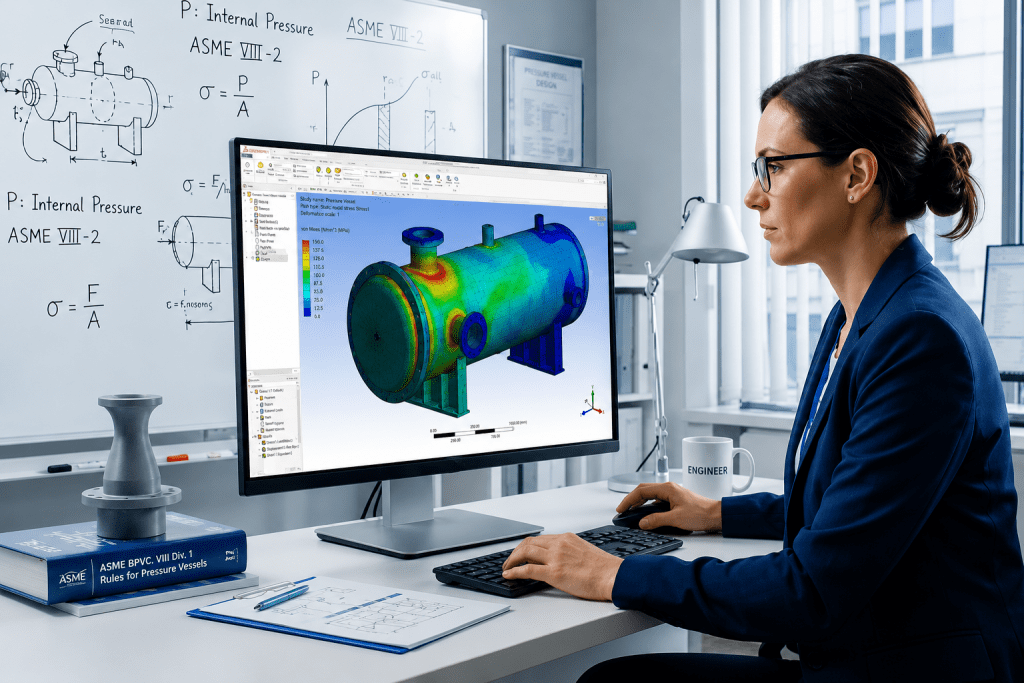
FEA in Pressure Vessel Design: Moving Beyond Design by Rule The global standard method for pressure vessel design has been the “Design-by-Rule” (DBR) methodology governed by popular Boiler and Pressure Vessel Codes like ASME Section VIII, Division 1, AD 2000, PD 5500, EN13445 among others. Design by Rule (DBR) relies on established formulas and safety margins to size components like cylinders, heads, and nozzles. However, these rules only work if you assume the equipment is symmetrical and the loads are simple enough to be conservatively analysed by formula-based methods. The equipment takes physical shape to meet these process demands, the resulting geometry often outgrows the simple mold of established rules in the Code. A vessel’s initial sizing is driven by the process engineer (They dictate exactly what the system needs to function). When a design falls outside the validated scope of standard rules, every major global code provides an “Alternative Design” provision, most famously recognized as ASME Section VIII Division 1’s Paragraph U-2(g) but equally embedded in the core principles of EN 13445, PD 5500, and AD 2000. As, the Code invokes Alternate analysis requirement clause. This clause essentially says if the book doesn’t cover your geometry, you should mathematically prove the design is safe. Alternative Design Provisions (ASME U-2(g), EN 13445, PD 5500, AD 2000) It is a common misconception that triggering these clauses mandates an immediate jump to Finite Element Analysis (FEA). These are Alternative Analysis provisions. They dictate that when the standard rulebook is silent, the engineer is to validate the structural integrity using recognized engineering mechanics. This can be achieved through closed-form analytical calculations (first principles), proof testing, the application of complementary international standards, OR when the geometric complexity outpaces manual mathematics advanced numerical methods like FEA. Let’s Explore what are some potential cases Designers and Engineers can come across which will require them to search beyond DBR methods laid out in the respective Code. In day-to-day static and fixed equipment design, we frequently run into scenarios where standard code rules just aren’t enough. Here are a few of the most common, real-world design issues where FEA becomes an absolute necessity. While the terminology in the examples below leans on ASME Section VIII, Division 1, the underlying physics applies across the board. Because every major “Design by Rule” standard (from EN 13445 to PD 5500) relies on the same basic assumptions of symmetry and uniform loading, they all share the exact same blind spots. Common Real-World Design Scenarios Requiring FEA Local Load Analysis of Geometries Outgrowing WRC LimitsWe use WRC 537 / 107 for analysing static reactions on pressure boundaries, some of the following examples are: Nozzle piping loads on shell and shell to nozzle junction lifting lug and tailing lug attachment to shell. Platform clips and pipe support clips to shell Support legs, Support bracket to shell Nozzle to shell / head junction is overstressed We all rely on WRC 107 / 537 and sometimes WRC 297 to determine local stresses in the shell at structural discontinuities such as legs, support lugs and clip attachments. This bulletin does not address rectangular attachments to shells of double-curvature, and these charts have strict geometric limits. If your nozzle is massive compared to the vessel, or if the shell is extremely thin, or if any rectangular attachment like lug, clips, etc., are welded on double curvature components like heads. WRC methods simply do not provide methods to analyse the concerned geometry. In highly loaded junctions such as a central nozzle supporting an agitator assembly. The standard software with WRC 107 / 537 will provide overstress results and cannot calculate the structural stiffeners. To properly analyze this pressure boundary and guarantee the design is safe, a 3D FEA model is the only practical solution. Non-Uniform Tubesheets Standard TEMA and ASME rules for sizing tubesheets rely on one massive assumption: that the plate is uniformly drilled with holes. For tube layouts which are not uniform where tubesheet is perforated for a small region and large part of it is an untubed area, but real-world heat exchangers often require multi-pass flow, which means there is un-tubed metal. These solid strips act like rigid steel beams. When pressure hits the tubesheet, it doesn’t bend evenly; the un-tubed lanes stay stiff while the drilled areas bow outward. Standard formulas cannot calculate this uneven bending, leading to unexpected shear forces that can rip the tube-to-tubesheet welds apart. As analysts, we model the exact, true geometry of the tubesheet, including every solid un-tubed lane and irregular perimeter gap. This allows the simulation to capture the exact bending behavior and locate the high localized stresses where the flexible tubed region meets the rigid un-tubed metal, ensuring the welds will hold under operating pressure. Large Openings, Extreme Aspect Ratios, and Knuckle Nozzles When you introduce unconventional geometries—like massive openings, obround cutouts, offset/tilted nozzles, or nozzles located right on a head knuckle. Per ASME UG-36(a)(1), if the aspect ratio (the long chord divided by the short chord of the opening) exceeds 2.0, the code warns that additional reinforcement is needed to resist complex bending forces. However, ASME provides no elementary formula for how much reinforcement is needed. Because of this, software will simply flag a permanent warning. This warning will never “disappear” just by artificially thickening the repad in the software, because the error is tied to the physical dimensions of the hole, not the thickness of the steel. The Large Nozzle Limit: If the nozzle is massive, Appendix 1-7(b) takes over. But even those advanced rules have a ceiling. If the ratio of the nozzle radius to the vessel radius exceeds 0.7, the software will complete the Appendix 1-7 analysis but immediately flag that the geometry is still too extreme, requiring additional analysis per U-2(g). Fatigue Life and Cyclic loading Pressure vessels aren’t always static. If a vessel undergoes thousands of pressure or temperature cycles over its lifetime (like a batch reactor continuously filling and draining), the metal can eventually crack from fatigue even if
